


DIY Kitchenette Designs That Make a Small Setup Feel Thoughtfully Planned

A DIY kitchenette is rarely someone’s first choice. It’s usually born out of necessity — a small studio, a garden room, a rental-friendly update, a home office conversion, or a space that simply doesn’t allow for a full kitchen footprint. And yet, when designed properly, a kitchenette can feel just as intentional as a full-scale kitchen.
The problem is that most DIY kitchenette setups look exactly like what they are: rushed, pieced together, or overly temporary. Cabinets don’t align, appliances feel random, storage is an afterthought, and the whole thing reads more like a workaround than a design decision.
This is where thoughtful planning changes everything. In this guide, we’re breaking down how designers approach DIY kitchenette design so it feels deliberate, functional, and visually resolved — even in the smallest spaces.
At A Glance
-What actually makes a DIY kitchenette feel designed
-How to plan layout before buying anything
-Which elements matter most in small kitchenettes
-Storage strategies that prevent clutter
-Common mistakes that make kitchenettes look temporary
-How designers prioritise function in limited space
1. DIY Kitchenette: Start With the Purpose Not the Products

The biggest mistake in DIY kitchenette design is starting with individual items instead of the role the space needs to play. A kitchenette used for daily cooking requires a very different setup from one used occasionally for coffee, light meals, or guests.
Designers always define purpose first. Will this space support full meal prep, or is it a supporting kitchen? Does it need a hob, or will a microwave and induction plate suffice? Will it be used daily, weekly, or only occasionally?
Answering these questions upfront prevents overloading a small area with unnecessary elements.
Designer Tip: If an appliance does not support a real habit, it doesn’t belong in a kitchenette.
YOU MAY LIKE

2. DIY Kitchenette: Layout Comes Before Storage

In compact kitchenettes, layout does the heavy lifting. Even a small miscalculation can affect how usable the space feels day to day.
Most successful DIY kitchenette layouts follow one of three formats: straight-line, L-shape, or compact galley. Designers prioritise clear prep zones, logical appliance placement, and uninterrupted counter space — even if it’s minimal.
Trying to squeeze storage into every available inch often backfires by breaking flow and usability.
Designer Tip: One clear prep zone is more valuable than extra cabinets that interrupt movement.
3. DIY Kitchenette: Choose Fewer Elements and Make Them Align

A DIY kitchenette feels temporary when nothing lines up. Cabinet heights vary, appliances sit awkwardly, and finishes change mid-run.
Designers simplify. Fewer cabinets, consistent heights, and aligned edges instantly make a kitchenette feel planned. Integrated appliances or visually quiet finishes reduce visual noise, which is critical in small spaces.
This is not about minimalism — it’s about visual order.
Designer Tip: Alignment matters more than quantity in small kitchenette design.
Let’s Map Out Your Space Together
If you're planning a makeover and want a designer’s eye on how stick on tiles could work in your home, we’d love to help you visualise the transformation. Book a free 30-minute consultation and let’s sketch out a layout that feels tailored to your space.
4. DIY Kitchenette: Storage Should Be Intentional Not Excessive

Storage in a DIY kitchenette needs restraint. Overhead cabinets that run too high or too wide can visually overpower the space and make it feel cramped.
Designers often mix closed storage with one open or lighter element to avoid visual heaviness. Deep drawers outperform narrow cupboards, and vertical storage works best when kept minimal and organised.
Every storage choice should earn its place.
Designer Tip: If storage makes the kitchenette feel heavier, it’s doing the opposite of its job.
5. DIY Kitchenette: Appliances Must Match the Scale

Oversized appliances are one of the fastest ways to break a DIY kitchenette. A full-depth fridge or wide cooker can dominate the layout and throw proportions off balance.
Designers choose slimline or compact appliances that align with cabinetry depth. Even visually simple appliances make a big difference when space is limited.
This keeps the kitchenette proportional rather than improvised.
Designer Tip: Appliances should support the layout, not dictate it.
6. DIY Kitchenette: Treat the Worktop as a Design Anchor

In small kitchenettes, the worktop becomes the visual anchor. A single continuous surface reads calmer and more deliberate than multiple materials stitched together.
Designers avoid unnecessary joins and select finishes that work hard visually without overwhelming the space. The goal is cohesion, not contrast.
Designer Tip: One strong worktop choice simplifies every decision that follows.
Your Renovation, Simplified
If you’re diving into a big home update, our Ultimate Renovation Planner can make the entire process far easier. From material planning to budgeting, it’s designed to keep your project organised while helping you visualise every detail. Explore the planner and plan your makeover with clarity.
7. DIY Kitchenette: Lighting Defines How Finished It Feels

Lighting is often overlooked in DIY kitchenette setups, yet it’s one of the clearest signals of design intent.
Under-cabinet lighting improves functionality, while a single well-placed ceiling or wall light elevates the space visually. Harsh overhead lighting flattens the design and highlights clutter.
Designers layer light even in the smallest kitchens.
Designer Tip: If lighting feels like an afterthought, the kitchenette will too.
8. DIY Kitchenette: Surfaces Must Handle Daily Contact

Kitchenettes experience concentrated use. Surfaces near sinks, hobs, and prep zones see more wear in a smaller footprint.
Designers choose finishes that handle water, heat, and cleaning without constant maintenance. This is where practicality quietly supports long-term satisfaction.
Designer Tip: Durability matters more in small kitchens than large ones.
9. DIY Kitchenette: Visual Consistency Beats Decorative Styling
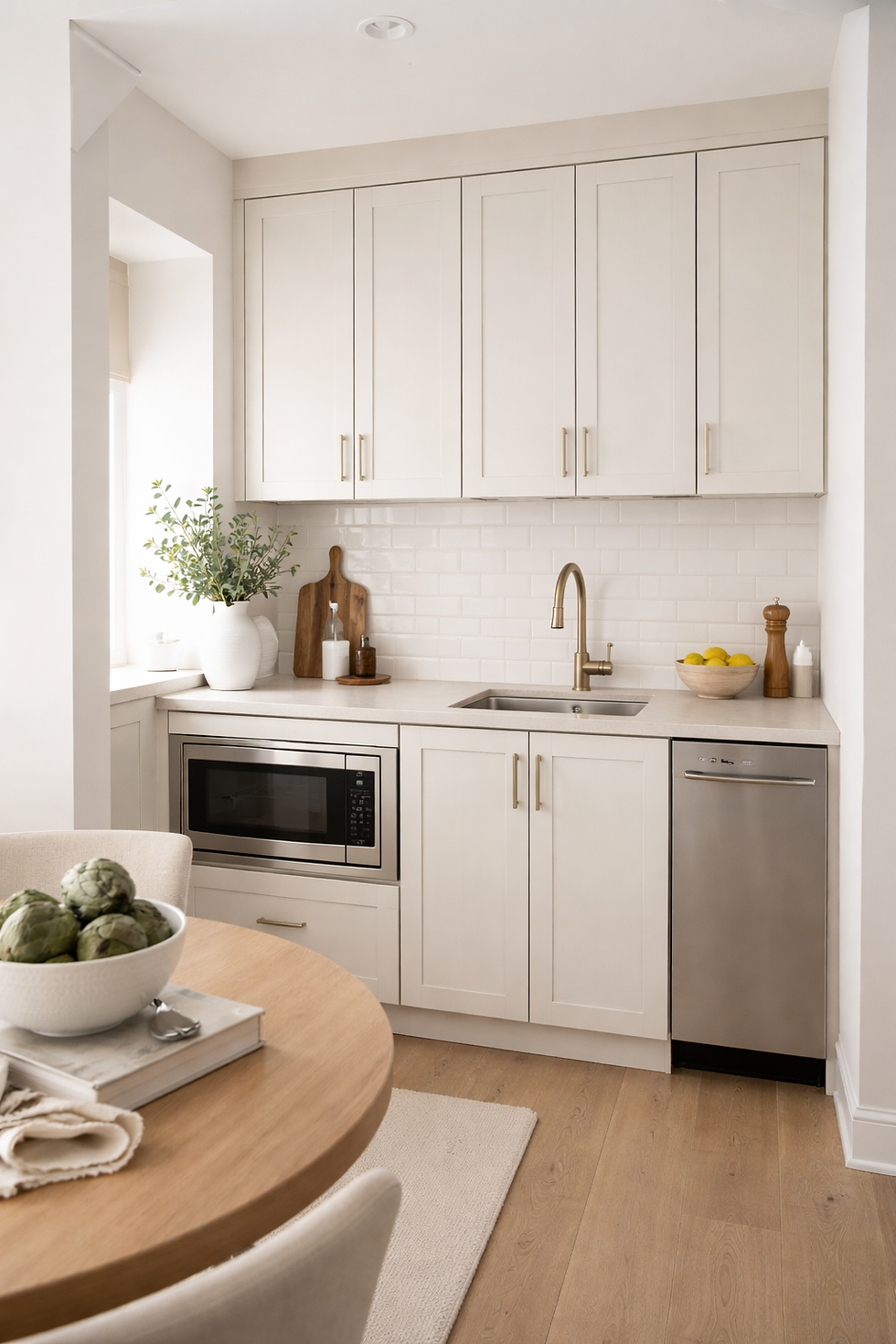
Decorative styling rarely saves a poorly planned DIY kitchenette. Instead, designers rely on visual consistency — repeated finishes, aligned edges, and simple transitions.
When everything belongs, the kitchenette feels permanent rather than temporary.
Designer Tip: Consistency does more work than accessories ever could.
10. DIY Kitchenette: Know When Less Is the Better Decision

Sometimes the most thoughtful DIY kitchenette includes fewer elements than expected. Removing an unnecessary cabinet or appliance can dramatically improve how the space functions.
Designers are comfortable editing back.
Designer Tip: A smaller kitchenette that works always beats a larger one that doesn’t.
Conclusion
A DIY kitchenette doesn’t need to look like a compromise. When planned with intention, it can feel just as resolved as a full kitchen — sometimes even more so.
By focusing on purpose, layout, alignment, and restraint, you transform a small setup into a space that feels deliberate, functional, and thoughtfully designed. The difference is not budget or size. It’s planning.
FAQ: DIY Kitchenette
What is considered a DIY kitchenette?
A DIY kitchenette is a compact kitchen setup typically including basic appliances, limited cabinetry, and a small prep area, often installed without a full kitchen footprint.
Can a DIY kitchenette feel permanent?
Yes. With aligned cabinetry, consistent finishes, and thoughtful layout, a DIY kitchenette can feel fully integrated rather than temporary.
What appliances are best for a DIY kitchenette?
Slimline fridges, compact ovens, microwaves, and induction plates work best in limited spaces.
Is a DIY kitchenette suitable for daily cooking?
It can be, provided the layout supports prep space, storage, and ventilation properly.
Start Your Dream Home Transformation
Our online design packages were created to make the entire process smoother, clearer, and far more enjoyable — no stress, no second-guessing. Whether you’re refreshing one room or reimagining your whole home, we guide you every step of the way with layouts, visuals, and a fully personalised design plan.
See our interior and exterior design packages to get started.
Author Bio
Beril Yilmaz is the founder of BY Design And Viz, an online interior and exterior design studio specialising in clear layouts, thoughtful architectural details, and design decisions that support how people actually live. With a background in architecture and a practical design approach, her work focuses on creating homes that feel considered, functional, and intentionally designed.


Comments