


Natural Cream vs Shoji White: The Comparison That Actually Helps You Decide

Natural Cream is a greige wearing a cream's name. Shoji White is an off-white with a greige heart. The names point each color toward the other's territory, and that mismatch is the whole comparison. Benjamin Moore Natural Cream has an LRV of roughly 65 and reads as a soft color on the wall. Sherwin-Williams Shoji White has an LRV of 74 and reads as a light, warm backdrop. One gives a room depth. The other gives it light.
I have used both across residential projects, and the choice is rarely close once the room is in front of me. Natural Cream earns its place where a space needs calm and a little weight. Shoji White earns it where a space needs light and a softer white. Here is exactly how I separate them, and how I decide which one a room needs.
This guide covers the undertones, how each color behaves in north- and south-facing light, which trim and finishes suit each one, and a clear verdict on which to choose.

At a Glance
| Natural Cream | Shoji White |
Brand | Benjamin Moore | Sherwin-Williams |
LRV | ~65 - a light mid-tone that reads as color before it reads as brightness | 74 - a clear step brighter; reads as a soft white with warmth underneath |
Colour category | Light greige - a soft neutral with presence, not a white | Warm off-white with a greige base - a white that stays soft, not stark |
Undertones | Neutral-warm with a faint green-yellow cast that settles into stone-beige in most light; the green is subtle, never obvious | Soft grey-beige with a warm lean - creamy in sun, softly taupe in shade, rarely yellow |
Character | Calm, grounded and slightly weighty - gives walls a quiet tone of their own and makes white trim look crisp by comparison | Airy, soft and adaptable - lifts a room without announcing itself as white, and works as wall, ceiling or trim |
North-facing | Demanding - the 65 LRV and green-grey cast can dull to flat stone without warm lamps and warm materials around it | Safer - the higher LRV keeps the wall luminous, though it can cool toward grey-beige under overcast light |
South-facing | Excellent - warm light softens the green cast and the wall settles into a rich, composed stone-cream | Glows warm cream; bright enough that strong sun can wash the sunniest wall close to white |
Open-plan | Strong - neutral enough to hold steady across zones, and the depth stops large walls reading blank | Strong where daylight is generous; in deep floor plates it needs warm lighting to avoid going flat |
On walls | A defined, soft-toned backdrop - walls read as color, so ceilings and trim look deliberately lighter | A light, low-contrast backdrop - walls recede and the room reads as open and bright |
On cabinets | Reads as putty or stone - a tonal, deliberate kitchen that suits warm wood and brass; can feel heavy in a small, dim kitchen | Reads as a soft white - the cleaner look, equally at home with stone, wood and stainless; better where a kitchen needs to feel bright |
Use together? | Yes - Natural Cream on walls with Shoji White on trim and ceilings gives a soft, tonal step in value | Yes - Shoji White on joinery and ceilings against Natural Cream walls; avoid the reverse, where the deeper color makes trim look dull |
Trim for each | Shoji White SW 7042 for a soft step up; Simply White OC-117 or White Dove OC-17 for crisp definition | Extra White SW 7006 or Pure White SW 7005 for definition; Alabaster SW 7008 for a quieter step |
Style fit | Transitional, modern traditional, organic modern - suits period homes with a considered palette | Organic modern, Japandi-leaning minimal, soft contemporary - also sits easily in traditional rooms |
Architect's pick | When the brief is a calm, tonal room with presence and the daylight is generous enough to carry a mid-tone | When the brief is light, softness and brightness, especially in rooms where daylight is limited |
Benjamin Moore Natural Cream OC-14 - What It Really Looks Like

Natural Cream has an LRV of 65, which puts it firmly in the light greige category. The name suggests cream. The color delivers something quieter. It is a soft, grounded neutral with a faint green-yellow cast that settles into stone-beige on the wall. Benjamin Moore places it in the Off-White Collection, but at 65 it sits well below what most people picture when they ask for a white.
The LRV of 65 means it reflects enough light to stay fresh, but not enough to disappear. Walls read as color. White trim and ceilings read as white by comparison, which gives a room natural definition. That is the quiet advantage of a mid-tone neutral.
It adapts to what surrounds it. Warm wood and brass bring out its warmth. Cool stone and grey fabrics pull it toward neutral. It flatters both, which is why it travels well from room to room. If Pale Oak is also on your shortlist, the softer Benjamin Moore neighbour that often joins this comparison, the Shoji White vs Pale Oak guide shows how Shoji White separates from that tone, a useful second reference point as you read this pair.
Sherwin-Williams Shoji White SW 7042 - What It Really Looks Like

Shoji White has an LRV of 74, which makes it a light, warm off-white rather than a true white. The base is a soft grey-beige with a trace of warmth. Nothing about it is stark. It sits a clear step above Natural Cream in brightness and carries more of the available light into the room.
In south-facing light, the warmth opens into a soft creamy glow. In north light it cools toward grey-beige, but the 74 keeps the wall luminous. It does not sink. That is the practical strength of the color, and the reason it works so often as a main wall color in rooms with limited daylight.
If Shoji White reads too grey in your room, there is a warmer option. Sherwin-Williams Natural Linen sits in the same neighbourhood with a pinker, warmer lean. The Shoji White vs Natural Linen guide compares the two directly, which is the quickest way to decide whether you need that extra warmth before Natural Cream enters the picture.
The Real Difference Between Natural Cream and Shoji White

The simplest way to explain it: Natural Cream is a color. Shoji White is a light. Natural Cream sits on the wall as a soft stone tone with weight. Shoji White lifts the wall and lets the room's daylight do the work.
The nine-point LRV gap is the engine of the difference. At 65, Natural Cream holds back about a third of the light and reads as a defined neutral. At 74, Shoji White holds back about a quarter and reads as a white with warmth. On a full wall the gap looks larger than the numbers suggest. Undertone adds a second layer. Natural Cream's faint green-yellow cast keeps it neutral and slightly cool-leaning in shade, while Shoji White's warm grey-beige base keeps it soft and slightly creamier in sun.
Trim is where the pairing becomes practical. Natural Cream on walls with Shoji White on trim and ceilings is a soft, tonal pairing: the step up in value defines the joinery without a harsh edge. The reverse does not work, because Natural Cream on trim reads dull against a lighter wall. For sharper definition than Shoji White offers on joinery, the Shoji White vs Cloud White guide shows how Shoji White compares to Benjamin Moore's softer, brighter white, which helps if you want more contrast than either wall color provides on its own.
Not sure which one is right for your room? A Color Direction consultation gets you a full custom palette built around your space - book yours here. |
When to Choose Natural Cream

Choose Natural Cream when the brief is a calm, tonal room and the light is generous enough to carry a mid-tone. It is the right answer in south- and west-facing living rooms, where warm light softens its green cast. It suits period and traditional homes that want a considered palette rather than a white box. It works beside warm wood, brass, linen and stone. And it earns its place in large, open spaces where a white would feel blank.
Avoid it in small, dark rooms. The 65 LRV needs light to stay fresh. In a north-facing room with little daylight it can drop to flat grey-stone. Avoid it wherever you want a bright, airy white. It will not give you one. If you want a white, choose a white.
When to Choose Shoji White

Choose Shoji White when you want warmth and softness without losing light. It is the stronger answer in north-facing and low-light rooms, where its 74 LRV keeps walls luminous. It suits bedrooms, hallways and open-plan spaces where the color has to flex across zones. It works in organic modern and minimal schemes where a true white would feel clinical. And it is the better choice for joinery and ceilings alongside deeper neutrals.
Avoid it where you want visible color on the wall. In strong south light it can wash toward white and lose its character. It also gives less definition against white trim than Natural Cream does, because the value gap is smaller.
How the Pairings Differ
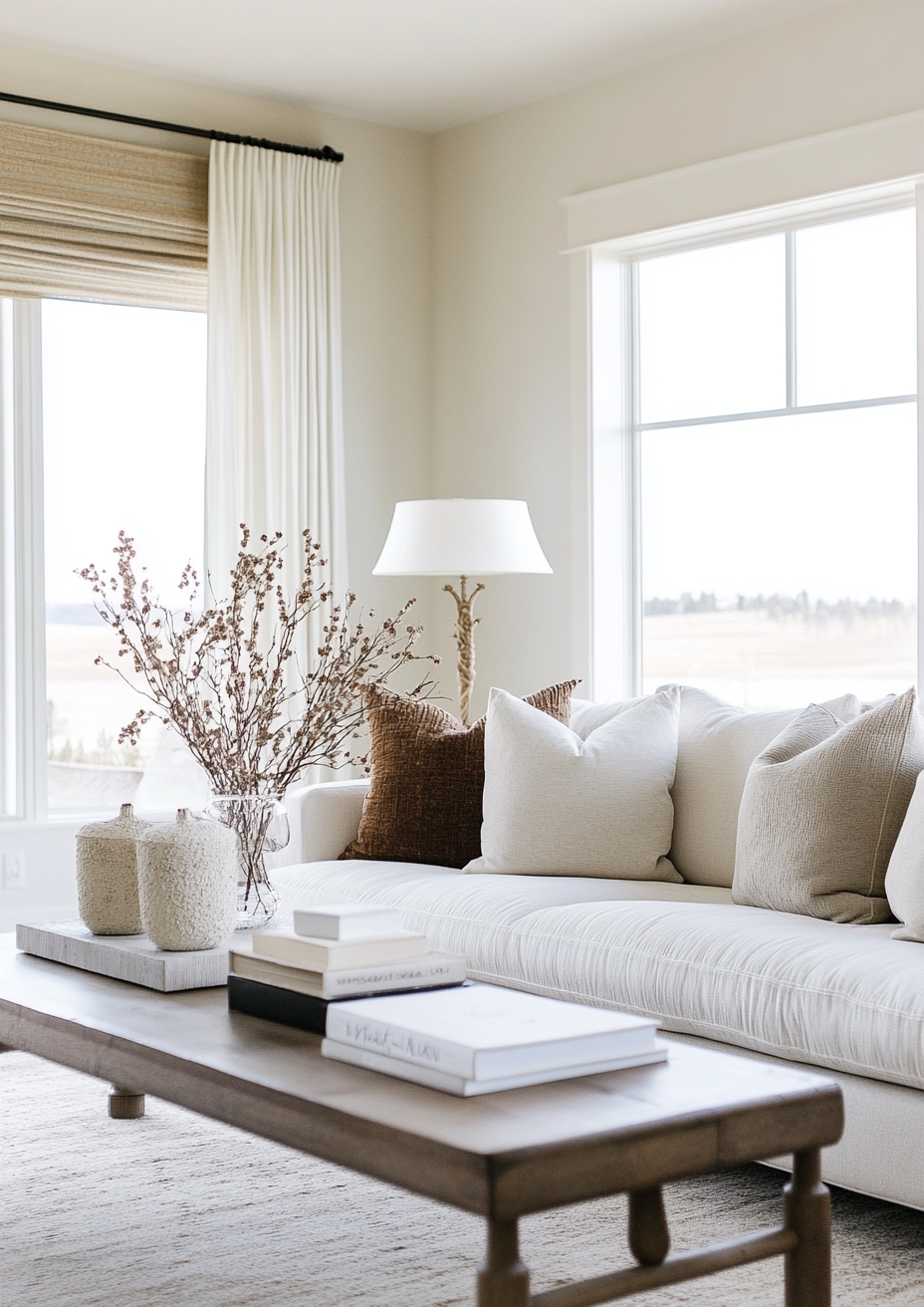
For Natural Cream on walls, the natural trim choice is Shoji White itself. It steps up in value gently and keeps the whole scheme tonal. Simply White or White Dove gives crisper definition. Avoid stark brilliant white, which can make Natural Cream look dull by contrast.
For Shoji White on walls, Extra White or Pure White on trim gives clean, crisp definition. Shoji White on walls and joinery together suits a soft, enveloping scheme, particularly in bedrooms and living rooms where the goal is calm throughout.
For flooring, both colors suit warm oak and limestone. Natural Cream also handles cooler grey stone and mid-tone timber, because its neutrality does not fight them. Shoji White needs warmth underfoot more urgently. Against cold grey tile its grey-beige base can look flat.
For hardware, both colors suit aged brass and bronze. Natural Cream also carries brushed nickel and black well, since its neutrality sits comfortably with cool metals. Shoji White favors warmer metals, with matte black as a crisp accent in contemporary schemes.
Architect's Verdict - Natural Cream or Shoji White?

Both colors are reliable. They solve different problems.
Natural Cream is the right choice when you want a soft, tonal neutral with presence. It gives walls depth, makes trim look crisp, and flatters both warm and cool materials. In a south-facing living room with warm wood and linen, it is more beautiful than Shoji White. It looks considered. It does not look like a compromise.
Shoji White is the more reliable choice for most homes. It carries more light, forgives limited daylight, and works as wall, ceiling and trim color across a scheme. If your brief is a soft, bright room, or you are unsure of your light, start here.
The test I always use: buy sample pots or peel-and-stick samples of both, paint two large patches side by side on the darkest wall in the room, and check them at 9am, at 4pm on an overcast afternoon, and at 8pm with the lamps on. The worst case is the overcast afternoon. A pass for Natural Cream is a warm stone tone that still looks deliberate, not flat grey-green. A pass for Shoji White is a wall that stays luminous without tipping into dull taupe. If Natural Cream fails, go with Shoji White. If Shoji White looks too white for your brief, go with Natural Cream.
Frequently Asked Questions

Is Natural Cream a cream or a greige?
It is a greige. Natural Cream is a light greige in Benjamin Moore's Off-White Collection, with an LRV of about 65. The name is misleading. It reads as a soft stone-beige on the wall rather than a buttery cream. If you want a true cream, this is not the color.
Is Shoji White lighter than Natural Cream?
Yes - Shoji White has an LRV of 74 against roughly 65 for Natural Cream. The nine-point gap is visible side by side and larger on a full wall. Shoji White reads as a soft off-white. Natural Cream reads as a light greige.
Can I use Natural Cream and Shoji White in the same house?
Yes, and the pairing works well when Shoji White takes the lighter role. Natural Cream on walls with Shoji White on trim and ceilings gives a soft, tonal step in value. Avoid putting Natural Cream on trim beside Shoji White walls, where it reads dull.
Which is better for kitchen cabinets?
Shoji White suits a bright, clean kitchen. Natural Cream suits a tonal one. Shoji White reads as a soft white and works with stone, wood and stainless. Natural Cream reads as putty or stone and suits warm, considered kitchens with good light. Test in the kitchen before committing, because cabinet sheen shifts both.
Which is better for a north-facing room?
Shoji White handles north light better. Its 74 LRV keeps the wall luminous when daylight is cool. Natural Cream can drop to flat grey-stone in the same room unless warm lamps and warm materials support it. Neither is automatic, so test both after dark with your actual bulbs.
What is the LRV of Natural Cream vs Shoji White?
Natural Cream has an LRV of about 65 and Shoji White has an LRV of 74. That nine-point gap is the clearest measurable difference between them. Undertone adds the second layer: Natural Cream leans neutral with a faint green-yellow cast, while Shoji White leans warm grey-beige.
Final Thought
Natural Cream and Shoji White are both excellent soft neutrals. The choice is not about which is better. It is about whether your room needs depth or light.
If your light is good and you want a calm, tonal wall, Natural Cream delivers presence without tipping into white. If your light is limited or your brief is soft and bright, Shoji White is the safer, lighter answer. Buy sample pots, paint large patches side by side, and watch them across a full day. The answer will be clear within 24 hours.
Want a complete colour scheme built around Natural Cream or Shoji White? Our design packages cover full palette selection, finish recommendations, and 3D visualisations - see our packages. |
About the Author
Beril Yilmaz is a qualified architect and interior designer based in the UK. She runs BY Design And Viz, a design platform covering paint colour reviews, interior design guidance, and residential design projects. Beril has specified both Natural Cream and Shoji White across residential projects in the UK and internationally — Natural Cream in living rooms and period-property schemes where a softer, tonal neutral was needed, Shoji White in north-facing and open-plan spaces where daylight is limited, often in the same scheme with Shoji White on trim and ceilings.


Comments