


A Designer’s Take on the Scandinavian Dining Room and Why It Always Feels Timeless

A Scandinavian dining room is one of those spaces that looks effortless when it’s done well — the kind of room that makes a Tuesday pasta feel oddly more intentional. But getting it right isn’t about buying a pale wood table and calling it a day. The difference between “Scandi” and “spare” usually comes down to a handful of design decisions most people skip.
Many dining spaces also struggle with the same issue: they’re treated like the leftover zone. The living room gets the attention, the kitchen gets the budget, and the dining area ends up with whatever table fit and a light that was “fine.” A Scandinavian dining room flips that script by making the dining space feel like a deliberate part of the home — not a furniture parking spot.
Many of the design principles seen in a Scandinavian dining room — light woods, soft neutrals, and an emphasis on natural light — are usually established first in the main living space. Scandinavian living rooms often set the tone for the entire home, making it easier to carry the same calm, cohesive look into dining areas.
At A Glance
-How to choose the right dining table shape and size for a Scandinavian dining room
-What makes Scandinavian dining room lighting look considered, not random
-How to mix light woods without creating a mismatched look
-Which colours work best for a Scandinavian dining room and why
-How to style a Scandinavian dining room so it feels lived-in, not bare
-Common Scandinavian dining room mistakes that make the space feel flat
1. Scandinavian Dining Room: Start With the Layout Before You Pick Anything Pretty

A Scandinavian dining room works because it’s planned around movement, not just aesthetics. Before you decide on a table style, you want to know how people will enter the space, where chairs will pull out, and whether the dining area overlaps with kitchen traffic.
The goal is to avoid the “chair scrape choreography,” where everyone has to stand up for one person to get past. Even in open plan homes, the dining space should have its own clear footprint — it should feel defined without needing walls.
If the dining room is small, that doesn’t mean you can’t do Scandinavian design. It just means you have to be more intentional about scale, negative space, and how much furniture you allow into the room.
Designer Tip: Mark out the dining zone with painter’s tape on the floor before buying a table. If the taped area already feels tight, the table will feel tighter.
YOU MAY LIKE

2. Scandinavian Dining Room: Choose a Table That Matches the Room’s Pace

A Scandinavian dining room tends to feel calm because the shapes are clean and the lines are legible. The dining table usually leads the rhythm of the room — and it should suit the way the space is used.
Round tables are brilliant for conversation and small footprints, especially in square rooms or awkward corners. Rectangular tables suit longer rooms, open-plan layouts, and families who need daily practicality. Oval tables are the best of both worlds when you want softness without losing capacity.
Material matters too. Light oak and ash are classic for Scandinavian dining rooms because they read fresh without shouting. If you’re choosing veneer, look for realistic grain and avoid high-gloss finishes that can push the room into “flat-pack showroom” territory.
Designer Tip: If your dining area connects to the kitchen, match undertones rather than exact wood. A slightly different wood is fine if it shares the same warmth level.
3. Scandinavian Dining Room: Get the Lighting Right and the Whole Room Levels Up
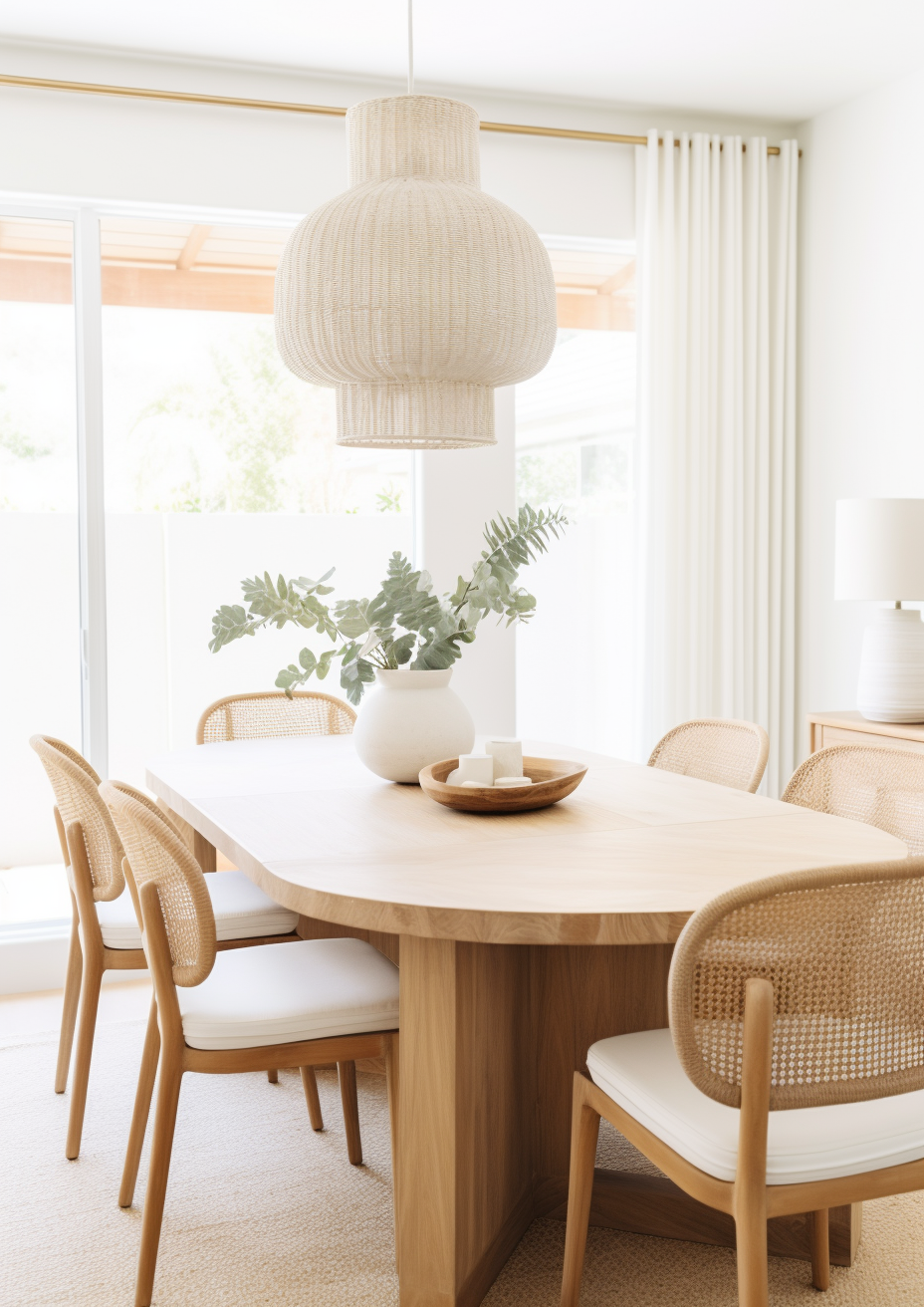
Lighting is where a Scandinavian dining room quietly shows its expertise. The pendant isn’t just a decorative moment — it’s what tells the table area, “this is a destination.”
A common mistake is using a pendant that’s too small. It looks like it’s floating with no purpose. Another common mistake is hanging it too high, which removes intimacy and makes the table feel like it’s under a ceiling light rather than part of a designed space.
Scandinavian dining rooms usually use a pendant with a simple silhouette — dome, globe, cone, or a soft pleated shade — and let the material do the talking. Think paper, linen, opal glass, matte metal.
Designer Tip: Centre your pendant over the table, not the room. The table is the anchor — everything else follows.
Let’s Map Out Your Space Together
If you're planning a makeover and want a designer’s eye on how stick on tiles could work in your home, we’d love to help you visualise the transformation. Book a free 30-minute consultation and let’s sketch out a layout that feels tailored to your space.
4. Scandinavian Dining Room: Build a Clean Palette That Still Has Contrast
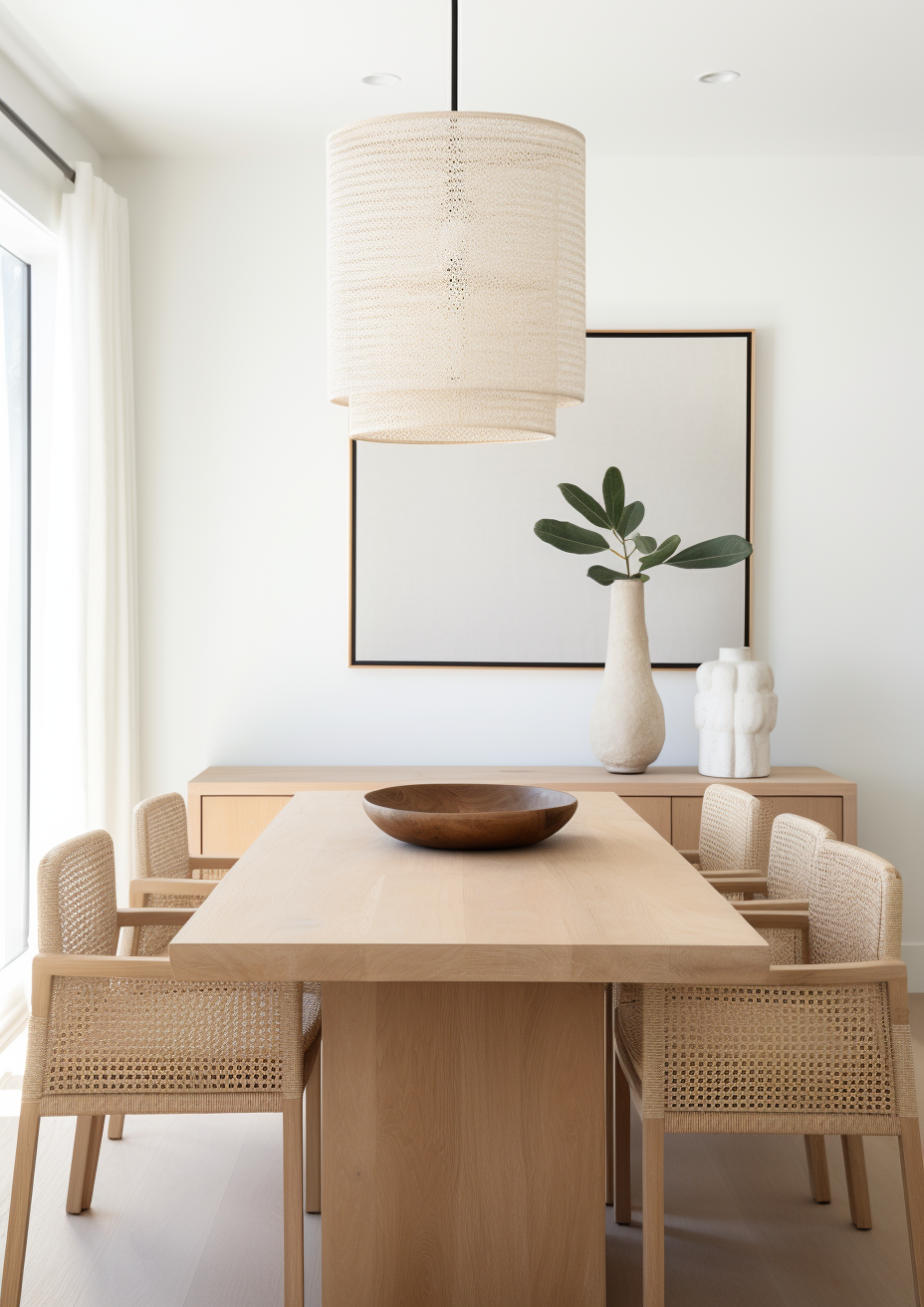
Scandinavian dining rooms are known for soft neutrals, but the spaces that look high-end always include contrast. Without contrast, the room can feel washed out — and that’s usually the moment people start saying it feels “empty.”
Instead of piling on décor, rely on contrast through a few controlled moves: darker chair frames, black hardware in the nearby kitchen, a charcoal rug, or a single deeper tone in art.
Your palette can still be light — just make sure it has structure. Think: warm white walls, pale wood table, black or charcoal accents, and a few muted tones like clay, oat, or stone.
Designer Tip: Choose one darker accent and repeat it three times (for example: chairs, frame, candle holders). This makes the room look intentional, not accidental.
5. Scandinavian Dining Room: Mix Woods Like a Designer, Not a Catalogue

If you’ve ever tried to do a Scandinavian dining room and ended up with “too many woods,” you’re not alone. Light woods are the signature, but mixing them without a plan can create a mismatched look.
The trick is to pick a dominant wood tone (usually the table) and let everything else either harmonise or intentionally contrast. Harmonising means staying within the same warmth and grain family.
Contrasting means adding black-stained wood or a darker walnut as a deliberate counterpoint.
Avoid the middle ground where everything is close-but-not-quite. That’s where it starts looking like you tried to match and missed.
Designer Tip: If your floor is wood, do not try to match it. Aim for complementary undertones instead — matching often makes everything blend into one flat plane.
6. Scandinavian Dining Room: Seating Should Look Light but Sit Well

Chairs in a Scandinavian dining room often look minimal, but they still need to be comfortable — especially if the dining table doubles as a work zone.
Woven seats, curved backs, and timber frames are classics. Upholstered seats can work too, but keep the fabric texture-led and low-fuss. Bouclé is popular, but it can show wear quickly in dining zones. Linen-look performance fabric is often the smarter choice if this is a daily-use table.
A mix of chairs can also look very Scandinavian — for example, matching side chairs with a slightly different end chair, as long as the palette stays cohesive.
Designer Tip: If you want to mix chairs, keep one element consistent across all of them: wood tone, seat colour, or silhouette style.
Your Renovation, Simplified
If you’re diving into a big home update, our Ultimate Renovation Planner can make the entire process far easier. From material planning to budgeting, it’s designed to keep your project organised while
helping you visualise every detail. Explore the planner and plan your makeover with clarity.
7. Scandinavian Dining Room: Use Texture to Prevent the “Too Bare” Look

A Scandinavian dining room is often mistaken for being about “less.” In reality, it’s about editing. The room still needs texture, otherwise it can feel like a staging photo rather than a place you live.
This is where you bring in texture through a rug, curtains, timber grain, ceramics, and lighting materials. Texture does the heavy lifting when you’re not relying on colour.
If you’re keeping walls simple, add interest through a framed print with depth, a textured paper shade, or a centrepiece that has shape — not clutter.
Designer Tip: If you only add one texture element, make it a rug. It instantly anchors the dining zone and improves acoustics.
8. Scandinavian Dining Room: Style the Table Like It’s Part of the Architecture

A Scandinavian dining room table doesn’t need constant styling, but it benefits from one “default” look that feels effortless.
Instead of lots of small décor, think in a few larger pieces: a simple ceramic bowl, a sculptural vase, a stack of two books, or a linen runner. The point is to create a focal moment that still leaves the table usable.
Fresh branches, eucalyptus, or seasonal stems work well because they echo the Scandinavian emphasis on nature without becoming fussy.
Designer Tip: Keep the centrepiece narrow enough that people can see across the table. If it blocks sightlines, it will always feel in the way.
9. Scandinavian Dining Room: Art Should Be Calm but Not Forgettable

Art in a Scandinavian dining room is often what stops the space feeling generic. Black-and-white photography, line drawings, and muted abstracts are classics — but the key is scale.
Undersized art is one of the fastest ways to make a dining wall feel unfinished. Go larger than you think, or use a pair/triptych that fills the wall with intention.
Frames matter too. Light oak frames feel natural and consistent with a Scandi palette. Black frames add definition and help anchor the room.
Designer Tip: Hang art so the centre sits at eye level when standing. Dining rooms often end up with art hung too high because people aim for “above the table” instead of visual balance.
10. Scandinavian Dining Room: Window Treatments Should Support Light, Not Fight It

Natural light is a defining feature of Scandinavian dining rooms, so window treatments should enhance it rather than dominate it.
Sheer linen-look curtains, simple roller blinds, or light-filtering shades work beautifully. Heavy curtains often feel too visually weighty unless the room is large and needs that balance.
If privacy is an issue, consider top-down blinds or light-filtering options that maintain brightness during the day.
Designer Tip: Choose window treatments based on how the room is used at the time you actually sit there — morning glare and evening privacy are different problems.
11. Scandinavian Dining Room: Add One Unexpected Detail to Make It Yours

The dining rooms that feel most “designed” usually have one detail that isn’t textbook Scandi. It might be a modern pendant with a sculptural shape, a vintage sideboard, or a bolder chair colour.
This keeps the space from feeling like a template. Scandinavian design is flexible — it’s not a uniform. The aim is clarity, not sameness.
Designer Tip: Choose one standout item and keep everything else quieter. This gives the room personality without visual noise.
Conclusion
A Scandinavian dining room works so well because it’s practical at its core — clear layout, clean lines, smart lighting, and a palette that makes the space feel cohesive. But the versions that truly look high-end aren’t “empty” or overly minimal. They’re edited with purpose, layered with texture, and designed around real daily habits.
If you focus on proportions, light, wood undertones, and a few intentional details, your dining space stops feeling like an afterthought and starts feeling like a proper part of the home — the kind of room you actually want to sit in, even when there’s no guest list and no occasion.
FAQ: Scandinavian Dining Room
1. What colours work best in a Scandinavian dining room?
The most successful Scandinavian dining rooms use a light, neutral base, then add contrast through darker accents like black frames, charcoal chairs, or deeper-toned art.
2. What type of dining table suits a Scandinavian dining room?
Light wood tables with simple silhouettes work best. Round or oval tables are great for small spaces, while rectangular tables suit longer rooms and open-plan layouts.
3. How do you make a Scandinavian dining room feel less bare?
Use texture rather than clutter. A rug, layered lighting materials, ceramics, and one strong art piece add depth without making the room feel busy.
4. Can a Scandinavian dining room work in an open-plan home?
Yes — it often works especially well in open plan spaces because the palette and clean lines help the home feel visually connected and calm.
Start Your Dream Home Transformation
Our online design packages were created to make the entire process smoother, clearer, and far more enjoyable — no stress, no second-guessing. Whether you’re refreshing one room or reimagining your whole home, we guide you every step of the way with layouts, visuals, and a fully personalised design plan.
See our interior and exterior design packages to get started.
Author Bio
Beril Yilmaz is the founder of BY Design And Viz, an online interior and exterior design studio specialising in clear layouts, thoughtful architectural details, and design decisions that support how people actually live. With a background in architecture and a practical design approach, her work focuses on creating homes that feel considered, functional, and intentionally designed.


Comments