


Choosing Floors That Hold Up to Houston Humidity

In Houston, the floor is the first thing humidity tests. Walls get the blame for mildew and doors get the blame for sticking. But the floor sits closest to the damp slab, the wet shoes and the muggy air that rolls in every time you open the patio door.
I have walked through plenty of Gulf Coast homes where the design was beautiful and the floor was failing. Cupped boards. Lifting seams. A faint musty smell near the back door. None of it was bad luck. It was a material that was never right for the climate.
This guide looks at what humidity really does to flooring, which materials cope best, and how to pick a floor that still looks good after ten Houston summers. Short version: choose for the air first, and for the look second.
What Humidity Actually Does to a Floor

Moisture moves, and materials move with it. Every porous floor trades water with the air around it. When the air is wet, the material takes on water. When the AC dries the room, it gives that water back.
Wood is the clearest example. The USDA Forest Products Laboratory notes that wood shrinks across the grain by 2% to 12% as it dries, depending on the direction of the growth rings. Swelling works the same way in reverse. Across a wide plank, that is enough to open gaps in winter and push boards into a crown or cup by August.
Then there is mold. The EPA advises keeping indoor humidity below 60 percent, ideally between 30 and 50. It also says wet materials should be dried within 24 to 48 hours to stop mold growth. Carpet pad and the underside of a floating floor are exactly the places where water hides past that window.
So a humid-climate floor has two jobs. It has to stay dimensionally stable. And it has to avoid trapping moisture where nobody can see it.
Why Flooring Installation in Houston Starts Below the Surface
The product matters, but the prep matters more. Most Houston homes sit on concrete slabs, and slabs carry moisture up from the ground all year. A floor laid straight over a damp slab, without testing or a proper barrier, can fail even if the product itself is rated for wet areas.
That is why good flooring instalation in Houston starts with moisture readings, a level subfloor and the right underlayment for the product. It also means letting materials acclimate in the home before they go down, so they settle at the same humidity they will live in.
Ask any installer how they test the slab and what vapor barrier they plan to use. If the answer is vague, keep looking. A great floor installed badly will look worse than a modest floor installed well.
Ranking the Contenders
Not every material handles Gulf Coast air the same way. Here is how the common options compare, from most forgiving to most demanding.
Porcelain and Ceramic Tile
The safest choice for wet zones. Porcelain barely absorbs water, it does not swell, and it stays cool underfoot in July. Wood-look porcelain planks now give you the warmth of timber without the movement. The weak point is grout, so choose a sealed or epoxy grout in kitchens and baths.
Luxury Vinyl Plank
The practical favorite. Rigid-core vinyl is waterproof at the surface and stable in changing humidity. It is softer and quieter than tile, which suits bedrooms and family rooms. Look for a thick wear layer if you have pets or kids, and make sure the edges are sealed at the perimeter.
Engineered Hardwood
Real wood, better manners. Engineered boards use a thin hardwood top over a cross-layered core. That core resists the swelling and shrinking that plague solid planks. It is the best route if you want genuine wood in a humid city, as long as indoor humidity is controlled.
Laminate
Good looks, careful placement. Newer water-resistant laminates are much better than older ones. Still, the core is wood fiber. Keep it out of bathrooms and laundry rooms, and wipe spills quickly.
Solid Hardwood and Carpet
Possible, but high maintenance. Solid hardwood can work in a well-conditioned upstairs room. Carpet is cozy in bedrooms but traps moisture and allergens. Neither belongs on a ground floor near an exterior door.
Think Room by Room
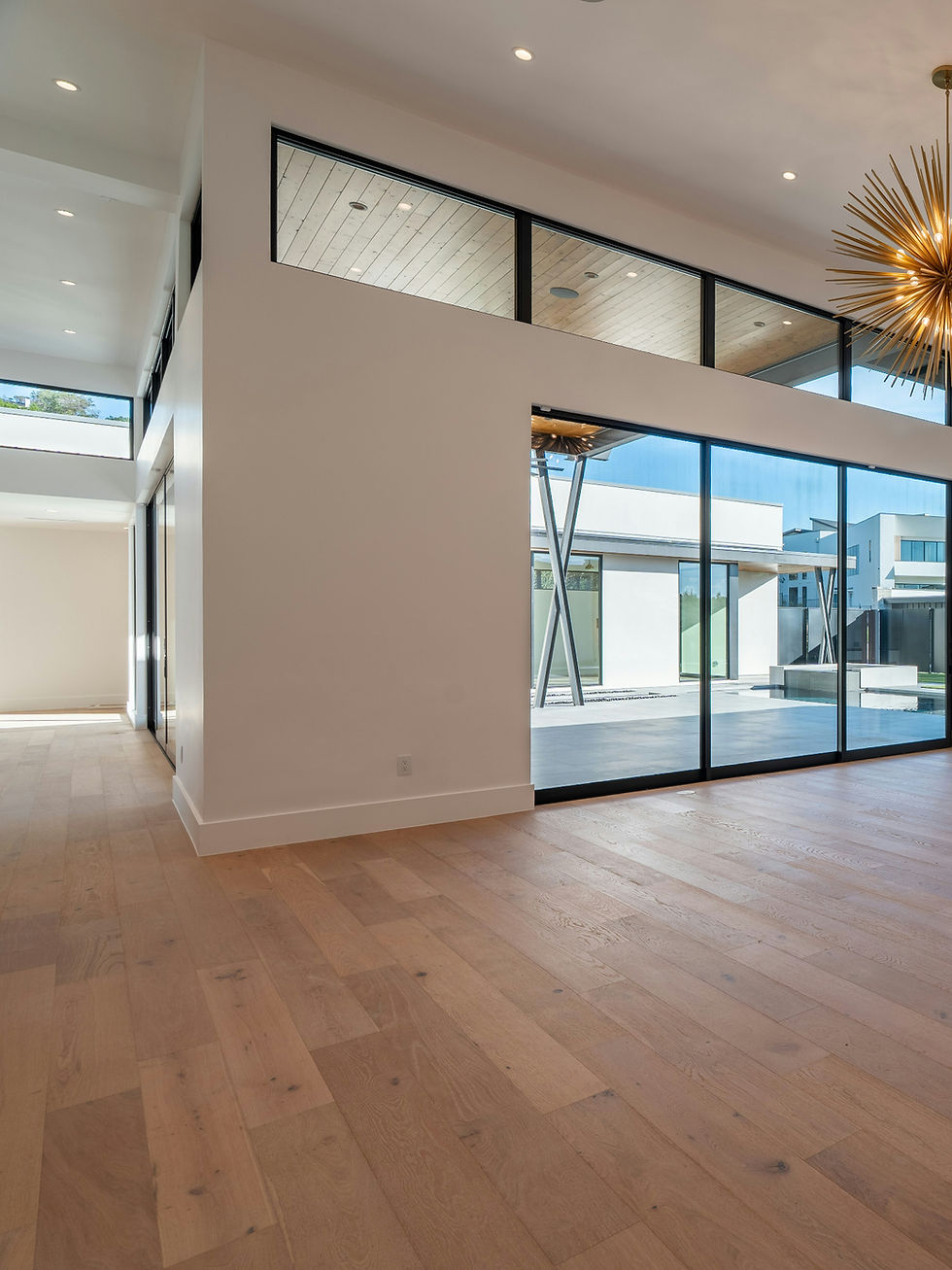
The best Houston homes rarely use one floor everywhere. They match the material to the job each room does.
Entries and mudrooms: porcelain tile, because this is where rain and wet shoes land first.
Kitchens: tile or rigid-core vinyl, both of which shrug off dishwasher leaks and dropped ice.
Living areas: engineered hardwood or vinyl plank for warmth and a softer feel.
Bedrooms: vinyl, engineered wood or carpet, ideally upstairs where the slab is not a factor.
Bathrooms and laundry: tile, with no exceptions.
To keep the house feeling connected, pick one color family and run it through every material. A warm oak-tone vinyl next to a warm oak-look tile reads as one design, not two.
Control the Air, Protect the Floor
Even the right floor needs help from the HVAC. Your AC does some drying, but in spring and fall it may not run long enough to pull humidity down. A dehumidifier fills that gap.
ENERGY STAR suggests keeping a home between 30% and 50% relative humidity. Its certified dehumidifiers also use about 20% less energy than standard models, which matters when a unit runs for months.
Plan for water from outside as well. Houston knows what a big storm can do. During Hurricane Harvey, the National Weather Service reported that Harris County flood officials estimated nearly 136,000 structures were flooded. If your home sits in a flood-prone area, a ground floor of tile over concrete is far easier to clean and save than wood or carpet.
Frequently Asked Questions
Is hardwood a bad idea in Houston?
Not always. Engineered hardwood performs well when humidity is controlled. Solid hardwood on a ground-floor slab is the risky version.
Is luxury vinyl really waterproof?
The planks are, the room is not. Water can still get under the edges and sit on the slab. Proper perimeter sealing and a moisture barrier still matter.
How long should new flooring acclimate?
Follow the maker's instructions. Wood products often need a few days in the conditioned room. Many rigid vinyl products need less.
What is the most humidity-proof floor overall?
Porcelain tile. It does not absorb meaningful moisture and holds up to both humidity and standing water.
Final Verdict
Houston humidity is not a reason to give up on beautiful floors. It is a reason to be specific. Use porcelain where water lands, vinyl or engineered wood where you relax, and save the delicate materials for upstairs.
Then protect the choice with a tested slab, a good barrier and a home kept under 50 percent humidity. Do that, and your floor will still look like the design you planned long after the next muggy summer.


Comments