


Color Palette For Home Ideas That Make Your Rooms Finally Feel Connected

A color palette for home isn’t just about picking a few colors you like and repeating them until the house looks “coordinated.” That’s how you end up with rooms that technically match, but still feel unrelated the moment you walk from one space to the next.
The real goal is connection. You want each room to have its own identity, but still feel like it belongs to the same home. And if you’ve ever stood in a doorway thinking, why does this room suddenly look wrong from here, that’s a palette problem, not a furniture problem.
In this guide, we’re sharing color palette for home ideas we actually use to create flow from room to room. You’ll get practical palette formulas, ways to choose a starting point, and the fixes we lean on when a home feels visually disconnected.
At A Glance
-Choose a “through-line neutral” that appears in every space
-Pick 1–2 repeating materials that act like a color
-Use a consistent undertone direction so rooms don’t clash
-Create one accent color that evolves, not repeats exactly
-Build contrast with finish and texture, not random new colors
-Use sightlines to decide what needs to relate
-Keep ceilings, trim, and metals on a tight plan
1. Color Palette For Home: Start With a Through-Line Neutral

If rooms don’t feel connected, it’s usually because there’s no shared base. A through-line neutral is the color that quietly shows up everywhere, even if it’s not the star of the room.
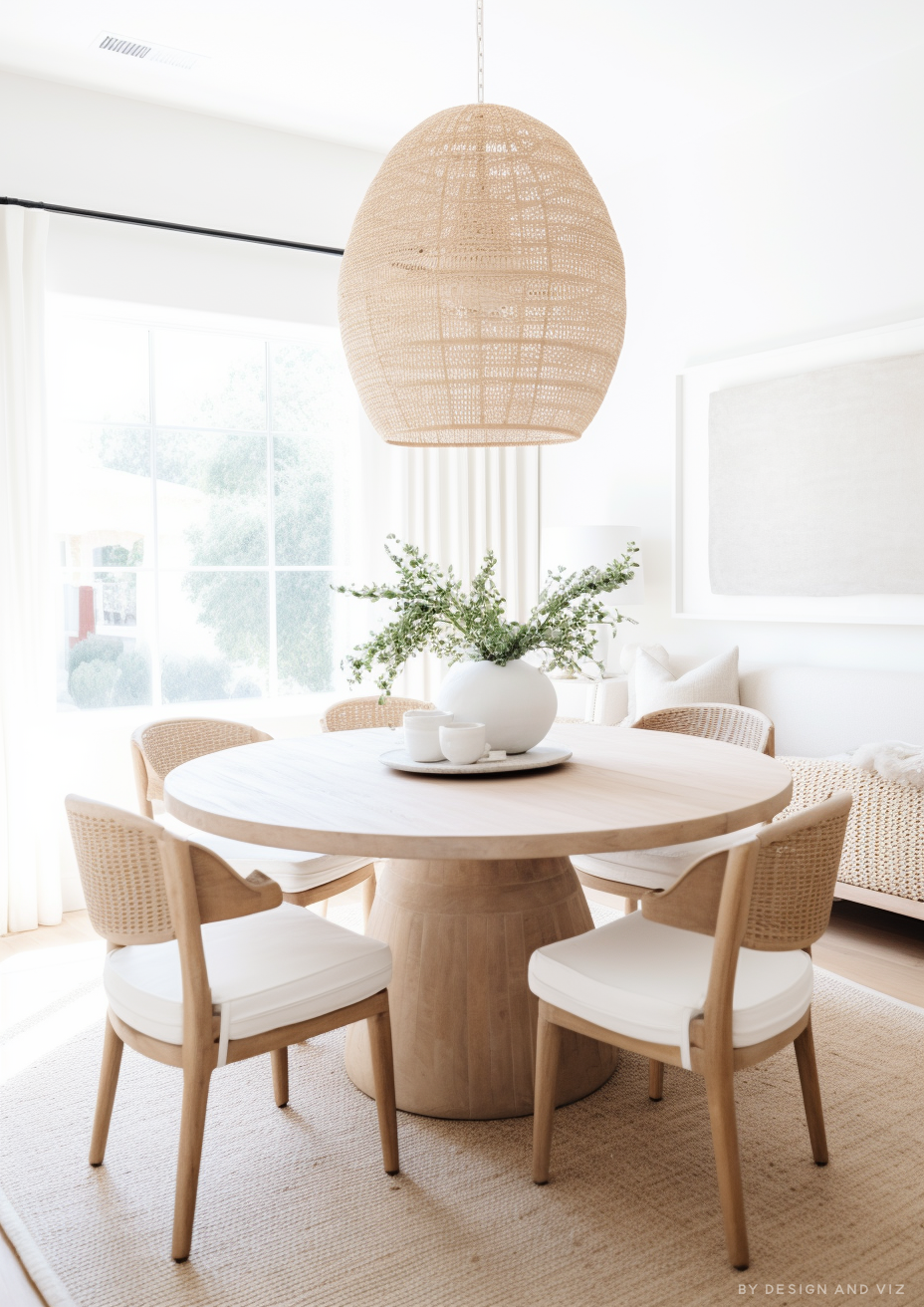
This is not the same as painting every wall the same off-white. It can be your trim color, your consistent wall neutral, or even a recurring material tone like light oak. What matters is that it repeats enough to act as a visual anchor.
If you’re stuck, start by choosing one neutral that works in the “hardest” lighting area of your home, then let the rest of the palette build out from there.
Designer Tip: Choose your through-line neutral based on undertone first, then brightness second.
2. Color Palette For Home: Pick One Undertone Direction and Commit

Most “why does this room look wrong next to that room” moments are undertone clashes. A neutral can be beige, but it might lean pink, yellow, green, or gray. Put two different undertone families next to each other in an open-plan sightline and the mismatch becomes obvious.
Pick an undertone direction for your home and keep it consistent:
Warm undertones that lean creamy, sandy, or golden
Cooler undertones that lean stone, gray, or blue-based
Balanced undertones that sit in the middle without tipping too hard
You can still use contrast and depth, but it will feel intentional instead of accidental.
Designer Tip: Compare neutrals against a clean sheet of white paper to spot hidden undertones.
3. Color Palette For Home: Build the Palette Around One “Proof” Piece

When clients feel overwhelmed, we look for a proof piece: something you already love that clearly signals your palette direction. It could be a rug, a piece of art, a fabric, or even a backsplash tile.
This piece does two jobs. First, it gives you your core colors. Second, it limits your choices so you don’t drift into “this is pretty” decisions that don’t relate to anything else.
If your proof piece has five colors, you don’t need five paint colors. You need a system: one base, one supporting tone, and one accent that repeats in small ways across the home.
Designer Tip: Let your proof piece choose your accents, but let your architecture choose your neutrals.
Let’s Map Out Your Space Together
If you're planning a makeover and want a designer’s eye on how stick on tiles could work in your home, we’d love to help you visualise the transformation. Book a free 30-minute consultation and let’s sketch out a layout that feels tailored to your space.
4. Color Palette For Home: Use Sightlines to Decide What Must Match

A color palette for home doesn’t have to be uniform everywhere, but it does need to behave well from the viewpoints that matter: hallway-to-living-room, kitchen-to-dining, stairs-to-landing.
Stand in your key transitions and notice what you see at once. Those rooms must share something. It can be a repeated neutral, a shared metal finish, a recurring wood tone, or a repeating accent family.
Rooms that don’t share a sightline can be allowed to drift a little more, as long as the home has an overall logic.
Designer Tip: If you can see two rooms at once, treat them like one composition.
5. Color Palette For Home: Repeat Materials Like They’re Colors

One of the easiest ways to make a home feel connected is to repeat materials as if they’re part of the palette. Wood tone, stone pattern, metal finish, and even upholstery texture all read like color.
If you keep changing wood tones from room to room, the home starts to feel visually noisy. If you repeat one main wood tone and one supporting tone, the house feels calmer without requiring every room to match.
This is especially helpful if you want more color in the home but don’t want walls doing all the work.
Designer Tip: Choose one dominant wood tone and one secondary wood tone, then stop there.
6. Color Palette For Home: Let Your Accent Color Evolve Instead of Copying It

Repeating the same accent color in every room can look forced. The better approach is evolution: the same color family, used at different depths or in different materials.
For example, if you love green, you might use:
a muted green on cabinetry
a deeper green in a rug pattern
a green-tinted neutral on a bedroom wall
green through plants and art rather than paint
It stays cohesive because the family is consistent, but it doesn’t feel staged.
Designer Tip: Repeat the color family, not the exact shade.
Your Renovation, Simplified
If you’re diving into a big home update, our Ultimate Renovation Planner can make the entire process far easier. From material planning to budgeting, it’s designed to keep your project organised while
helping you visualise every detail. Explore the planner and plan your makeover with clarity.
7. Color Palette For Home: Use a Simple Ratio for Every Room

A palette feels intentional when it has hierarchy. One practical method is to use a simple ratio so you don’t over-accent every space.
A common approach is:
one main neutral or base tone
one supporting mid-tone
one accent used in smaller doses
This helps rooms feel related because the structure is the same, even if the colors change.
Designer Tip: If everything is an accent, nothing is an accent.
8. Color Palette For Home: Keep Trim and Ceilings on a Plan

Trim and ceilings are the “quiet connectors” people forget. When they change randomly, you lose continuity instantly.
You don’t have to keep every trim the same shade, but you do need a strategy: either one trim color across the home, or a tight family of trim colors that shift only for clear reasons (like a historic room or a dramatic contrast moment).
Same goes for ceilings. If you’re changing ceiling color from room to room, it should be intentional, not accidental.
Designer Tip: Decide your trim and ceiling approach before you choose accent colors.
9. Color Palette For Home: Control Contrast So Rooms Don’t Compete

Disconnected homes often have contrast problems: one room is high contrast, the next is low contrast, then suddenly another has a dark ceiling and bold walls. Individually, each room can look good. Together, they fight.
Contrast is not just light vs dark. It’s also pattern scale, metal shine, and texture. You want contrast levels to feel like they belong to the same household.
Designer Tip: Match contrast levels across connected spaces, not just colors.
10. Color Palette For Home: Fix a “Random” Home by Editing, Not Adding

When a home feels random, most people add more color to “fix” it. Usually the fix is editing: removing the one or two elements that don’t belong to the palette logic.
That might be a rug with undertones that clash, a too-cool gray wall next to warm oak floors, or a bright accent that appears once and never again.
Connection often comes from subtraction.
Designer Tip: If a color appears only once in the whole home, it will look accidental.
Conclusion
A color palette for home that feels connected isn’t created by forcing every room to match. It’s created through a few consistent decisions repeated with intention: a through-line neutral, one undertone direction, a controlled accent family, and materials that show up again and again.
When you build your palette around sightlines and real-life flow, the home starts to make sense visually. Rooms can still have personality, but they stop feeling like separate projects. And that’s when a home starts to feel finished, not just decorated.
FAQ: Color Palette For Home
How do I choose a Color Palette For Home if I’m starting from scratch?
Start with one proof piece you love, then pull a base neutral, a supporting tone, and one accent family from it. Keep undertones consistent across the home.
How many colors should be in a Color Palette For Home?
A practical home palette usually has one through-line neutral, one to two supporting tones, and one accent family that evolves across rooms.
Why do my rooms look disconnected even if the colors “match”?
Undertones or contrast levels may be fighting. Two beiges can clash if one leans pink and the other leans green, especially in connected sightlines.
Can I use different wall colors in every room and still stay cohesive?
Yes, if you keep a consistent undertone direction, repeat materials and metals, and make sure connected rooms share at least one element.
Start Your Dream Home Transformation
Our online design packages were created to make the entire process smoother, clearer, and far more enjoyable — no stress, no second-guessing. Whether you’re refreshing one room or reimagining your whole home, we guide you every step of the way with layouts, visuals, and a fully personalised design plan.
See our interior and exterior design packages to get started.
Author Bio
Beril Yilmaz is the founder of BY Design And Viz, an online interior and exterior design studio specialising in clear layouts, thoughtful architectural details, and design decisions that support how people actually live. With a background in architecture and a practical design approach, her work focuses on creating homes that feel considered, functional, and intentionally designed.


Comments