


Pale Oak vs Sea Pearl: The Benjamin Moore Neutral Comparison You Need to Read

Updated: Jul 29
Pale Oak and Sea Pearl sit next to each other in the Benjamin Moore Off-White collection -- OC-20 and OC-19 -- and on a paint chip in a shop they look deceptively similar: both are soft, mid-depth neutrals that sit between white and a proper color. On a wall they behave completely differently, and choosing the wrong one for your room's light and style can be genuinely costly.
This guide covers exactly how Pale Oak and Sea Pearl differ in undertone, temperature, and room performance -- with a clear verdict on which one suits which situation and why.

Quick Reference - Pale Oak vs Sea Pearl
| Pale Oak OC-20 | Sea Pearl OC-19 |
Brand | Benjamin Moore | Benjamin Moore |
LRV | ~69 | ~67 |
Undertone | Warm greige -- beige, taupe, soft pink | Cool-neutral: green, gray, soft aqua |
Temperature | Warm | Cool-leaning, can feel quite green |
North-facing rooms | Reads warm and settled | Can read noticeably green-gray |
South-facing rooms | Glows warmly, can read pink | At its best -- fresh and serene |
Best trim | White Dove OC-17, Chantilly Lace OC-65 | Chantilly Lace OC-65, Simply White OC-117 |
Best for | Traditional, transitional, organic modern | Coastal, spa-like, contemporary |
Verdict | Warmer, more versatile, safer choice | More distinctive, situation-specific |
What Is Pale Oak?

Pale Oak OC-20 is one of Benjamin Moore's most consistently popular neutrals -- a warm greige with an LRV of approximately 69 that sits in the soft middle ground between beige, taupe, and the lightest warm grays. Its defining quality is warmth without being obviously beige -- it reads as a sophisticated, layered neutral that suits traditional, transitional, and organic modern interiors equally well.
Pale Oak's undertone is warm -- a mix of beige, taupe, and a subtle soft pink that becomes more visible in strong south-facing light. This warmth is what makes it so popular: it creates a cosy, grounded atmosphere without the heaviness of a true beige or the chill of a gray. In north-facing rooms it holds its warm character well. In south-facing rooms the soft pink undertone can become more noticeable -- which suits some styles and not others. The full breakdown is in the Pale Oak review.
What Is Sea Pearl?

Sea Pearl OC-19 is Benjamin Moore's cool-toned answer to Pale Oak -- technically a neighbour in the Off-White collection but in character a very different color. Its LRV is approximately 67 -- slightly deeper than Pale Oak -- and its undertone is a distinctive cool mix of green, gray, and a hint of soft aqua. It is more unusual and more situation-specific than Pale Oak, and it has built a loyal following in coastal, spa-like, and contemporary interiors where its cool freshness is an asset rather than a liability.
Sea Pearl's undertone is the most important thing to understand before choosing it. In strong natural light -- particularly south or west-facing -- it reads as a fresh, serene, sophisticated green-gray that feels genuinely beautiful. In north-facing rooms or under artificial light in the evening, the green undertone can become noticeably stronger and the color can shift toward a distinctly green-gray that reads more like a deliberate color choice than a neutral. This is not a problem if it is what you want -- but it is not what many people expect when they select it as a 'neutral'.
For the full standalone review of Sea Pearl - undertones, LRV, light behaviour by orientation, best rooms, trim colours, and an honest verdict on who this colour is and is not right for - the Benjamin Moore Sea Pearl review covers everything you need to know before committing.
Pale Oak vs Sea Pearl - The Key Differences

Undertone and Temperature
This is the fundamental difference between the two colors and it determines everything else. Pale Oak is warm -- its beige-taupe-soft pink undertone reads as settled, grounded, and inviting in most light conditions. Sea Pearl is cool -- its green-gray-aqua undertone reads as fresh, serene, and distinctive in good light but can feel cold or strongly colored in poor light. Choosing between them is essentially a decision about whether you want warmth or cool freshness as the baseline character of your room.
Light Sensitivity
Sea Pearl is significantly more light-sensitive than Pale Oak -- the cool undertone shifts more dramatically between good and poor light conditions than Pale Oak's warm undertone does. Pale Oak in a north-facing room reads as a soft warm neutral; Sea Pearl in a north-facing room can read as a noticeably green-gray color. This makes Pale Oak the safer choice for rooms with mixed or limited natural light, and Sea Pearl a more deliberate choice that should be tested carefully in the specific room before committing.
Versatility
Pale Oak is the more versatile of the two across different interior styles and room orientations. Its warm greige character works in traditional homes with crown moulding and hardwood floors as naturally as it does in contemporary spaces with clean lines and minimal furniture. Sea Pearl's cool-green character is more style-specific -- it suits coastal, spa-like, and certain contemporary interiors beautifully, but can feel out of place in traditional or warm-palette interiors.
Depth
Pale Oak at LRV ~69 and Sea Pearl at LRV ~67 are very close in depth -- Sea Pearl is fractionally deeper but the difference is small. In terms of how much light a room loses by going with either color over a brighter neutral, both sit in the same range: soft enough to feel light, deep enough to have genuine character on the wall.
Need help choosing the right neutral for your room? Book a color consultation here -- bydesignandviz.com/book-online |
Pale Oak vs Sea Pearl - Room by Room
Living Rooms
Pale Oak suits the widest range of living rooms -- its warm greige character works alongside warm wood floors, stone fireplaces, warm-toned furniture, and both traditional and contemporary fittings. Sea Pearl suits living rooms with a coastal or contemporary brief, good natural light, and a cool-palette furniture and material selection. Sea Pearl in a living room with warm wood floors and traditional furniture can create an uncomfortable clash between the cool wall color and the warm surroundings.
Bedrooms

Both work well in bedrooms but for completely different atmospheres. Pale Oak creates a warm, cosy, enveloping bedroom -- the kind that feels settled and restful regardless of the time of day or season. Sea Pearl creates a fresh, serene bedroom with a spa-like quality that is particularly beautiful in summer in a south or east-facing room. In a bedroom used for relaxation in the evening under artificial light, Pale Oak is the stronger performer -- Sea Pearl's cool undertone can shift under warm artificial light and feel less serene than it does in natural daylight.
Bathrooms
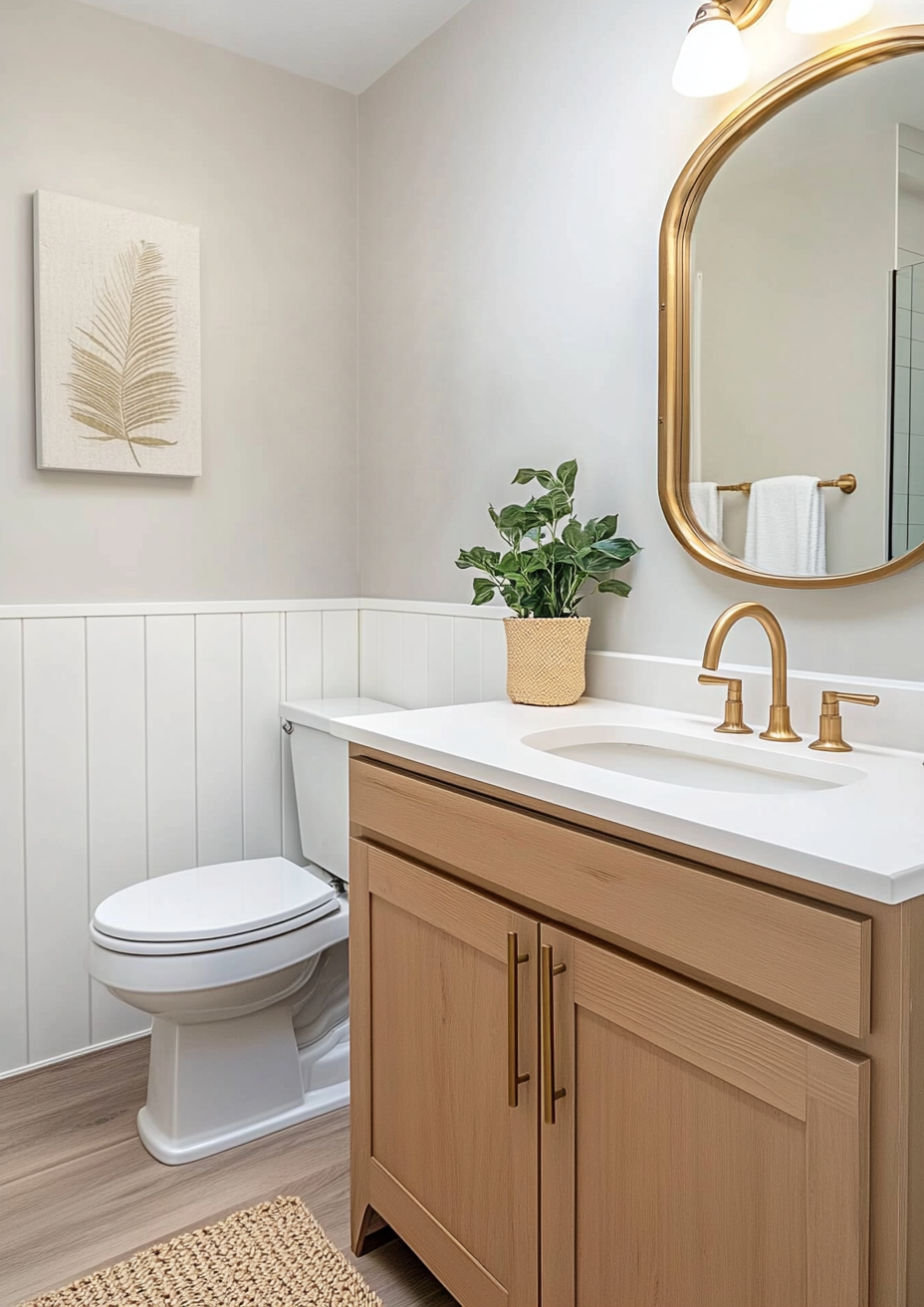
Sea Pearl is arguably at its best in bathrooms -- its cool green-gray-aqua undertone suits the spa-like character of a well-designed bathroom exceptionally well. In a bathroom with white fittings, chrome or brushed nickel fixtures, and good natural light, Sea Pearl creates a genuinely beautiful, sophisticated finish. Pale Oak also works in bathrooms -- particularly those with warm materials like warm stone, warm wood vanities, and brass fixtures -- but it does not have the same distinctive spa quality that Sea Pearl delivers.
Kitchens

Pale Oak is the stronger kitchen choice for most situations -- its warm greige character works alongside the widest range of cabinet colors, countertop materials, and hardware finishes. Sea Pearl on kitchen walls can create a challenging interaction with warm wood cabinet tones -- the cool green-gray of the walls can make warm wood look orange by contrast. Sea Pearl works best in kitchens with cool-toned cabinetry -- white, gray, or sage -- and cool countertop materials like marble or light quartz.
North-Facing Rooms

Pale Oak is the clear winner in north-facing rooms -- its warm undertone holds its character in cool blue-toned light and the room reads as a soft warm neutral throughout the day. Sea Pearl in a north-facing room can read as a noticeably green-gray color under cool light, particularly in the morning and on overcast days. If your room is north-facing and you want a soft neutral rather than a deliberate cool color, Pale Oak is the correct choice.
What to Pair With Pale Oak

Trim: White Dove OC-17 or Chantilly Lace OC-65 -- White Dove shares Pale Oak's warm character and creates a cohesive warm neutral scheme; Chantilly Lace provides a crisper white boundary that makes Pale Oak's warmth read as more deliberate and sophisticated.
Floors: Warm wood in any tone, warm stone, terracotta-influenced tile -- Pale Oak's warm greige character relates naturally to warm floor materials.
Accents: Warm brass, aged bronze, soft terracotta, muted sage green, warm navy -- Pale Oak's warm neutrality suits both warm accent colors and muted cool accents equally.
Style: Traditional, transitional, organic modern, farmhouse, contemporary with warm palette.
For how Pale Oak compares to another popular Benjamin Moore greige in the same depth range, the
Edgecomb Gray vs Pale Oak guide covers that comparison directly.
What to Pair With Sea Pearl

Trim: Chantilly Lace OC-65 or Simply White OC-117 -- the crisp neutrality of both provides a clean boundary for Sea Pearl's cool undertone without adding warmth that fights the color.
Floors: Light cool-toned wood, white oak, light stone, limestone, white marble tile -- cool or neutral floor materials that complement rather than contrast Sea Pearl's cool character.
Accents: Brushed nickel, chrome, soft aqua, pale blue, warm white linen as a contrast -- Sea Pearl suits cool metal finishes and coastal accent colors naturally.
Style: Coastal, spa-like, Scandinavian, contemporary with cool palette.
The Verdict

Choose Pale Oak if: your room has mixed or limited natural light, the interior style is traditional, transitional, or warm-palette contemporary, your floor and furniture materials are warm-toned, or you want a versatile warm neutral that performs consistently across varied conditions.
Choose Sea Pearl if: your room is south or west-facing with strong natural light, the interior style is coastal, spa-like, or contemporary with a cool palette, your floor and fixture materials are cool or neutral-toned, or you specifically want the distinctive fresh green-gray quality that Sea Pearl delivers.
For most rooms in most houses, Pale Oak is the safer and more predictable choice -- its warmth and versatility mean it performs well across a wider range of conditions and styles without demanding specific room orientation or material choices. Sea Pearl is more distinctive and more beautiful in the right situation -- but that situation is specific enough that it always needs to be tested carefully in the actual room before committing. For how Pale Oak compares to a lighter Benjamin Moore greige in the same family, the Pale Oak vs Revere Pewter comparison covers both colors across their full depth range.
Frequently Asked Questions
Is Sea Pearl a green or a gray?
Sea Pearl reads differently depending on room orientation and light conditions -- in strong natural light it reads as a cool green-gray with a hint of aqua; in north-facing rooms or under artificial light it can read more strongly green. It is best described as a cool green-gray neutral rather than either a pure gray or a pure green, but the green character is strong enough that it should always be tested in the specific room before committing.
Can Pale Oak look pink?
In south-facing rooms with strong warm natural light, Pale Oak's soft pink undertone can become more visible -- it reads as a warm, peachy-pink greige rather than a neutral. This is a characteristic of the color in those specific conditions, not a flaw. In most light conditions -- and particularly in north-facing rooms -- the pink is subtle and the color reads as a conventional warm greige.
Which is more popular -- Pale Oak or Sea Pearl?
Pale Oak is significantly more popular in terms of search volume and specified use across different interior styles -- it has a longer track record as a designer staple and works in a broader range of situations. Sea Pearl has a loyal following in coastal and spa-inspired interiors and is growing in popularity alongside the contemporary interest in cool, green-toned neutrals.
Does Sea Pearl look good with white trim?
Yes -- but the white trim matters. A warm white trim like White Dove will create a visible clash with Sea Pearl's cool undertone -- the two colors will fight each other. A cool or neutral white trim like Chantilly Lace or Simply White provides a clean boundary that complements Sea Pearl without introducing warmth that conflicts with the wall color.
Can I use Pale Oak and Sea Pearl in the same house?
You can, but only if the rooms are separated rather than adjacent or open-plan -- the warm undertone of Pale Oak and the cool undertone of Sea Pearl will conflict noticeably if the colors can be seen simultaneously. Used in separate rooms with clear visual boundaries between them, both colors work well as part of a whole-house neutral scheme.
Final Thought
Pale Oak and Sea Pearl are closer in depth than they are in character -- and that is the essential thing to understand before choosing between them. Pale Oak is a warm, versatile greige that performs consistently across conditions. Sea Pearl is a cool, distinctive neutral that is beautiful in the right situation and challenging in the wrong one. Test both with large samples in your specific room before deciding -- the undertone difference between them is significant enough that it will not be fully visible on a small chip in a shop.
Need help choosing the right neutral for your home? See our design packages here -- bydesignandviz.com/#interiordesignpackages |
About the Author
Beril Yilmaz is a qualified architect and interior designer based in the UK. She runs BY Design And Viz, a design platform covering paint color reviews, interior design guidance, and residential



Comments