


Your Guide to Modern Houses: Honest Advice Designers Wish Everyone Knew

If you’ve ever found yourself saving modern houses at midnight like it’s a competitive sport, you’re not alone. The lines are clean, the spaces look intentional, and somehow the whole house feels like it’s working with you, not against you.
But here’s the part no one says out loud: plenty of modern houses photograph brilliantly and live badly. You don’t notice the awkward pinch points, the echo-prone rooms, or the kitchen that looks sleek but functions like a corridor until you’re actually in it.
This guide is for choosing modern houses wisely — or designing one that makes sense for how you live. We’re breaking down what makes a house modern, what makes it work, and the details that separate “nice idea” from “I never want to leave.”
At A Glance
-What makes modern houses modern without the confusing jargon
-How modern houses use layout to improve daily movement
-How modern houses use light so rooms feel brighter without relying on decor
-Which exterior materials read modern and why some combinations fail
-The details inside modern houses that make everything look more premium
-How to borrow modern houses ideas when you’re renovating an older home
1. Modern Houses: What Makes a House Modern Today

Modern houses are often described as “clean” or “minimal,” but that’s not the real definition. Modern houses are defined by priorities: clarity, purpose, and a plan that feels organised. The structure doesn’t hide behind decoration — the proportions, openings, and materials do the heavy lifting.
Historically, modernism pushed back on ornament for ornament’s sake. That mindset still shows up in modern houses today: fewer visual interruptions, fewer competing lines, and details that look deliberate rather than added later. It’s why modern houses can feel calmer to look at — your eye isn’t being pulled in ten directions.
Modern houses also tend to be strong on geometry. Think rectangles, strong horizontal lines, and forms that connect logically. That doesn’t mean flat roofs only. Plenty of modern houses use gables, sheds, or a combination — but they’re simplified and repeated in a way that feels intentional.
Designer Tip: When you’re evaluating modern houses, ignore the furniture and look at the bones: window placement, rooflines, and whether the shapes repeat with purpose.
YOU MAY LIKE

2. Modern Houses: Layout Logic That Makes Daily Life Easier

The layout is where modern houses either succeed or quietly frustrate you for years. The goal isn’t just “open plan.” The goal is flow: the way you move from entrance to kitchen, kitchen to dining, dining to outside, and whether the house supports real routines.
Great modern houses are often organised in zones. Public spaces connect and share light. Private spaces are separated and quieter. Service areas (utility, storage, boot room, pantry) are placed so they don’t interrupt the main experience of the house. It’s practical, but it also changes how the home feels because the messier parts of life have a place to go.
One of the smartest things modern houses do is reduce dead corridors. Instead of long hallways, circulation often happens through the living spaces — but in a way that still protects the furniture layout. That means you’re not constantly walking through the middle of the seating area to get somewhere.
Designer Tip: A modern layout works best when the main walking routes run along the edges of rooms, not directly through the middle of where you want furniture to sit.
3. Modern Houses: Light Strategy That Isn’t Just Bigger Windows

Modern houses are obsessed with light — but not only because it looks good. Light makes spaces feel larger, sharper, and more usable throughout the day. The best modern houses don’t just add glazing everywhere; they place it with intention.
Corner windows, clerestory windows, long horizontal strips, and full-height sliding doors all do different jobs. Corner glazing opens views and reduces visual weight. Clerestory windows bring light deeper into a plan while protecting privacy. Long strips emphasise the architecture and keep walls usable for storage and art.
Also, light is not only about windows. It’s about what the light hits. Pale floors, light-reflective worktops, and simple wall finishes bounce light further than heavy textures do. If a home has large glazing but dark surfaces everywhere, you don’t get the full benefit.
Designer Tip: When planning modern houses, place glazing based on what you want to see and how you want the light to move — not just because “more glass” sounds modern.
Let’s Map Out Your Space Together
If you're planning a makeover and want a designer’s eye on how stick on tiles could work in your home, we’d love to help you visualise the transformation. Book a free 30-minute consultation and let’s sketch out a layout that feels tailored to your space.
4. Modern Houses: Exterior Materials That Look Intentional Together

Modern houses often use fewer materials, but each one has to be chosen carefully. If the palette is too random, the house looks busy. If the palette is too flat, it can feel one-note. The magic is in contrast and restraint — and in using the same material in more than one place so the exterior reads as a single idea.
Here are material combinations that consistently work for modern houses, because they create clear contrast without visual chaos:
-brick with black metal windows and timber accents
-white render with natural timber and standing seam metal
-charred timber with light stone and minimal trim lines
-stone with large glazing and simplified roof details
Modern houses also benefit from consistent detailing. If you’re mixing materials, the junctions matter: where brick meets timber, how the soffit is finished, how the downpipes are handled, and whether window frames align across elevations.
Designer Tip: Pick two main materials and one accent for modern houses — and repeat them with purpose instead of introducing new finishes on every elevation.
5. Modern Houses: Rooflines and Massing That Make the House Feel Designed

People get hung up on whether modern houses “need” a flat roof. They don’t. What modern houses need is disciplined massing: shapes that relate to each other and feel balanced.
A gable can absolutely be modern if it’s simplified, repeated, and paired with large glazing or crisp detailing. A flat roof can look wrong if the proportions are off or if the fascia and gutter lines are bulky. A shed roof can look excellent when it directs light and views, especially in garden-facing extensions.
The best modern houses often break the home into volumes. A lower volume might hold the kitchen and dining. A taller volume might hold a double-height living area. A separate volume might house bedrooms. This makes the house easier to read from the outside and often improves the layout inside.
Designer Tip: When modern houses look “expensive,” it’s often because the volumes are clear and the rooflines align with the internal functions.
6. Modern Houses: Interior Details That Quietly Raise the Whole House

If you want modern houses to feel premium, focus less on statement pieces and more on quiet detailing. These are the choices that don’t scream for attention but make everything look sharper.
Think flush skirting or shadow gaps, simple architraves, clean door styles, and consistent ironmongery. Think aligned grout lines, consistent reveals around windows, and lighting that’s planned with the architecture rather than stuck in wherever there was space.
Modern houses also benefit from visual continuity. If every room has a different floor finish, threshold strips, and door style, the house feels chopped up. Continuity makes the home feel like one story instead of a series of disconnected decisions.
Designer Tip: Choose a small set of repeating details for modern houses — one skirting approach, one door style, one metal finish — and keep them consistent throughout.
7. Modern Houses: Colour and Contrast That Looks Deliberate

Colour in modern houses is rarely about “trendy shades.” It’s about contrast, balance, and what the colour does to the architecture. A crisp palette makes the lines feel cleaner. A tonal palette makes the volumes feel calmer. A dark accent can anchor a space and emphasise structure.
A designer trick in modern houses is to choose one “shadow” colour (often charcoal, deep brown, or black) and use it consistently for window frames, lighting, or hardware. Then the rest of the palette can stay quieter without looking bland.
Inside, modern houses tend to look best when the colour strategy supports the light strategy. If you have strong daylight, you can carry deeper tones without losing clarity. If the light is limited, keep ceilings and upper walls lighter so the space doesn’t flatten.
Designer Tip: In modern houses, repeat one contrasting colour in at least three places so it reads as a deliberate choice, not a one-off.
8. Modern Houses: Kitchen Design That Matches the Architecture

The kitchen is often the “make or break” moment in modern houses. It’s usually visible from multiple angles, which means it needs to look clean from the living area and function properly from the cooking side.
A modern kitchen usually performs best with a limited set of materials and a strong geometry: flat fronts, consistent gaps, minimal handles, and storage that goes all the way up where possible. Islands matter too — not just aesthetically, but for traffic flow.
Here are the decisions that keep kitchens in modern houses looking intentional:
-align the island to window lines or ceiling features
-use one worktop material throughout rather than mixing three
-plan appliance placement so tall units don’t interrupt the main sightline
-keep open shelving minimal and purposeful
Designer Tip: In modern houses, the kitchen should look like part of the architecture — not a separate “fitted kitchen” dropped into the space.
Your Renovation, Simplified
If you’re diving into a big home update, our Ultimate Renovation Planner can make the entire process far easier. From material planning to budgeting, it’s designed to keep your project organised while
helping you visualise every detail. Explore the planner and plan your makeover with clarity.
9. Modern Houses: Bathrooms That Feel Architectural, Not Decorative

Bathrooms in modern houses look best when the layout is organised and the finishes are restrained. That doesn’t mean boring. It means the design relies on proportion, lighting, and material choices rather than decoration.
Walk-in showers with a single pane of glass, wall-mounted vanities, concealed cisterns, and large-format tiles reduce visual clutter. Good lighting matters more than people think: layered lighting (mirror, ceiling, and shower niche) changes how the room performs.
Storage is also key. Modern houses feel sharper when there aren’t bottles and clutter on every ledge. Recessed niches, mirrored cabinets, and full-height tall storage make a bathroom feel designed rather than improvised.
Designer Tip: If you want modern houses bathrooms to look higher-end, prioritise fewer materials and better lighting rather than adding extra features.
10. Modern Houses: Indoor Outdoor Connection That Changes How You Use Space

One reason modern houses are so appealing is how they connect inside and outside. It’s not only about having big doors. It’s about thresholds: the point where the interior becomes the exterior without feeling abrupt.
Courtyards, terraces, and covered zones extend the usable footprint. A sheltered outdoor dining area can make the kitchen feel larger. A slim planted border outside a window can improve the view instantly. Even a small patio can feel like a second room if it’s planned with furniture placement and lighting in mind.
This is also where modern houses often outperform traditional layouts. When the outdoor connection is built into the plan, the house feels more flexible. You can host without everyone piling into one room.
Designer Tip: Design the exterior like another room of the house — with a clear purpose, lighting, and a layout — not as leftover space.
11. Modern Houses: Renovation Moves That Modernise an Older Home
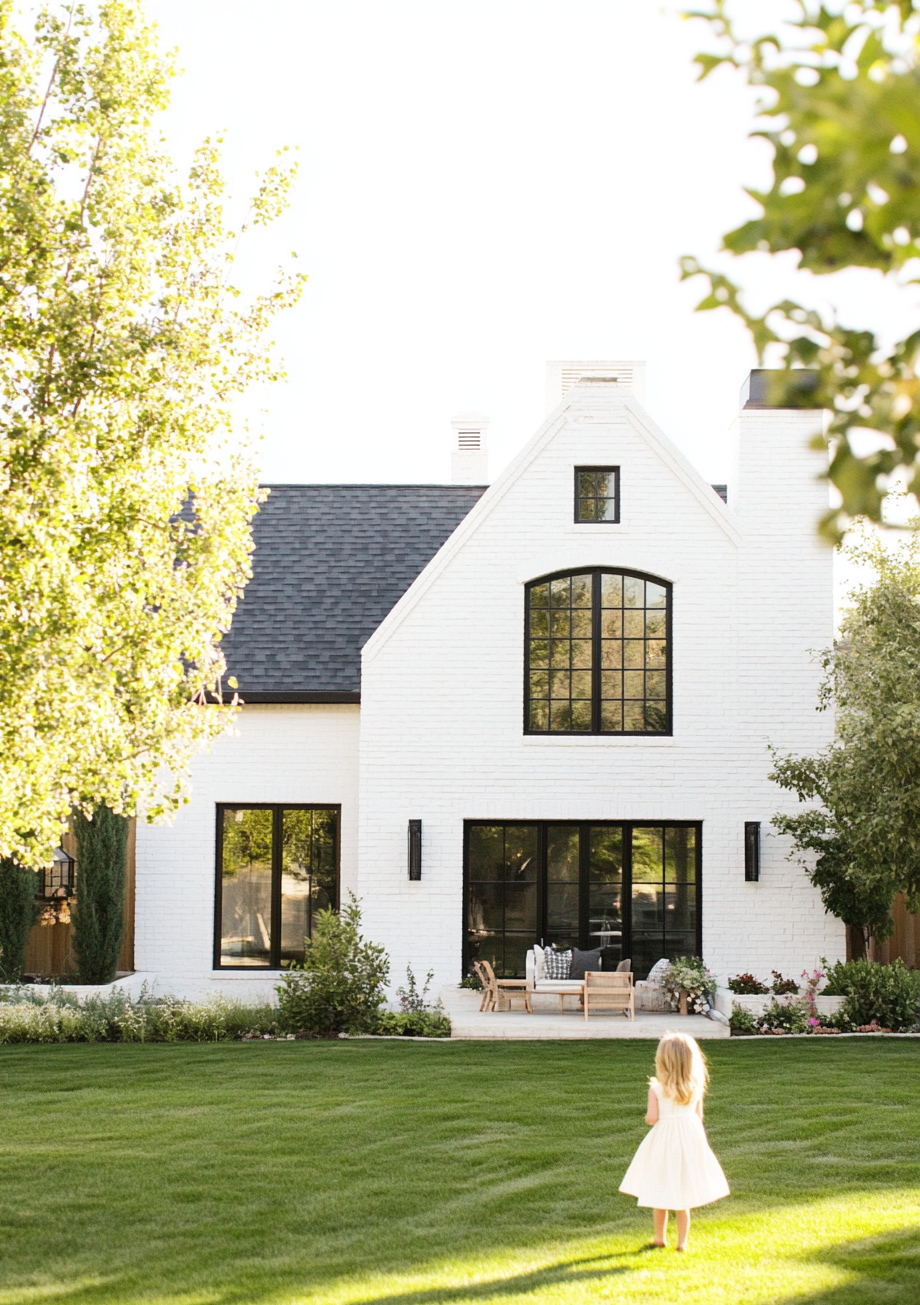
If you love modern houses but you’re renovating a period property, you don’t need to erase the original character to get the modern effect. The goal is to introduce modern logic — clarity, flow, and intentional detailing — while respecting what already works.
These upgrades give the strongest “modern houses” impact without turning your home into something unrecognisable:
-open up sightlines strategically rather than removing every wall
-upgrade glazing and align window proportions where possible
-simplify trims and unify hardware finishes
-create one consistent flooring route through main spaces
Modernisation is also about editing. If every wall has a different finish, every room has a different “theme,” and every light fitting competes for attention, the house won’t feel modern — even if you buy modern furniture.
Designer Tip: The most effective modern houses renovations focus on layout clarity and repeated details before they focus on decor.
Conclusion
Modern houses aren’t defined by one roof shape, one window style, or one exact material palette. The modern effect comes from decisions that feel organised: layout that supports movement, light that’s placed with intention, and details that repeat so the home reads as a single idea.
If you’re designing, buying, or renovating with modern houses in mind, start with the bones: zoning, circulation, glazing, and massing. Then refine with materials and interior details that support the architecture rather than distracting from it. That’s how modern houses stop being a look and start being a better way to live at home.
FAQ: Modern Houses
What makes modern houses different from contemporary houses?
Modern houses are rooted in modernist principles like functional planning and simplified forms, while contemporary houses reflect what’s current now and can borrow from many styles.
Do modern houses have to be open plan?
No. Modern houses often prioritise flow and clarity, but that can include defined rooms when it improves function and furniture layout.
Are modern houses more expensive to build?
Not always. Modern houses can be cost-effective when the design is simple and materials are chosen strategically, but large glazing and bespoke detailing can increase costs.
What exterior materials look best on modern houses?
Brick, render, timber, stone, and metal can all work for modern houses when the palette is restrained and the detailing is consistent.
Can you make a traditional home feel like modern houses without rebuilding?
Yes. Improving sightlines, simplifying finishes, unifying details, and upgrading lighting and glazing can bring modern houses logic into an older home.
Start Your Dream Home Transformation
Our online design packages were created to make the entire process smoother, clearer, and far more enjoyable — no stress, no second-guessing. Whether you’re refreshing one room or reimagining your whole home, we guide you every step of the way with layouts, visuals, and a fully personalised design plan.
See our interior and exterior design packages to get started.
Author Bio
Beril Yilmaz is the founder of BY Design And Viz, an online interior and exterior design studio specialising in clear layouts, thoughtful architectural details, and design decisions that support how people actually live. With a background in architecture and a practical design approach, her work focuses on creating homes that feel considered, functional, and intentionally designed.


Comments