


Natural Linen vs Chantilly Lace: The Comparison That Actually Helps You Decide

These two rarely compete for the same wall, and that is precisely why they get paired so often. Sherwin-Williams Natural Linen and Benjamin Moore Chantilly Lace sit at opposite ends of the reflectance scale - one a warm, grounded neutral, the other one of the brightest true whites either brand makes. Put them on a sample board together and the relationship is obvious before you even discuss undertone.
I have specified Natural Linen on walls with Chantilly Lace on trim more times than I can count, and I have also seen homeowners try to choose between them as if they were rivals. They are not rivals. They do different jobs in a room, and understanding that difference is the entire decision.
Here is how I read each one, where each performs, and why the 25-point LRV gap between them matters more than any undertone comparison chart.

At a Glance
| Natural Linen | Chantilly Lace |
Brand | Sherwin-Williams | Benjamin Moore |
LRV | 68 - a mid-tone warm neutral, not a near-white | 93.42 - one of the highest LRVs in either brand's white range |
Colour category | Warm greige-beige - grounded and quiet, built to anchor a room rather than brighten it | True bright white - the near-absence of undertone is the entire point |
Undertones | Soft warm beige with a faint green-gray undercurrent - never pink, never yellow, settles differently depending on adjacent materials | Minimal - a whisper of cool gray-blue that only shows under artificial light or beside a warmer white |
Character | A wall color with weight and presence; reads as considered neutral background, not as an accent or a near-white | A backdrop and trim white built to maximize light, not a wall color chosen for warmth or character |
North-facing | Reliable - the muted undertone stays warm without tipping gray or cold in flat light | Can read cool and slightly flat without warm materials or layered lighting to offset it |
South-facing | Excellent - warms further and reads richer without turning yellow or beige-heavy | Excellent - the high LRV bounces strong daylight cleanly without glare or yellowing |
Open-plan | Strong - its mid-range LRV holds consistent depth across zones with mixed light | Strong on trim and ceiling; as a wall color it can feel clinical across large uninterrupted runs |
On walls | Full wall-color commitment - a grounded neutral backdrop that gives a room warmth without brightness | Best used sparingly as a full wall color - more effective as trim, ceiling, and millwork white |
On cabinets | Works well in kitchens wanting a warm, furniture-like lower cabinet, less common on uppers where more light is needed | Excellent - the brightness reads as crisp and considered against nearly any countertop or hardware finish |
Use together? | Yes - Natural Linen on walls with Chantilly Lace on trim and ceiling is a classic high-contrast pairing | Yes - Chantilly Lace on trim against Natural Linen walls is the pairing it is built for |
Trim for each | Chantilly Lace OC-65 for crisp definition, or Alabaster SW 7008 for a softer, warmer step up | Rarely needs its own trim color - it typically is the trim |
Style fit | Transitional, warm modern, organic minimalism - rooms that want a quiet neutral with real depth | Modern, coastal, Scandinavian-minimal - rooms built around maximum light and crisp definition |
Architect's pick | When the room needs a wall color that reads as intentional and grounded, not an off-white searching for brightness | When the brief calls for maximum brightness and sharp definition against a warmer wall color |
Sherwin-Williams Natural Linen SW 9109 - What It Really Looks Like

Natural Linen has an LRV of 68, which places it firmly in the mid-tone neutral range - warm enough to anchor a room, dark enough that it never reads as a near-white. The undertone is a soft warm beige with a faint green-gray undercurrent that keeps it from tipping pink or yellow. Against materials with a similar warm base, it settles quietly. Natural Linen vs Accessible Beige guide covers exactly how it compares against the closest warm beige in the range, where the undertone gap does most of the work.
It does not hedge toward brightness. Where a lot of popular greiges try to split the difference between wall color and near-white, Natural Linen commits to being a mid-tone neutral. In warm, south-facing light it deepens further and reads genuinely rich. In flat, north-facing light it holds its warmth better than most beiges at this depth, because the green-gray undercurrent keeps it from swinging yellow.
Benjamin Moore Chantilly Lace OC-65 - What It Really Looks Like

Chantilly Lace has an LRV of 93.42, one of the highest reflectance values Benjamin Moore makes. There is almost no undertone to discuss - a faint cool gray-blue whisper is the only thing that shows, and only under artificial light or beside a warmer white. For the comparison of Chantilly Lace against a warmer Sherwin-Williams cream, where the undertone conversation actually matters, the Chantilly Lace vs Creamy guide covers that decision in full.
There is nothing warm about it, and that is deliberate. It is built to maximize light, not to add character. On trim and millwork this is exactly what a room needs. As a full wall color without a warmer material nearby, it can read flat and slightly clinical, particularly under cool artificial lighting or in a north-facing room with limited daylight.
The Real Difference Between Natural Linen and Chantilly Lace

The simplest way to explain it: Natural Linen is a wall color. Chantilly Lace is a backdrop white. They are not competing for the same job, and treating them as rivals misreads what each one is built to do.
The 25-point LRV gap is the whole story here. Natural Linen sits at 68, comfortably in the mid-tone neutral range where a wall color needs to be to read as warm and grounded. Chantilly Lace sits at 93.42, close to the ceiling of what any paint can reflect. That is not a subtle difference you need a light box to detect - it is visible from across the room.
This is why the two are so often used together rather than compared against each other. Natural Linen gives a room its warmth and weight on the walls; Chantilly Lace picks up the trim, ceiling, and millwork and pushes light back into the space. For how Natural Linen performs against a closer competitor - a warm beige at a similar LRV where the undertone comparison actually matters - the Shoji White vs Natural Linen guide breaks down that closer-LRV decision, which this post does not need to make.
Not sure which one works for your room? A colour consultation is included in all our design packages - book directly here. |
When to Choose Natural Linen

Choose Natural Linen when the room needs a grounded, warm neutral with real depth on the walls. This is the right call in living rooms and bedrooms where the brief is warmth and weight rather than brightness, in open-plan spaces that need a consistent mid-tone anchor across zones, and in any room where the surrounding materials - wood floors, warm stone, linen upholstery - are already warm and benefit from a wall color that matches rather than fights them.
Avoid it in rooms that are already dim and need more reflected light, and avoid it as a trim color against its own walls unless the effect has been tested first - the tonal contrast is subtle rather than crisp.
When to Choose Chantilly Lace

Choose Chantilly Lace when the brief calls for maximum brightness and crisp definition on trim, ceilings, or millwork. It is the stronger choice in kitchens and bathrooms where a clean white against stone or tile is the goal, in rooms with strong natural light that can carry a bright wall color without it reading sterile, and anywhere the design intent is to push reflected light back into the space.
Avoid it as a full wall color in north-facing or artificially lit rooms without a warm neutral nearby to offset it - on its own in that light it can feel cold rather than crisp.
How the Pairings Differ

For Natural Linen on walls, Chantilly Lace on trim is the highest-contrast, most classic pairing - the jump from a mid-tone warm neutral to a near-white ceiling and casing gives a room clean definition without losing warmth. Alabaster is the softer alternative where less contrast is wanted.
For Chantilly Lace on walls, it performs best in smaller doses or in rooms already flooded with natural light - a full room of Chantilly Lace with no warm neutral to balance it can feel sterile, particularly in spaces with cool artificial lighting.
Natural Linen works with both warm and mid-tone flooring - it is forgiving with oak, walnut, and warm-toned stone. Chantilly Lace as a trim color pairs cleanly with almost any floor, since its job is to frame rather than compete.
Natural Linen suits aged brass, matte black, and warm brushed gold. Chantilly Lace is more neutral still and works equally well with brushed nickel, chrome, or black - its job is to stay out of the way of the finishes around it.
Architect's Verdict - Natural Linen or Chantilly Lace?
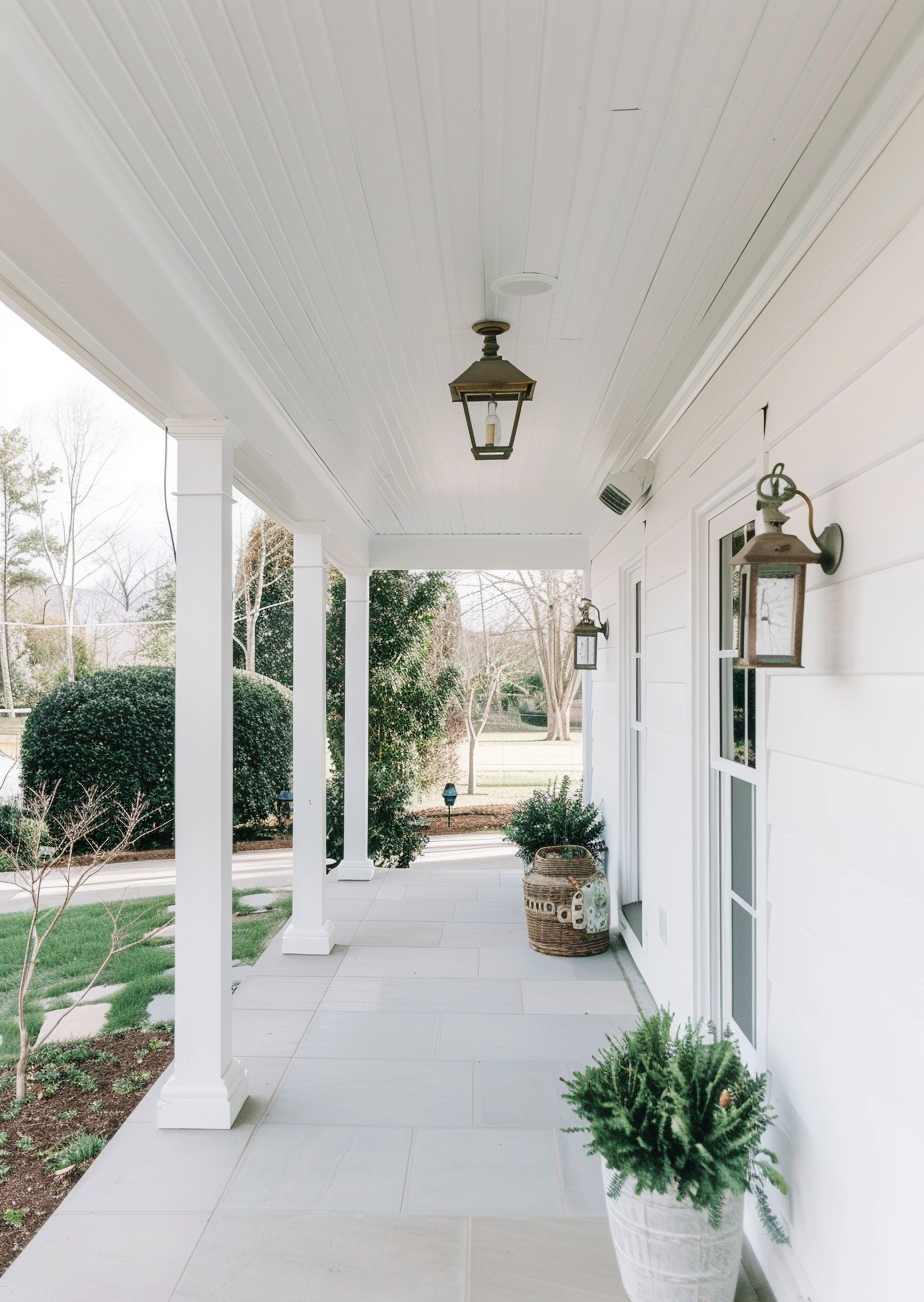
For most rooms, this is not really a choice between two colors - it is a decision about which job each one should do.
Choose Natural Linen for the walls whenever the brief calls for a grounded, warm neutral with enough depth to anchor furniture and materials around it. It is the stronger choice wherever a room needs presence rather than brightness.
Choose Chantilly Lace for trim, ceilings, and millwork whenever maximum light and crisp definition matter - and reserve it as a full wall color only for rooms that already have strong, warm natural light to keep it from reading flat.
The test I always use on this pairing: paint a large sample of Natural Linen on the wall and a strip of Chantilly Lace on the adjacent trim, then check it in a north-facing room in overcast afternoon light - the worst case for both. If the Chantilly Lace trim still reads crisp rather than gray, and the Natural Linen still reads warm rather than flat, the pairing passes. If either goes muddy or cold in that light, adjust your artificial lighting temperature before you repaint.
Frequently Asked Questions

Is Natural Linen warmer than Chantilly Lace?
Yes, significantly. Natural Linen has a warm beige base with a soft green-gray undercurrent, while Chantilly Lace carries only the faintest cool gray-blue whisper. They are not close on the undertone scale, which is part of why they pair so well rather than compete.
Can I use Natural Linen and Chantilly Lace in the same room?
Yes - it is one of the most reliable high-contrast pairings available. Natural Linen on walls with Chantilly Lace on trim, ceiling, and millwork gives a room warmth and definition at the same time. The large LRV gap is what makes the contrast read as intentional rather than accidental.
Which is better for a small room?
Chantilly Lace, if the goal is to maximize perceived light. Its LRV of 93.42 bounces available light more effectively than any mid-tone neutral can. Natural Linen will make a small room feel warmer and more furnished, but it will not make it feel larger.
Does Chantilly Lace look stark on its own?
It can, particularly in north-facing rooms or under cool artificial lighting. Without a warmer material or color nearby to offset it, large expanses of Chantilly Lace can read clinical rather than crisp. Pairing it with a warm neutral like Natural Linen solves this.
What is the LRV difference between Natural Linen and Chantilly Lace?
Natural Linen has an LRV of approximately 68 and Chantilly Lace has an LRV of 93.42 - a gap of roughly 25 points. This is a large enough difference that the two rarely compete for the same surface; it is one of the widest LRV gaps covered on this site.
Which is better for trim?
Chantilly Lace, without much competition. Its near-ceiling LRV and minimal undertone are built for the job. Natural Linen on trim against its own walls can work in very warm, tonal schemes, but it needs testing first - the effect is subtle rather than crisp.
Final Thought
Natural Linen and Chantilly Lace are not two versions of the same decision. One is a wall color built for warmth and weight; the other is a near-white built to maximize light and definition. The 25-point LRV gap between them means the real question is rarely which one to choose, but how to use them together.
If your room needs warmth, depth, and a grounded neutral backdrop, Natural Linen is the answer. If your trim, ceiling, or millwork needs to read crisp and bright against that backdrop, Chantilly Lace is the answer. Most well-considered rooms end up using both.
Want a complete colour scheme built around Natural Linen or Chantilly Lace? Our design packages cover full palette selection, finish recommendations, and 3D visualisations - see our packages. |
About the Author
Beril Yilmaz is a qualified architect and interior designer based in the UK. She runs BY Design And Viz, a design platform covering paint colour reviews, interior design guidance, and residential design projects. Beril has specified both Natural Linen and Chantilly Lace across residential projects in the UK and internationally - Natural Linen on walls in transitional and warm-modern living spaces, Chantilly Lace on trim, ceilings, and millwork, most often in the same scheme, with Natural Linen anchoring the walls and Chantilly Lace defining the edges.


Comments