


Pure White vs Shoji White: The Comparison That Actually Helps You Decide

Pure White is a clean, bright white. Shoji White is a warm greige wearing a white's name. That is the whole tension. Ten LRV points and two different undertone logics separate them, and the gap shows the moment either goes on a full wall.
I have used both across residential projects, and I treat them as different tools. Pure White gives a room light and definition. Shoji White gives it depth and softness. Choose the wrong one and the room feels either stark or muddy. That is an expensive mistake to repaint.
This guide covers the undertones, how each behaves in north and south light, where each belongs on walls, cabinets and trim, and the exact test I run before committing. The short version: Pure White for brightness, Shoji White for warmth with weight.

At a Glance
| Pure White | Shoji White |
Brand | Sherwin-Williams | Sherwin-Williams |
LRV | 84 - one of the brightest soft whites in the range; reflects far more light than Shoji White | 74 - a 10-point drop you can see; absorbs more light and reads as a pale tint, not a white |
Colour category | Soft, near-neutral white - clean and bright with only a trace of warmth | Warm greige-white - closer to a pale beige-taupe than to any true white |
Undertones | Faint warm cream, held well back; reads almost neutral in daylight and softens slightly in lamplight | Beige-grey with a soft yellow base; the grey gives it weight and can show as stone-like in cool light |
Character | Crisp, airy and adaptable; sharpens joinery and architectural detail without the chill of a stark white | Cocooning, earthy and low-contrast; softens hard edges and makes a room feel settled rather than bright |
North-facing | Holds up well - stays light and clean, though it settles into a soft warm-grey cast that benefits from warm bulbs | Risky - the grey in the undertone leads, and the color can turn flat and dim without strong artificial light |
South-facing | Bright and fresh; the warm trace becomes a gentle glow, but intense sun can push it close to stark | Excellent - warm light brings out the yellow-beige, so the color glows like pale sand instead of going grey |
Open-plan | Strong - its restraint keeps it consistent from zone to zone, and it bounces light into the deeper areas | Mixed - works if the whole space is warm-toned, but shifts from sunny to shaded zones and can look like two colors |
On walls | Light-maximising backdrop that keeps small or dim rooms open and gives art and furniture a clean ground | Warm, enveloping backdrop that adds quiet depth to large bright rooms but visibly darkens small north-facing ones |
On cabinets | Reliable cabinet white that reads as white in every sheen - suits shaker kitchens with stone, stainless and brass | Reads as a soft greige-cream - beautiful with warm wood and honed stone, but not what clients expect from white cabinets |
Use together? | Yes - Pure White trim against Shoji White walls is the classic pairing, with crisp definition and no harsh contrast | Yes - as the wall color with Pure White trim; Shoji White trim beside Pure White walls looks dull and is not recommended |
Trim for each | Extra White SW 7006 for a subtle lift, or Pure White itself in satin for a tonal, seamless look | Pure White SW 7005 for crisp contrast, Extra White SW 7006 for more, or Alabaster SW 7008 for a softer, warmer edge |
Style fit | Contemporary, Scandinavian, transitional, coastal - any scheme that wants brightness first | Organic modern, Japandi, farmhouse, Mediterranean - schemes built on natural texture |
Architect's pick | When light is the priority: small rooms, north-facing spaces, kitchens, and anywhere you want white to read as white | When mood is the priority: large, sunlit living rooms and bedrooms where you want walls that read like plaster, not paint |
Sherwin-Williams Pure White SW 7005 - What It Really Looks Like
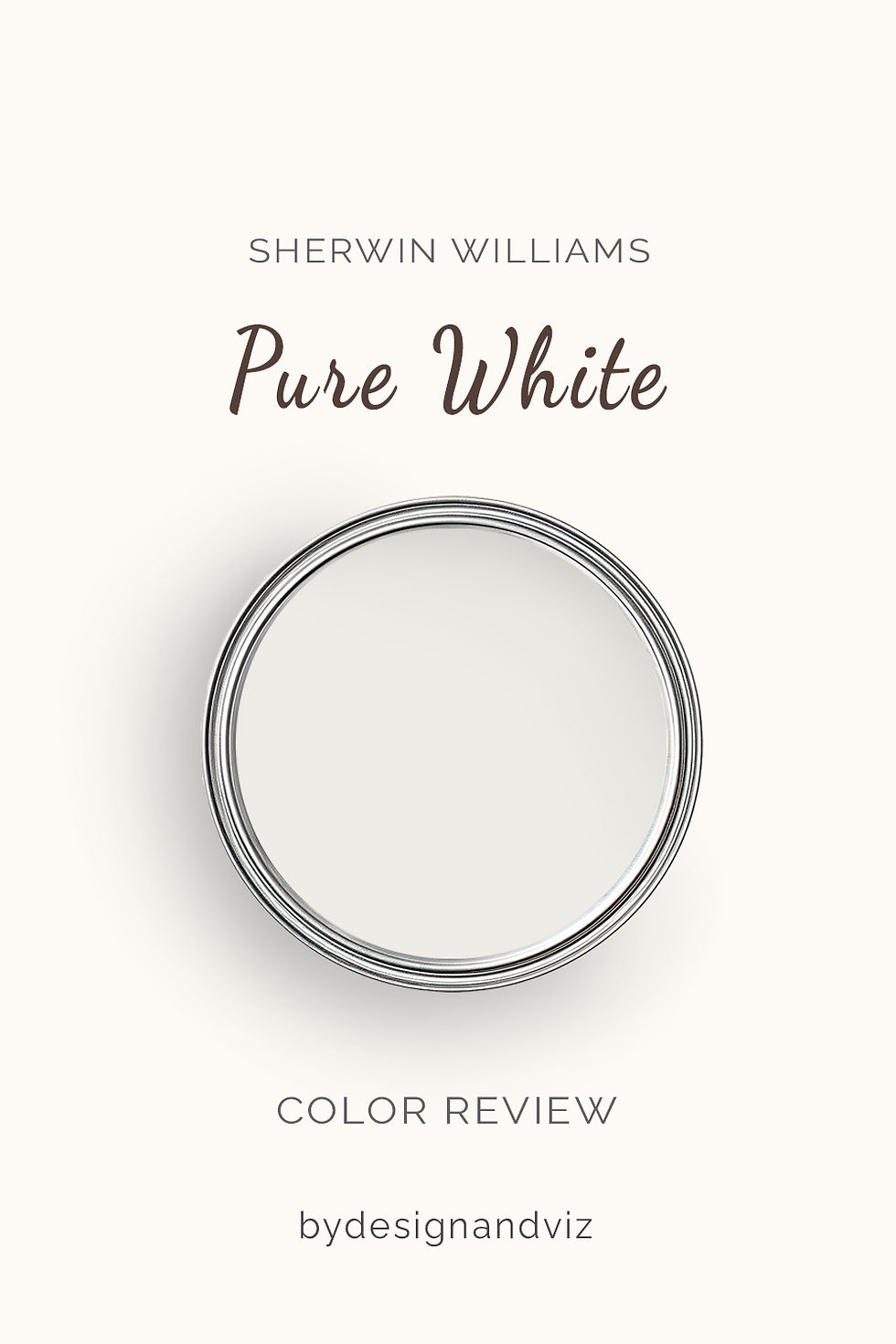
Pure White has an LRV of 84, which puts it firmly in the bright, soft white category. It carries a trace of warmth, not a statement of it. In daylight it reads as a clean white with just enough softness to avoid feeling clinical. There is nothing fussy about it.
It reflects light rather than absorbing it. That makes it the stronger choice for small rooms, dim hallways and anywhere natural light is limited. In lamplight the faint warmth deepens slightly, which stops the room feeling cold at night. In strong direct sun it can tip towards stark, and that is the one thing to watch.
Pure White also has a close, creamier neighbor. To see how much extra warmth is worth the loss of its cleaner finish, the Alabaster vs Pure White guide compares the two side by side in the same light, so you can judge whether your room needs the step up.
Sherwin-Williams Shoji White SW 7042 - What It Really Looks Like

Shoji White has an LRV of 74, which puts it in greige territory despite the name. It is a warm off-white built on a beige-grey base with a soft yellow warmth underneath. Ten points below Pure White, the gap is visible at a glance. It reads as a pale, earthy neutral. Hold it beside a true white and the difference is immediate.
The grey in the undertone gives it weight. In warm, bright light the beige leads and the wall glows like pale sand. In cool or dim light the grey takes over and the color goes flat and stony. It does not hedge. Plan the room's lighting around it, not the other way round.
Shoji White's nearest white neighbor is Alabaster, which is brighter and cleaner. If you are deciding how much grey-beige depth you actually want, the Shoji White vs Alabaster guide shows what you gain and what you lose by stepping up in brightness.
The Real Difference Between Pure White and Shoji White

The simplest way to explain it: Pure White is a white with a hint of warmth. Shoji White is a warm greige that borrows the name. One brightens. The other settles.
The 10-point LRV gap (84 versus 74) is the clearest measurable difference, and it is not subtle. A room in Pure White feels lighter and larger. The same room in Shoji White feels calmer, more enclosed and more textured, especially where light is limited. Numbers aside, the undertone is what you notice first. Pure White is nearly neutral. Shoji White carries a beige-grey body that reads as color.
Pure White trim with Shoji White walls is the pairing I specify most. The brightness step creates clean definition on skirting and door frames without a harsh contrast, and both stay in the same warm family. The reverse fails. Shoji White trim beside Pure White walls looks dull and slightly dirty. If neither suits your scheme, a warm white sitting between them is worth testing, and the Pure White vs Greek Villa guide shows how a warmer white behaves against Pure White and where it overtakes it.
Not sure which one is right for your room? A Color Direction consultation gets you a full custom palette built around your space - book yours here. |
When to Choose Pure White

Choose Pure White when light and a clean, defined finish are the priority. These are the conditions where it is the right answer.
Small rooms, hallways and north-facing spaces where every bit of bounce matters. Kitchens with white shaker cabinets, stone and stainless. Contemporary, Scandinavian and coastal schemes. Ceilings and trim in homes with warmer wall colors. Any room where white should look like white.
Avoid it in large, sun-drenched rooms where it can tip into glare, and in schemes built on earthy, textured materials where it will look sterile.
When to Choose Shoji White
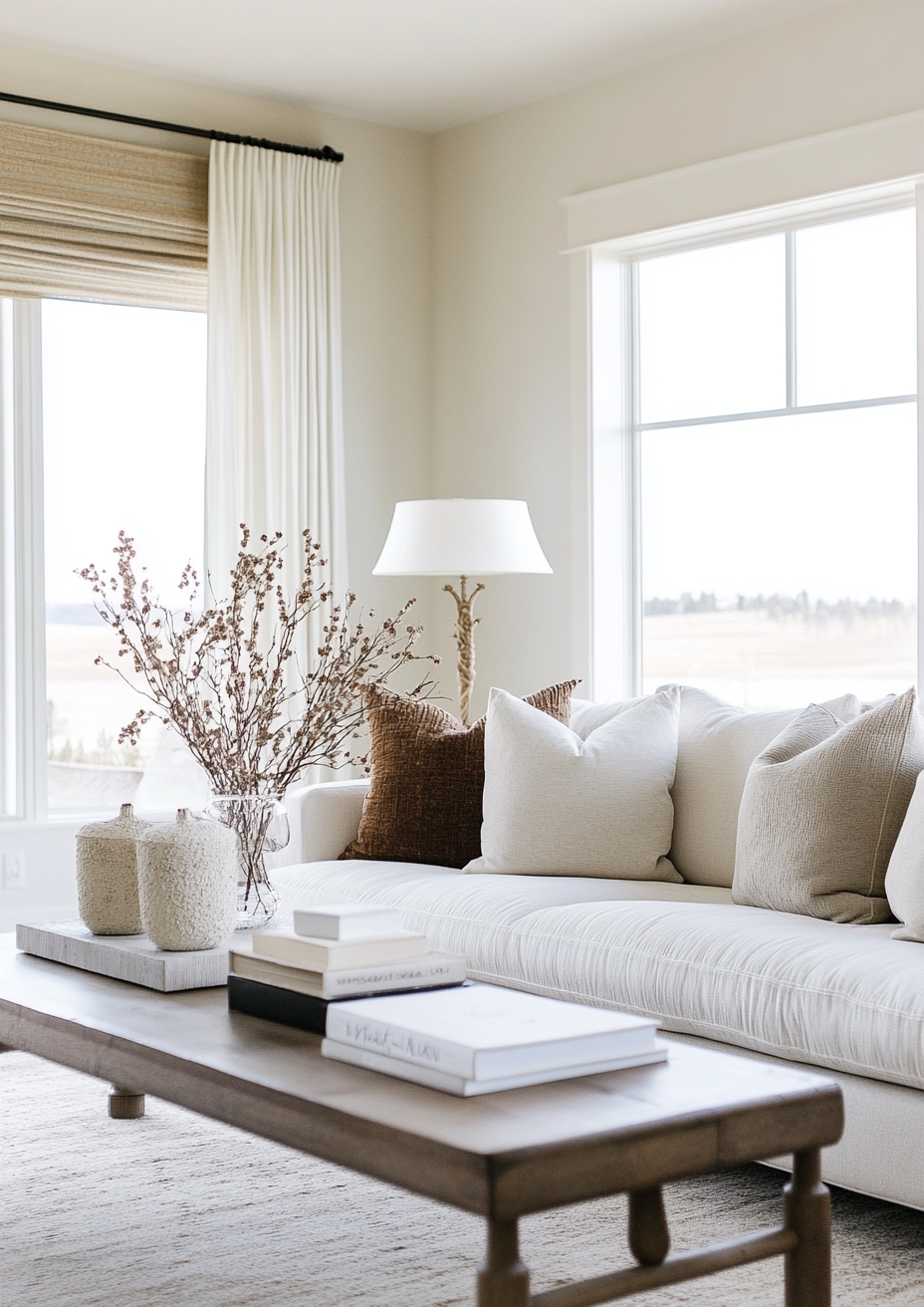
Choose Shoji White when you want warmth with weight, not brightness. It earns its place in these conditions.
South and west-facing living rooms and bedrooms where the light is strong enough to keep the beige warm. Organic modern, Japandi and farmhouse interiors with oak, linen and plaster textures. Large rooms that can carry a deeper tone. Open-plan spaces that are warm throughout.
Avoid it in small, north-facing rooms where the grey will dominate and the walls will feel heavy. Avoid it too wherever the client expects white. It will disappoint them.
How the Pairings Differ

For Pure White on walls, Extra White SW 7006 on trim gives the cleanest result, a subtle lift that sharpens joinery. Pure White on both walls and trim in different sheens works well in modern and Scandinavian rooms.
For Shoji White on walls, Pure White SW 7005 on trim is the strongest pairing. Alabaster SW 7008 gives a softer, warmer edge. Avoid cool brilliant whites, which make Shoji White look muddy.
For flooring, Pure White suits almost everything: pale oak, grey stone, polished concrete. Shoji White needs warmth underfoot. Warm oak, limestone and terracotta make it glow. Cool grey tile pulls out the grey in its undertone and flattens the walls.
For hardware, Pure White is the more flexible. It takes brushed nickel, matte black, chrome and aged brass without argument. Shoji White prefers warm metals such as aged brass, bronze and brushed gold. Chrome feels clinical against it.
Architect's Verdict - Pure White or Shoji White?

The choice depends on what the room needs, not on which color is more fashionable.
Pure White is the right choice for most rooms that need brightness. Its restraint keeps it adaptable, and at LRV 84 it does the hard work in small, shaded or north-facing spaces. It is the safer specification and in most homes the better result.
Shoji White is the right choice when you want a white-adjacent wall with real depth. In a south-facing living room with oak floors and linen, it is more beautiful than Pure White. The walls read like plaster, not paint. But it is a greige, and it should be chosen as one.
The test I always run targets Shoji White's worst case, a dim north-facing corner. Buy sample pots of both. Paint two patches roughly two feet square in that corner, each with a strip of Pure White trim beside it. Check them at 8am and again at 8pm under your actual bulbs. Shoji White passes if it still reads as a warm, soft beige against the trim. If it looks grey, flat or like concrete, choose Pure White. If Pure White looks glaring in midday sun, move to Shoji White.
Frequently Asked Questions

Is Shoji White a white or a greige?
Shoji White is a warm greige that reads as an off-white. At LRV 74 with a beige-grey base, it sits well below true whites in brightness. Beside Pure White it looks clearly tinted. Treat it as a light neutral, not a white.
What is the LRV of Pure White vs Shoji White?
Pure White has an LRV of 84 and Shoji White has an LRV of 74. That 10-point gap is visible in a room. Pure White reflects noticeably more light, which matters most in small or north-facing spaces.
Which is better for a north-facing room?
Pure White handles north light better. Its higher LRV keeps the room bright, while Shoji White's grey undertone can dominate and make walls look flat. If you love Shoji White in a north-facing room, test it under warm bulbs first.
Can I use Pure White and Shoji White together?
Yes, and it is a classic pairing. Shoji White on the walls with Pure White on the trim gives clean definition without harsh contrast. Do not reverse it. Shoji White trim next to Pure White walls looks dull.
Which is better for kitchen cabinets?
Pure White is the more practical cabinet color in most kitchens. It reads as white, works with stone, stainless and brass, and holds across sheens. Shoji White on cabinets reads as a soft greige and suits warm wood and honed stone kitchens, but test it first.
Does Pure White look cold or yellow?
Neither in most light. It carries a faint warm cream trace that softens it in lamplight. In strong direct sun it can look stark, and in north light it can settle into a soft grey-warm cast. Always test a large patch in your room before committing.
Final Thought
Pure White and Shoji White are both excellent, but they answer different questions. One asks how bright the room can be. The other asks how settled it can feel.
If light is limited or you want a clean, true white, Pure White is the answer. If light is generous and you want warmth with depth, Shoji White will reward you. Buy sample pots of both, paint large patches with Pure White trim beside each, and watch them across a full day. By evening, the answer will be clear.
Want a complete colour scheme built around Pure White or Shoji White? Our design packages cover full palette selection, finish recommendations, and 3D visualisations - see our packages. |
About the Author
Beril Yilmaz is a qualified architect and interior designer based in the UK. She runs BY Design And Viz, a design platform covering paint colour reviews, interior design guidance, and residential design projects. Beril has specified both Pure White and Shoji White across residential projects in the UK and internationally — Pure White in compact kitchens and north-facing rooms where light needs to be maximised, Shoji White in large south-facing living rooms with warm oak and linen, often in the same scheme with Pure White on the trim.


Comments