


School House White vs Skimming Stone: The Comparison That Actually Helps You Decide

School House White leans cream. Skimming Stone leans stone. That is the whole tension, and it decides everything else. Both are Farrow & Ball neutrals pitched as softer alternatives to a stark white, and with an LRV of roughly 73 against roughly 67 they reflect almost the same amount of light. Same brightness, different temperament. One reads as a pale, warm ivory. The other reads as a warm grey with a pink cast.
I have used both across residential projects, and the choice is never about which color is nicer. It is about what sits next to the wall: the floor, the worktop, the window. Neither forgives the wrong room. School House White turns sallow beside cool grey stone. Skimming Stone turns flat and slightly fleshy beside orange-toned wood.
This guide covers the undertone difference, how each behaves by light direction, the trim and flooring pairings that work, and a final test to settle it in your own room.

At a Glance
| School House White | Skimming Stone |
Brand | Farrow & Ball | Farrow & Ball |
LRV | ~73 - the brighter of the two, but only by about six points. The undertone reads before the brightness does | ~67 - slightly deeper, which is what lets the stone character show instead of washing out |
Colour category | Warm cream-white - an ivory off-white that reads as white first and cream second | Warm stone neutral - a pale grey-greige that reads as a color first and never as a white |
Undertones | Soft yellow-cream over a faint warm beige base - glows in daylight, turns buttery in lamplight | Pink-leaning warm grey over a yellow base - the pink surfaces under warm bulbs and in low evening light |
Character | Light, open and gently nostalgic - brightens a room and makes it feel slightly older in the best way; the pick when pure white feels clinical | Grounded and softly tonal - adds depth without darkening, and makes whites, woods and brass look deliberate |
North-facing | Holds up but flattens - the cream goes dull and grey-yellow without sun, so it needs warm bulbs to stay alive | Better equipped - the grey base steadies cool light, though the pink can surface; warm bulbs tame it |
South-facing | Excellent - the cream warms into a luminous ivory, though it can drift buttery at midday | Good - reads as a soft stone with a faint blush, losing some of its grey in strong sun |
Open-plan | Consistent only when floors and joinery are warm - shifts yellow beside cool stone or tile | Strong - the grey-stone base bridges warm timber and cool stone with less friction |
On walls | Bright, airy backdrop that opens a room - reads as white with warmth rather than as a color | Soft, tonal backdrop with visible color - makes a room feel settled rather than bright |
On cabinets | Clean cream Shaker look in warm kitchens with timber, brass and warm stone - yellows against stainless and cool quartz | Reads as painted stone, not white - handles mixed worktops, though the pink can show beside cold blue-grey tile |
Use together? | Yes - works as the trim and ceiling color with Skimming Stone on the walls, a soft step up in light | Yes - as the wall color with School House White on the woodwork; the reverse needs testing, as darker trim against lighter walls looks heavy |
Trim for each | Wimborne White No. 239 for a soft step up, or All White No. 2005 for crisp definition | School House White for a gentle tonal lift, or Wimborne White No. 239 for more definition |
Style fit | Period, cottage, farmhouse and Shaker interiors - Georgian and Victorian rooms with warm timber | Contemporary-traditional, Scandinavian-leaning and organic modern interiors |
Architect's pick | When the brief is a bright, warm, white-adjacent room and the materials are warm - timber, brass, linen | When the room needs to feel calm and grounded rather than bright, and the floors, stone or fabrics lean grey, taupe or mixed |
Farrow & Ball School House White No. 291 - What It Really Looks Like

School House White has an LRV of roughly 73, which puts it firmly in the light, airy off-white category. That is bright enough to lift a room without the hard edge of a pure white. The undertone is a soft yellow-cream. In daylight it reads as a luminous ivory. In lamplight it deepens to butter. It does not hedge.
School House White reads as white first and cream second. Next to a true white, the cream is obvious. On its own, the wall simply looks warm and clean. That makes it forgiving in rooms with plenty of light and warm materials: oak floors, linen, brass, painted timber. It struggles where cool materials dominate, because grey stone and blue-toned tile pull the yellow forward until the wall looks tired. There is no hiding it.
To judge how far School House White sits from a true neutral, look at its nearest neighbor. Slipper Satin is the closest match in the Farrow & Ball range. For a read on how that neighbor handles different light, the Slipper Satin guide shows where the cream in School House White begins and where a cleaner off-white takes over.
Farrow & Ball Skimming Stone No. 241 - What It Really Looks Like

Skimming Stone has an LRV of roughly 67, which keeps it light but gives it enough depth to read as a color. Farrow & Ball calls it a stony off-white, and that is accurate. The base is a warm grey. A pink cast sits over it, with a thread of yellow underneath. It is not a white. It is not a beige either.
Skimming Stone behaves like a stone, not a white in disguise. In soft daylight the grey leads and the room feels calm. Under warm bulbs the pink rises and the wall takes on a gentle blush. In strong afternoon sun it warms further and loses some grey. Those shifts are the appeal. They are also the risk if you dislike pink in any form.
Skimming Stone rewards a closer look at its undertones, and the pink-versus-grey balance is what makes or breaks it in a given room. For a full single-color breakdown of how that balance shifts across light direction and finishes, the Skimming Stone guide is the one to read before you buy a tester pot.
The Real Difference Between School House White and Skimming Stone
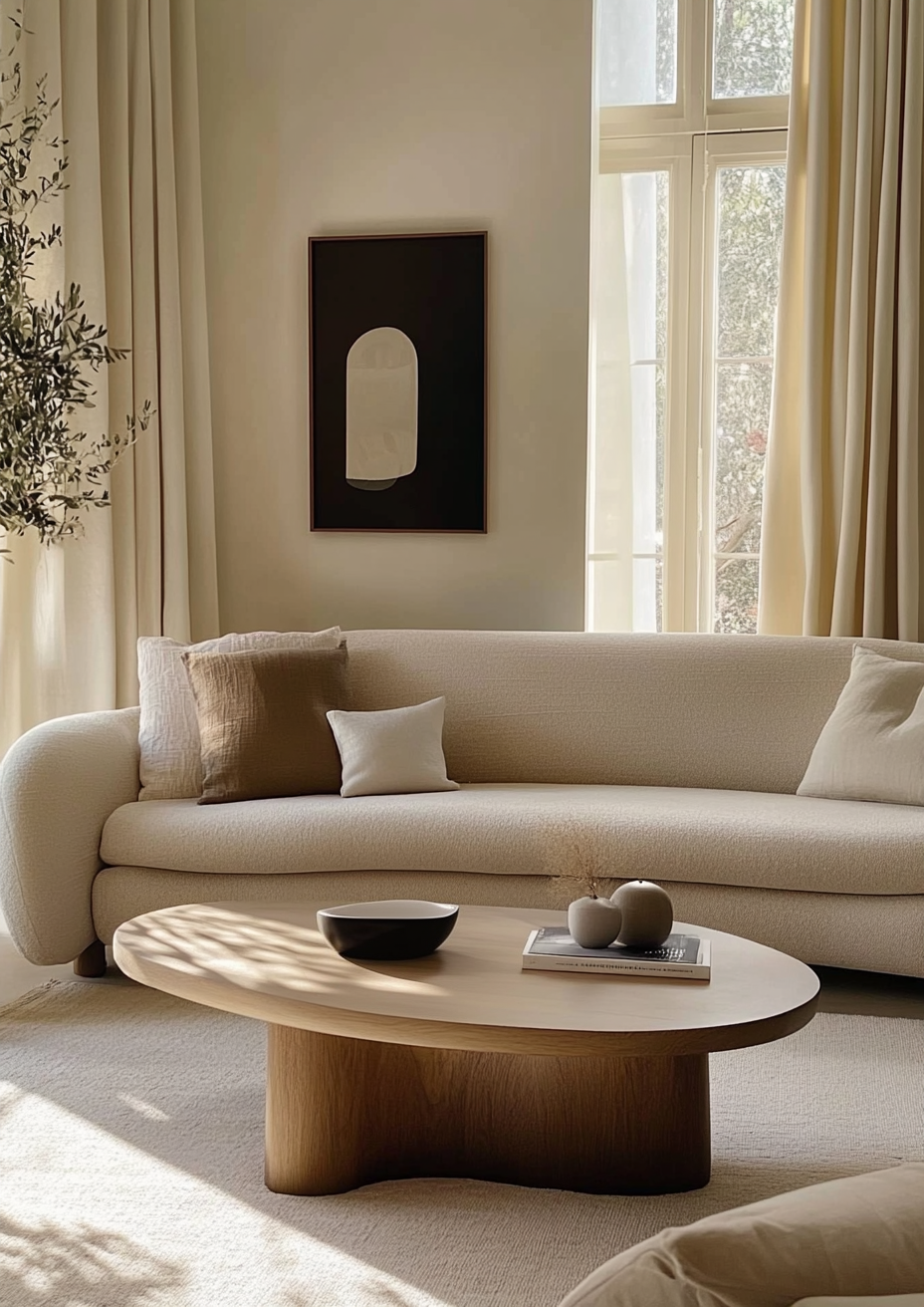
The simplest way to explain it: School House White is a warm white with a cream edge. Skimming Stone is a warm stone with a pink edge. One is built for brightness. The other is built for depth.
The LRV gap is about six points, roughly 73 against 67. That is small enough that neither color wins on brightness. Undertone is the only axis that matters. Hold the two cards together and School House White looks sunlit and clean while Skimming Stone looks grounded and slightly dusty. Farrow & Ball does not publish official LRV figures, so treat both numbers as estimates and trust your sample patches over the maths.
The other key difference is how they behave against trim and woodwork. School House White on the trim lifts Skimming Stone walls gently, creating a soft tonal step without a hard line. The reverse is riskier, because stone-colored trim against cream walls can look dingy. To see where Skimming Stone sits against another pale neighbor of School House White, the Slipper Satin vs Skimming Stone guide compares it with the Farrow & Ball off-white closest to School House White, which makes the cream-versus-stone split easier to see.
Not sure which one is right for your room? A Color Direction consultation gets you a full custom palette built around your space - book yours here. |
When to Choose School House White

Choose School House White when you want a bright, warm, white-adjacent room and the materials around it are warm. South and west-facing rooms. Oak or pine floors. Brass, linen, painted timber. Period properties where a clean cream reads as appropriate rather than accidental. It suits living rooms, bedrooms and Shaker-style kitchens with warm worktops.
Avoid it where cool materials set the tone. Grey quartz, blue-grey tile and stainless appliances drag the yellow forward. North-facing rooms with no warm light flatten it too. Test it there first, or move to the stone.
When to Choose Skimming Stone

Choose Skimming Stone when you want a calm, grounded backdrop that adds depth without going dark. Rooms with mixed materials. North-facing spaces that need steadying. Open-plan layouts where timber meets stone. Interiors with grey, taupe or mushroom textiles. It suits bedrooms, hallways, living rooms and kitchens with painted cabinetry.
Avoid it if you dislike any pink in a neutral. The blush surfaces under warm bulbs and in low evening light, and cold blue-grey or green tile makes it more obvious. It is also a poor choice where you want brightness. At roughly 67 LRV it will not lift a dark room the way School House White does.
How the Pairings Differ

For School House White on walls, Wimborne White No. 239 is the natural trim choice. It steps up in brightness and stays in the same warm family. All White No. 2005 gives crisper definition for a more contemporary look. Avoid cold, blue-leaning whites. They make the cream look yellow and accidental.
For Skimming Stone on walls, School House White on the trim is the softest pairing. It lifts the woodwork by a few points and echoes the warmth without matching the pink. Wimborne White gives sharper definition. Skimming Stone on both walls and trim creates a tonal, enveloping scheme that suits bedrooms and hallways.
For flooring, School House White needs warmth underfoot. Oak, pine, terracotta and warm limestone support it. Cool grey tile pulls the yellow forward. Skimming Stone is more flexible. It sits comfortably with warm timber, limestone and mid-grey stone because its grey base meets cool materials halfway. It struggles only with strongly orange-toned wood, where the pink and the orange argue.
For hardware, both suit aged brass and bronze. Skimming Stone also handles blackened iron and brushed nickel, where the grey base keeps the pairing coherent. School House White is less comfortable with cool metals. The cream looks tired against chrome.
Architect's Verdict - School House White or Skimming Stone?

For most homes with mixed materials or uncertain light, Skimming Stone is the safer specification. Its grey base absorbs variation that would push School House White yellow. In the right room, though, School House White is the better color.
School House White is the right choice when the brief is bright, warm and white-adjacent. In a south-facing room with oak floors and brass, it looks effortless. It lifts the room and stays quiet. Put it beside grey stone and it turns sallow. That is the entire trade.
Skimming Stone is the right choice when the room needs depth and steadiness. It copes with mixed light, mixed materials and mixed hardware. It rewards patience. It does not reward a room that wants to feel white.
The test I always use: buy sample pots of both and paint two patches at least two feet square on separate walls, with your floor or worktop sample beside each. Check them at 9am in cool daylight, then again at 8pm under your warm evening bulbs. School House White passes if the morning patch still looks clean and warm, not sallow or grey-yellow. Skimming Stone passes if the evening patch looks like warm stone, not pink. Whichever one fails, rule it out.
Frequently Asked Questions

Is School House White lighter than Skimming Stone?
Slightly, yes. School House White has an LRV of roughly 73 against roughly 67 for Skimming Stone. The gap is small. The undertone difference is far more visible than the brightness difference.
Is Skimming Stone pink?
It can be. The grey base carries a pink cast that surfaces under warm bulbs and in low evening light. In bright, neutral daylight it reads as a warm grey-beige. If any pink is a dealbreaker, test it at night first.
Can I use School House White and Skimming Stone in the same house?
Yes, and it works well. Skimming Stone on the walls with School House White on trim and ceilings creates a soft tonal step. Keep School House White as the lighter of the pair. Reversing them tends to look heavy.
Which is better for kitchen cabinets?
It depends on the worktop. School House White suits warm kitchens with timber, brass and warm stone. Skimming Stone is more forgiving beside mixed or cool surfaces and reads as painted stone rather than white. Test both in your kitchen's evening light before committing.
Which is better for a north-facing room?
Skimming Stone, in most cases. The grey in its base steadies cool light, while School House White can go flat and grey-yellow without sun. Neither is a sure thing. Use warm bulbs and test large patches either way.
What is the LRV of School House White vs Skimming Stone?
School House White is roughly 73 and Skimming Stone roughly 67. Farrow & Ball does not publish official LRV figures, so these are close estimates. Treat them as a guide, not a rule.
Final Thought
School House White and Skimming Stone are both quiet, well-mannered Farrow & Ball neutrals. The choice is not about quality. It is about which one your room can support.
If your light is good and your materials are warm, School House White will make the room feel brighter and more generous. If your room mixes materials or the light is uncertain, Skimming Stone will hold steady. Buy sample pots of both, paint large patches, and watch them across a full day. The wall that survives both the morning and the evening wins.
Want a complete colour scheme built around School House White or Skimming Stone? Our design packages cover full palette selection, finish recommendations, and 3D visualisations - see our packages. |
About the Author
Beril Yilmaz is a qualified architect and interior designer based in the UK. She runs BY Design And Viz, a design platform covering paint colour reviews, interior design guidance, and residential design projects. Beril has specified both School House White and Skimming Stone across residential projects in the UK and internationally - School House White in bright period-property living rooms and bedrooms with warm timber floors, Skimming Stone in open-plan and mixed-material spaces where timber meets stone, often in the same scheme with School House White on the trim.


Comments