


Sherwin Williams Naval Coordinating Colors: The Palettes That Actually Work

Updated: Mar 6
Naval is one of those paints that people choose confidently and then get stuck on. The color itself is not the problem — it is extraordinary in the right room. The difficulty is everything around it. The trim color, the floor, the adjacent rooms, the hardware, the furniture. Get those wrong and Naval looks cold and heavy. Get them right and the room looks like it was designed rather than just painted.
I have specified Naval across a range of projects — on full walls, on cabinetry, on single accent walls — and the coordinating palette is where most of the real decisions happen. Here is exactly how I build a scheme around it.
Why Sherwin Williams Naval Is Harder to Coordinate Than It Looks
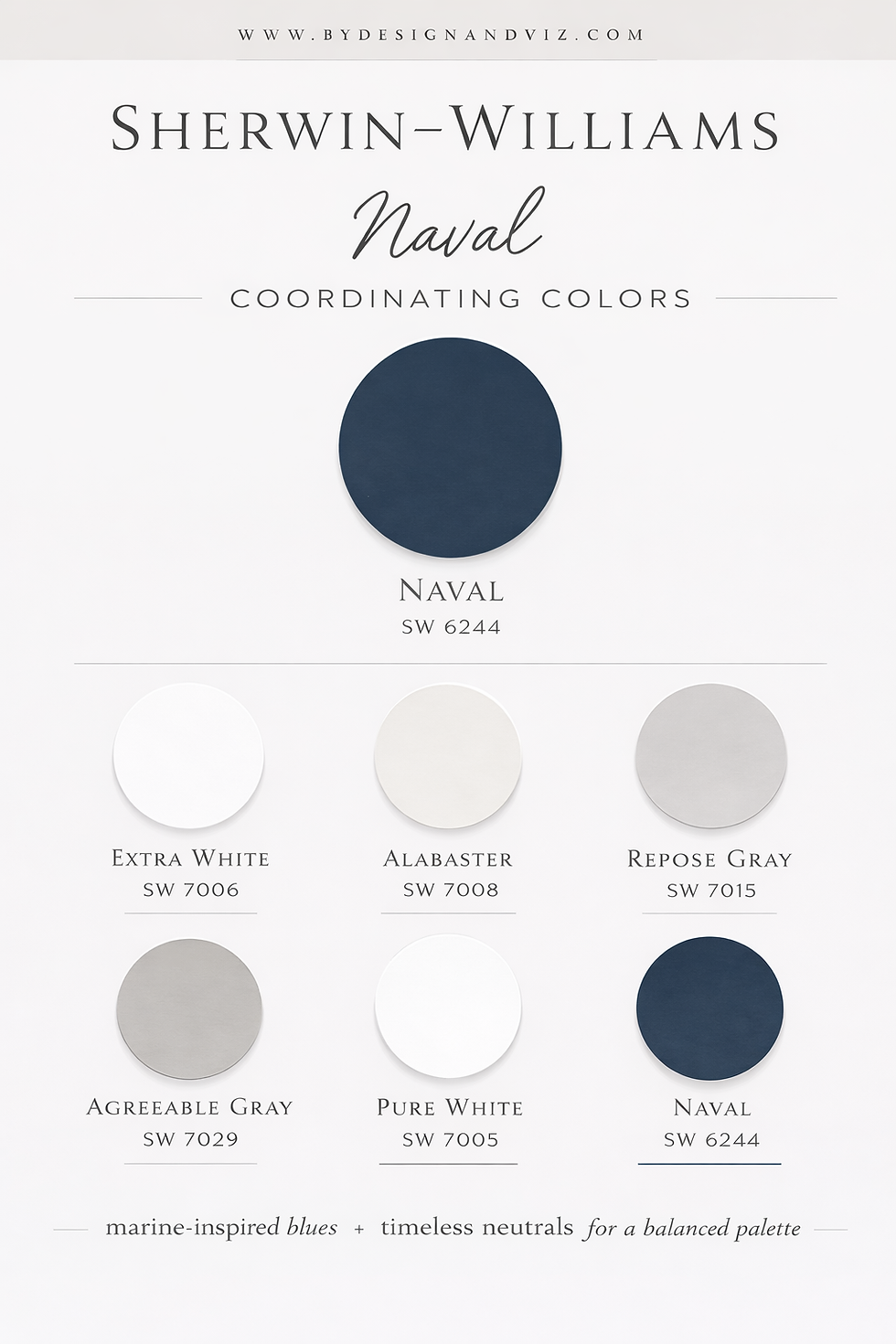
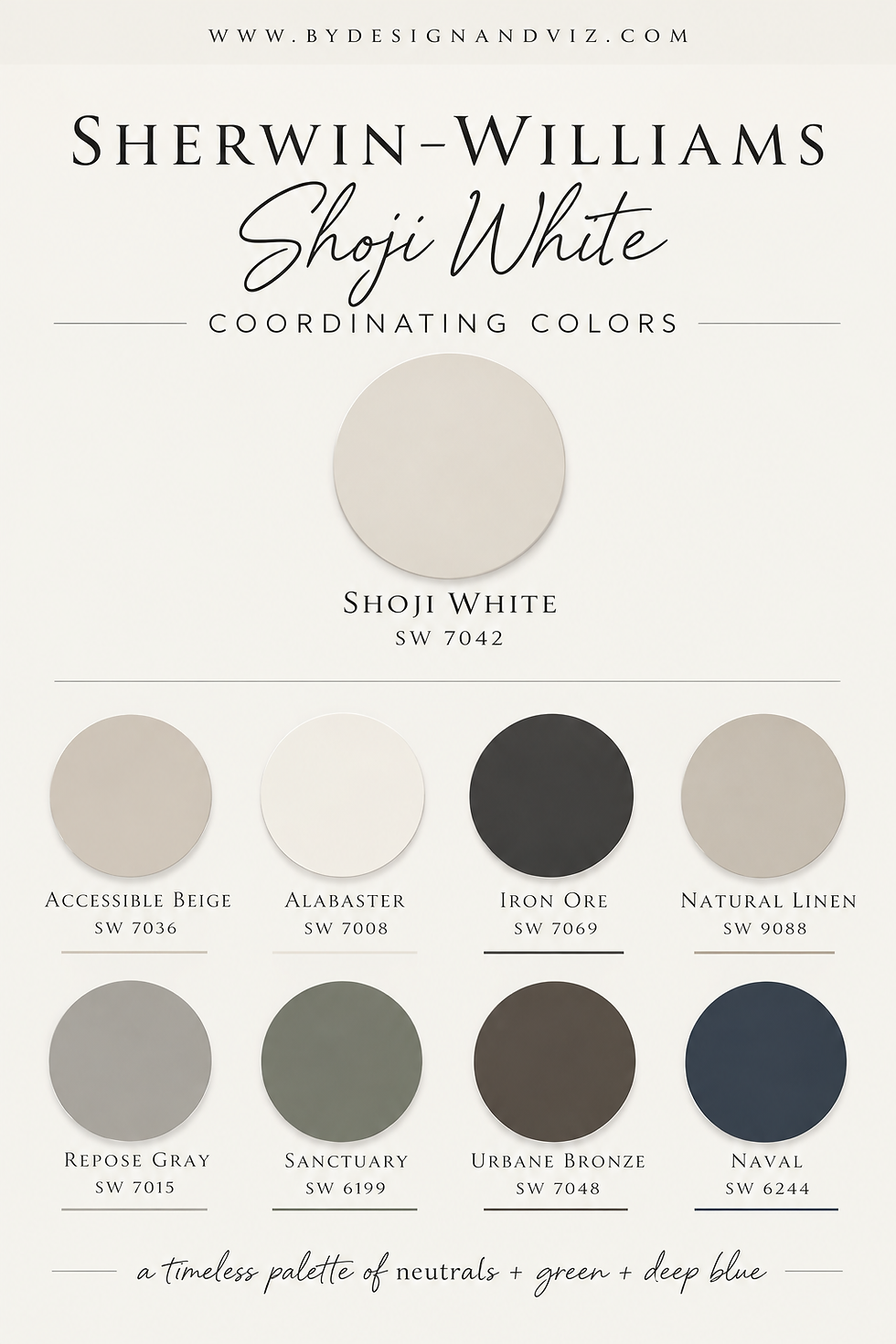
Naval (SW 6244) has an LRV of 4 — one of the darkest paints in the Sherwin Williams range. At that depth, it absorbs almost all the light in a room and its surrounding colors have to work hard to balance it. The undertone is a blue with faint green and purple notes depending on the light, which means warm colors pair better than people expect, and cool colors can clash in ways that are difficult to predict from a swatch.
The most common mistake I see: pairing Naval with brilliant white trim and cool grey furnishings. It reads clinical and cold rather than sophisticated and rich. Naval needs warmth around it — in the trim, the floor, the soft furnishings — to bring out its best qualities. Once you understand that, the palette decisions become much more straightforward.
The Right Trim Color for Naval
This is the single most important coordinating decision. Get the trim wrong and the whole scheme suffers.
Alabaster SW 7008 — my first choice

Alabaster is the trim color I reach for most often alongside Naval. It is warm enough to soften Naval's depth without going so cream that it loses definition. The slight warmth in Alabaster's undertone balances Naval's cool blue quality beautifully, and the contrast is clean and high enough to read as deliberate rather than accidental. For most homes — whether the floors are warm wood or neutral stone — Alabaster on the trim is the safest and best choice.
Extra White SW 7006 — for maximum contrast
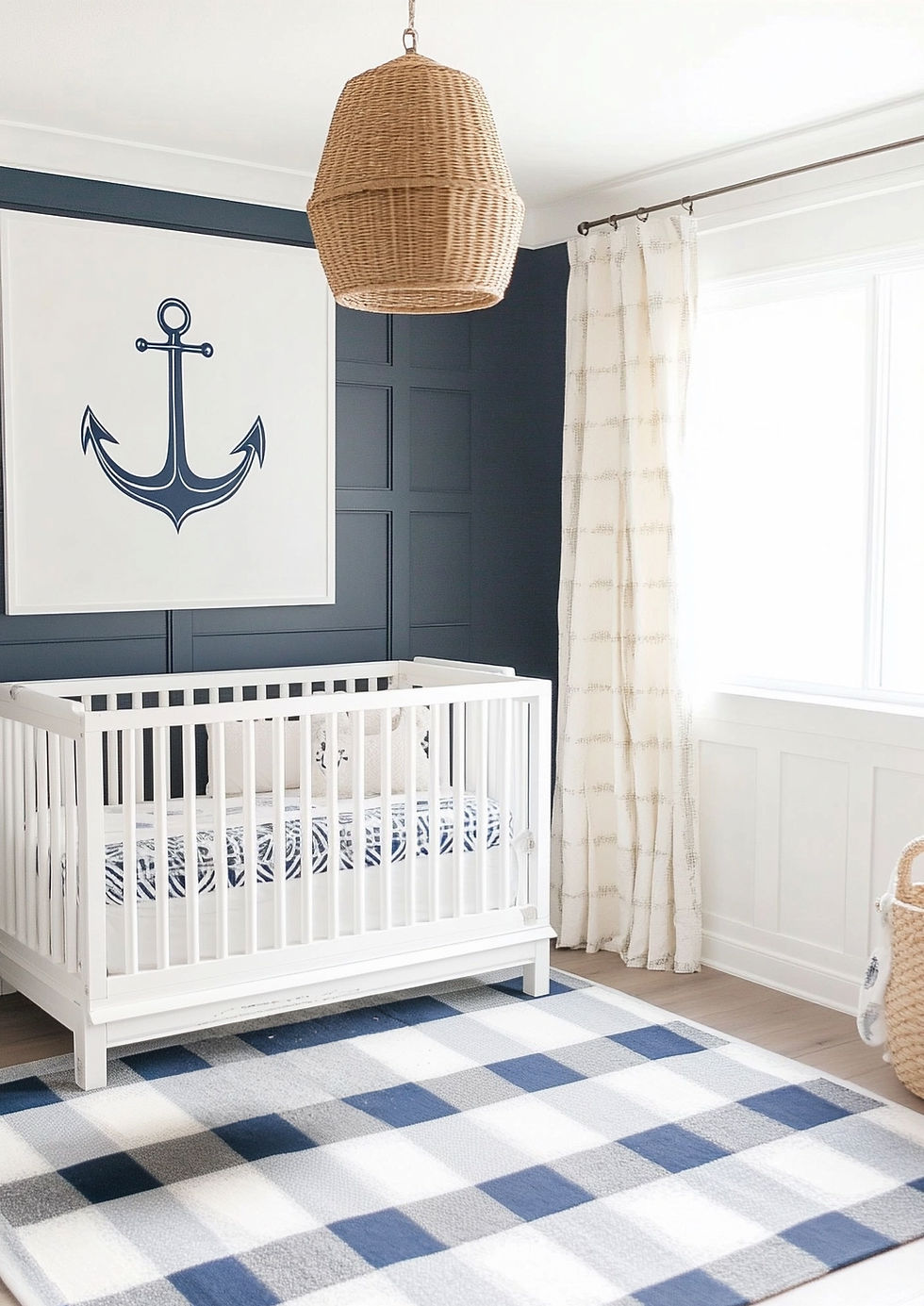
If the brief is specifically for very crisp, high-contrast trim, Extra White is the alternative to Alabaster. It is brighter and cleaner, with virtually no undertone. The result is sharper and more graphic — closer to a coastal or modern aesthetic. I would choose Extra White over Alabaster when the interior has very clean contemporary lines and the client specifically wants the trim to pop rather than blend. In traditional or transitional interiors, Alabaster is the more considered choice.
What to avoid on trim
Brilliant white trade paint is the most common mistake. The blue-white quality of standard brilliant white fights Naval's undertone and makes the overall scheme feel cold and unresolved. Pure White (SW 7005) can also be too stark in most contexts. If you are not sure, Alabaster is almost always the right answer.
Not sure how to build a complete palette around Naval for your specific room? A color consultation is included in all our design packages — book directly here: bydesignandviz.com/book-online |
Coordinating Wall Colors for Adjacent Rooms
Naval is a strong color that needs thoughtful transitions into connecting spaces. These are the colors I use most often in rooms that flow from a Naval space.
Alabaster SW 7008 — for a seamless, enveloping scheme

If Naval is on one wall or in one zone, Alabaster on the surrounding walls keeps the scheme cohesive without competing. The warmth of Alabaster against the depth of Naval creates a naturally rich palette that feels considered and layered. This works especially well in open-plan living and dining spaces where you want one bold zone and a calmer surround.
Repose Gray SW 7015 — for a cooler, more contemporary scheme

Repose Gray is the most versatile of the Sherwin Williams greys — it has just enough warmth to avoid feeling cold, and enough grey presence to work as a calm companion to Naval. In a hallway leading to a Naval room, or in a kitchen adjoining a Naval dining room, Repose Gray bridges the two zones without jarring. The result reads as an intentional tonal palette rather than a random combination.
For the full breakdown of Repose Gray coordinating colors and how to build a complete scheme around it, that dedicated guide covers every combination."
Agreeable Gray SW 7029 — for warmth in adjacent spaces

Agreeable Gray is warmer than Repose Gray and brings more of a greige quality to the palette. If the adjacent room needs to feel warmer and more welcoming — a family room off a more formal Naval dining room, for example — Agreeable Gray is the better choice. It shares Naval's underlying warmth without competing with its drama.
Pure White SW 7005 — for a clean, airy contrast room
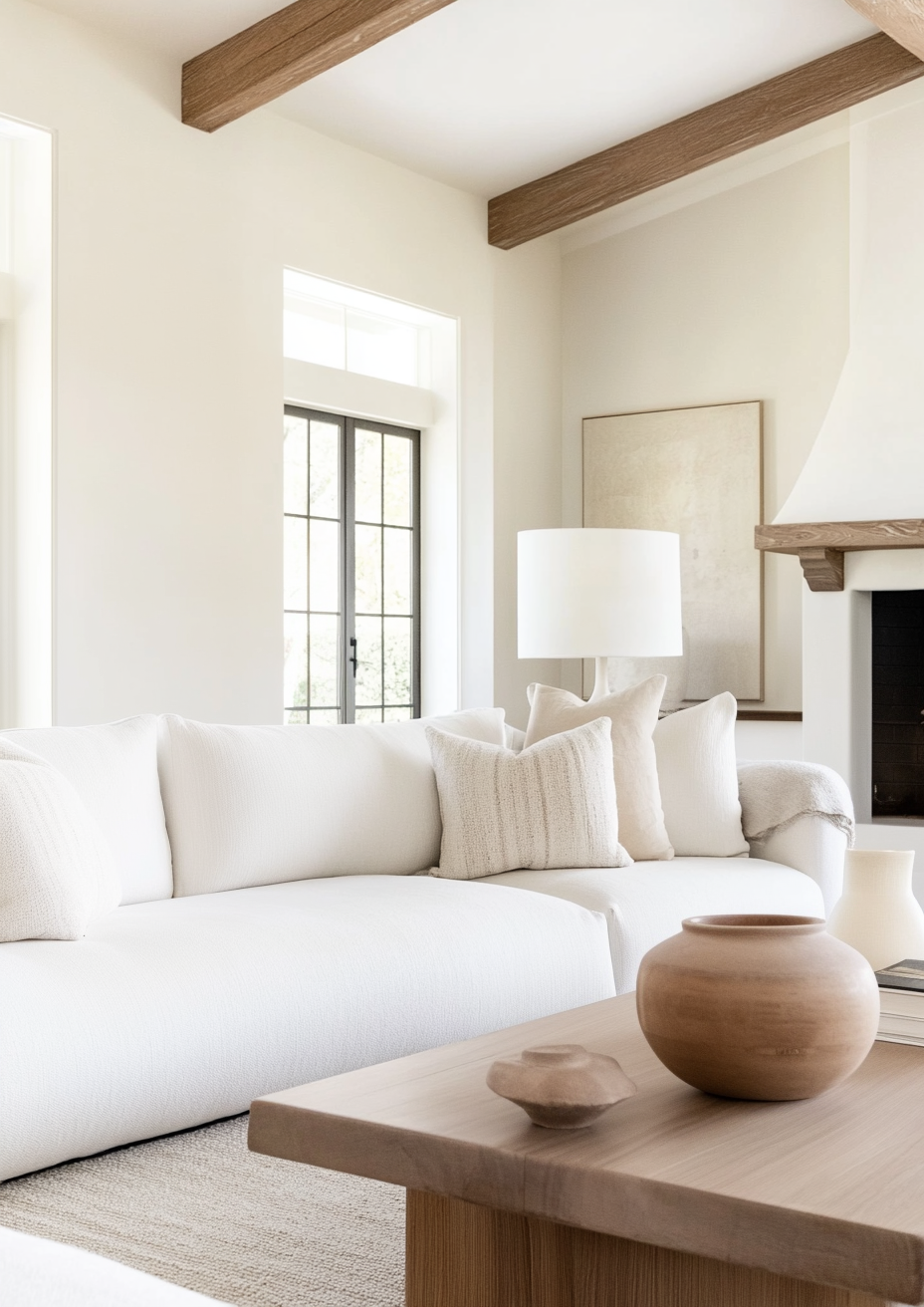
In spaces directly adjacent to a Naval room where the brief is for light and air — a bright kitchen, a utility room, a large landing — Pure White gives a clean, fresh contrast that makes the transition feel intentional. It works because the difference in depth is so significant that there is no awkward in-between.
Naval Coordinating Color — Quick Reference
Role | Color | Why it works |
Trim (first choice) | Alabaster SW 7008 | Warm undertone balances Naval's cool depth — the classic pairing |
Trim (high contrast) | Extra White SW 7006 | Crisper, more graphic result — best for contemporary interiors |
Adjacent walls (warm) | Agreeable Gray SW 7029 | Warm greige companion — good for family rooms and casual spaces |
Adjacent walls (cool) | Repose Gray SW 7015 | Calm, versatile grey — the most neutral transition from Naval |
Ceiling | Alabaster SW 7008 or Pure White SW 7005 | Keeps the ceiling from feeling heavy — Alabaster for warmth, Pure White for crispness |
Floor (wood) | Warm or medium oak, aged pine, dark walnut | Warm wood tones balance Naval's coolness and ground the room |
Floor (stone/tile) | Warm limestone, aged terracotta, cream porcelain | Warm-toned stone prevents the room feeling cold and dark |
Hardware | Aged brass, unlacquered brass, brushed gold | Warm metallic against deep blue is one of the most classic pairings in design |
Accent (subtle) | Warm white linen, cream, natural jute | Softens the drama and adds texture without competing |
Accent (bold) | Terracotta, burnt orange, warm coral | Unexpected but excellent — the warmth pops against the deep navy |
Flooring and Naval — What Works and What Clashes

Flooring has more impact on how Naval reads in a room than most people realise. Because Naval absorbs light rather than reflecting it, the floor becomes a significant source of warmth and brightness in the overall space.
Warm wood — the most reliable choice
Medium to warm oak, aged pine, and dark walnut all work well with Naval. The warmth of the wood provides exactly the counterbalance the color needs. In rooms where Naval covers all four walls, warm wood floors prevent the space from feeling cave-like. In rooms with Naval on a single accent wall, any warm wood floor will allow the color to read as rich rather than heavy.
Dark wood — proceed with care
Very dark wood floors — dark ebonised oak, dark walnut stain — can work beautifully with Naval in rooms with excellent natural light and pale trim, but in lower-light conditions the combination becomes too dark and absorbs too much. Test carefully in your specific room before committing.
Cool grey stone or concrete — the most common mistake
Cool grey stone floors, blue-slate, and polished concrete fight Naval's undertone and make the whole scheme read cold and uninviting. If your floor is cool grey, Naval is a difficult choice for the walls unless you are very deliberate about adding warmth elsewhere — in furnishings, lighting, textiles. In most cases, a warmer wall color is the easier solution.
Cream or warm-toned tile
Cream limestone, warm porcelain, and aged terracotta tile all work well. The warmth in the stone or tile family counterbalances Naval naturally and gives the room lightness without competing with the color's drama.
The Best Metal Finishes With Naval
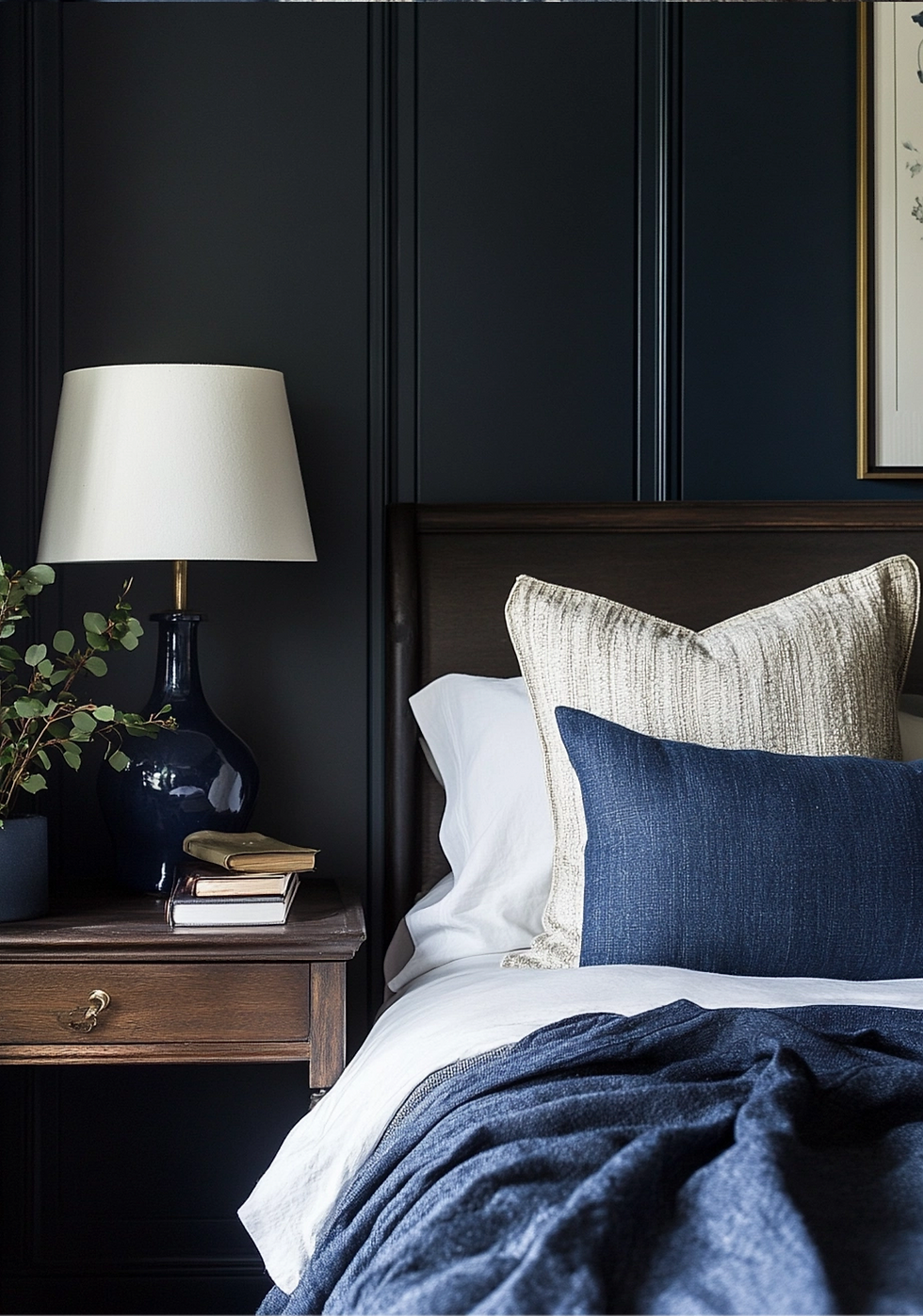
Hardware choice is where a Naval scheme either elevates or undermines itself. The wrong metal can make a beautifully painted room look unfinished.
Aged brass and unlacquered brass — the definitive choice
The pairing of deep navy and warm brass is one of the most enduring combinations in interior design. Unlacquered brass in particular looks extraordinary against Naval walls — the warmth and slight variation of unlacquered metal against the deep, flat blue creates a richness that feels genuinely luxurious. This applies to door handles, cabinet hardware, light fittings, taps, and towel rails.
Brushed gold and satin brass
If unlacquered brass feels too traditional, brushed gold and satin brass finishes give the same warm metal quality in a slightly more contemporary form. Both work very well with Naval and suit a wider range of interior styles.
Matte black — for a more graphic scheme
Matte black hardware with Naval gives a sharper, more graphic result — less warm, more architectural. It works well in very contemporary spaces with clean lines, Extra White trim, and minimal furnishing. It is a different scheme to the warm brass approach — more urban, less inviting — but done well it is striking.
What to avoid
Polished chrome and brushed nickel both have cool blue undertones that compete with Naval rather than complementing it. The cool metal and the cool blue create a scheme that feels hard and clinical. If your existing fixtures are chrome or nickel, Naval is a more difficult choice — consider Dorian Gray or Repose Gray instead, which sit more comfortably with cool metals.
Three Complete Naval Schemes
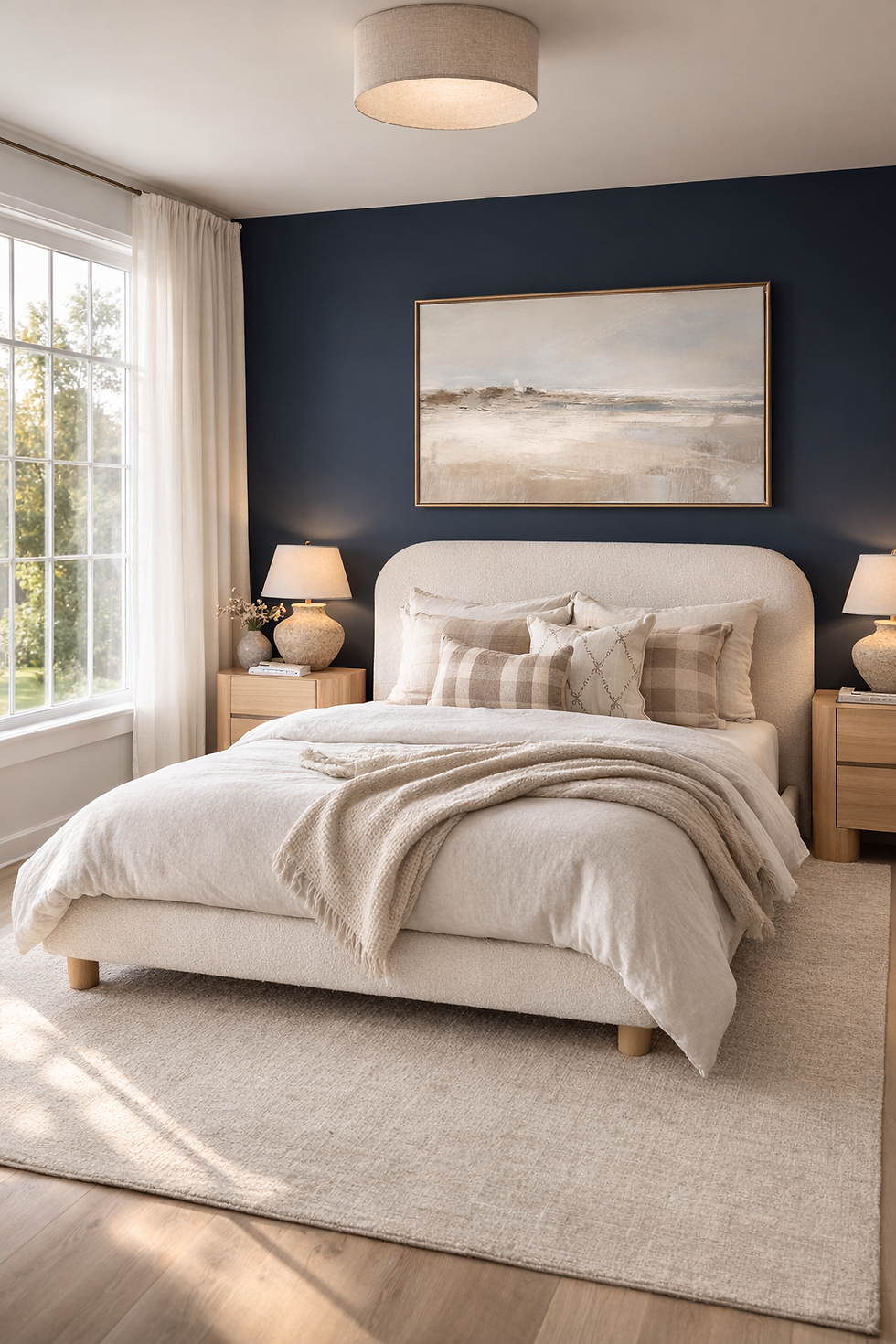
Scheme 1: Warm Classic
Naval on walls or cabinetry. Alabaster on all trim, doors, and ceiling. Warm medium oak floors. Aged brass hardware and light fittings. Linen and cream soft furnishings. Warm terracotta or deep burgundy accents. This is the scheme I come back to most often — it uses Naval's drama while keeping the overall atmosphere warm, inviting, and timeless.
Scheme 2: Contemporary Contrast
Naval on a single accent wall. Extra White on all other walls, trim, and ceiling. Large-format warm cream porcelain floor tiles. Brushed gold hardware. Clean-lined furniture in natural oak or warm walnut. Minimal accessories in natural linen and aged leather. This scheme lets Naval make a strong statement without overwhelming the space.
Scheme 3: Coastal
Naval on lower cabinets or a single wall. Alabaster on upper cabinets and trim. Pale bleached oak or whitewashed timber floors. Aged brass or antique bronze hardware. Soft furnishings in natural linen, sandy cream, and soft white. Woven textures — jute rug, rattan accessories. This is a lighter-touch approach to Naval that suits rooms with good natural light and a relaxed brief.
Frequently Asked Questions
What white goes best with Sherwin Williams Naval?
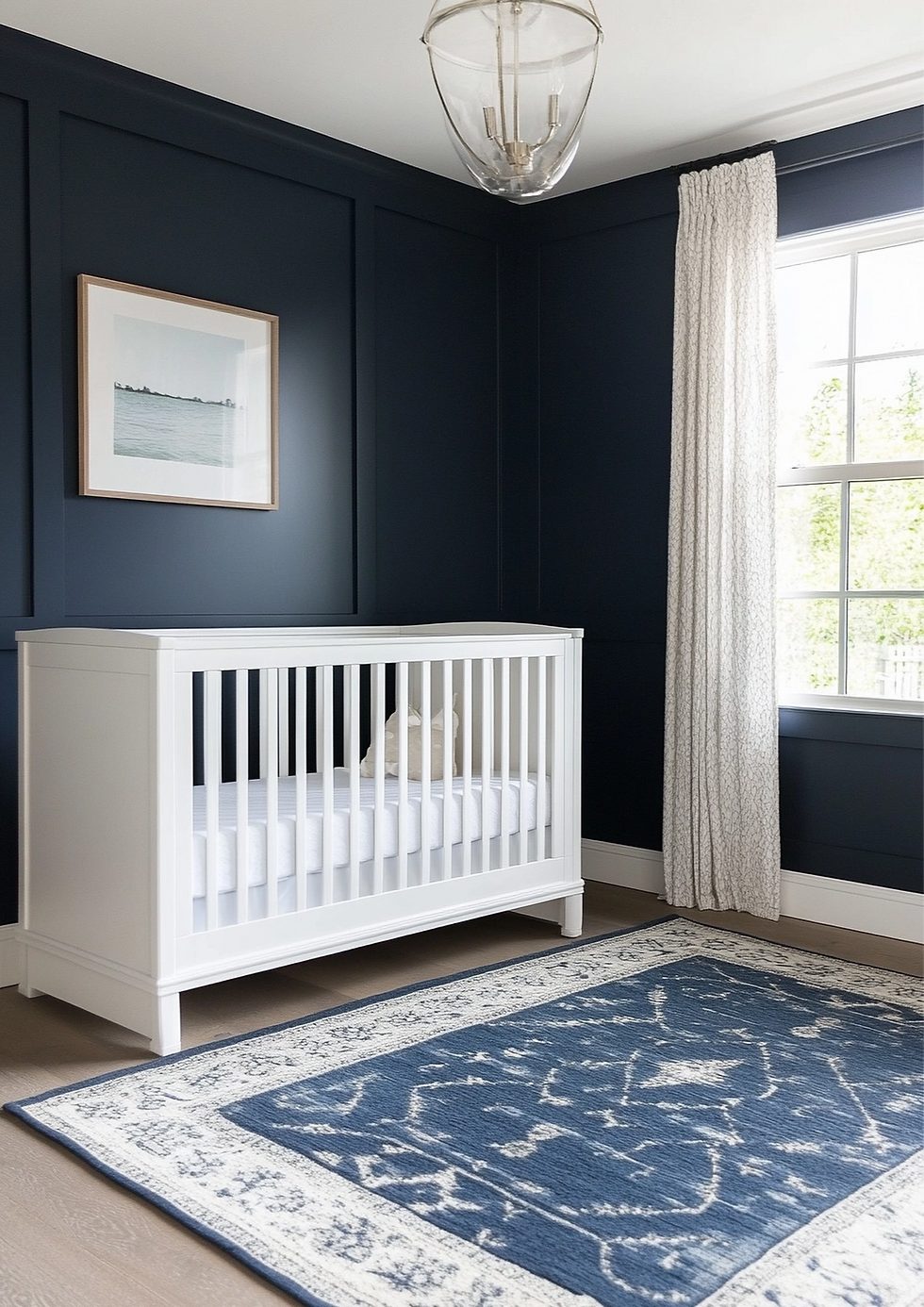
Alabaster SW 7008 in almost all cases. It is warm enough to balance Naval's cool depth without going so cream that it loses definition. Extra White SW 7006 is the alternative if you specifically want a crisper, higher-contrast result. Avoid brilliant white — it fights Naval's undertone and makes the scheme feel cold.
Does Naval work with grey floors?
Warm grey floors — greige-toned stone, warm-toned tile — can work if handled carefully. Cool grey stone, slate, and blue-toned concrete are genuinely difficult alongside Naval and tend to make the whole scheme feel cold and heavy. If your floors are cool grey, test Naval very carefully or consider a warmer alternative.
What accent colors work with Naval?
Warm accents work best — terracotta, burnt orange, warm coral, aged gold, deep burgundy. These all pop beautifully against Naval's depth and balance its coolness. Cooler accents like teal or mint can work in a coastal scheme but need careful handling to avoid the room feeling cold. Warm neutrals — cream, linen, natural jute — are always safe and always good.
Can I use Naval in a small room?
Yes, but deliberately. Naval in a small room — a powder room, a study nook, a snug — can feel intimate and luxurious rather than oppressive, provided there is adequate lighting and the trim is Alabaster or Extra White to maintain contrast. The mistake is using Naval in a small room with poor lighting and no warm elements — that combination feels claustrophobic rather than cosy.
What wood tones go with Naval?
Medium to warm oak and aged pine are the most reliable choices. Dark walnut works in rooms with good light. Very pale, almost white Scandi oak can also work beautifully in a contemporary scheme — the contrast between pale wood and deep navy reads as very deliberate and considered. Avoid cool grey-stained or blue-toned wood, which clashes with Naval's undertone.
Final Thought
Naval is a color that rewards careful coordination. The paint itself is not complicated — it is a deep, beautiful navy with real character. But it needs warmth around it to perform at its best: warm trim, warm floors, warm metals. Get those three things right and Naval will look exactly as good as you are hoping.
If you are unsure about any element of the palette, default to Alabaster on the trim. That single decision resolves more problems than any other in a Naval scheme.
Want a complete color scheme built around Naval for your specific room? Our design packages include full palette selection, finish recommendations and 3D visualisations — see our packages at bydesignandviz.com. |
About the Author
Beril Yilmaz is a qualified architect and interior designer based in the UK. She runs BY Design And Viz, a design platform covering paint color reviews, interior design guidance, and residential design projects. Beril has specified Sherwin Williams Naval across residential projects in the UK and internationally, in applications ranging from full-room wall color to kitchen cabinetry.



Comments