


5 Signs Your Windows Are Costing You Money - And What Each One Means for Your Home

Windows account for up to 30% of residential heating and cooling loss - but unlike a failing furnace or a leaking roof, they rarely announce the problem loudly. The signs are subtler: a room that's always slightly wrong, a utility bill that keeps creeping up, a draft you've learned to live with. Here are five warning signs that your windows are working against you, and what each one actually means for your wallet.
Sign #1: Does Air Sneak Through Your Window Frames Even When They're Closed?

A draft from a closed window signals measurable air leakage - the DOE estimates these gaps contribute to 25-30% of home heating and cooling loss. You can locate the source in under five minutes with a lit candle or your hand. Hold it slowly along the window frame perimeter on a windy day, working the corners, the sash edges, and the gap between the frame and the wall. If the flame wavers or you feel cool air moving, you've found your leak.
The three most common locations: the corners of the sash where the weatherstripping ages and compresses permanently, the meeting rail where two sashes overlap on a double-hung window, and the gap between the window frame and the rough opening where the original installation caulk has cracked or shrunk. All three are repairable without replacing the window - but only if the glass itself is in good condition.
Sign #2: Is There Fog or Condensation Trapped Between Your Window Panes?
Condensation trapped inside the glass unit - not on the surface, but between the panes - signals a failed IGU (insulating glass unit) seal that increases the window's U-Factor by 30-60%. The argon or krypton gas fill has escaped; humid outdoor air has taken its place, and the insulating value is gone with it. When that hermetic seal breaks, the insulating gas that gave your double- or triple-pane window its thermal performance is permanently lost. What remains is a cavity with roughly the same insulating value as a single-pane window.
This is not a problem you can wipe off or dry out. Once the seal fails, the IGU itself must be replaced - either as a standalone glazing swap if the frame is structurally sound, or as a full window replacement if the frame has also degraded. Treating it as a cosmetic issue and ignoring it means paying to heat and cool through glass that has quietly become much less effective.
Sign #3: Are Certain Rooms Always Too Hot in Summer and Too Cold in Winter?
Chronic temperature inconsistency between rooms is a reliable symptom of windows with a U-Factor above your climate zone's ENERGY STAR threshold - one that leaves certain rooms running 3-5°F colder in winter than your thermostat intends. Your HVAC system is sized for the house as a whole. When one room loses heat disproportionately through underperforming windows, the system responds to the average - leaving the cold room cold while over-conditioning the rest. The same dynamic runs in reverse through summer with solar heat gain.
What Is U-Factor - and What Number Should Your Window Hit?

U-Factor is a window's thermal report card: the lower the number, the less heat escapes in winter. The ENERGY STAR threshold for the Northern zone is 0.27 - and most windows installed before 2010 fall short of that standard, with typical values ranging from 0.35 to 0.55. A single-pane window runs around 1.0. A standard double-pane air-filled unit lands around 0.40-0.50. A high-performance triple-glazed system with argon fill hits 0.20 or below - a four-fold improvement over single-pane glass.
The SHGC (Solar Heat Gain Coefficient) is equally important in warmer climates: it measures how much solar energy enters as heat. Northern zones want higher SHGC in winter to capture passive solar heat; Southern zones need low SHGC year-round to keep AC loads down. Both numbers appear on the NFRC label affixed to every certified window.
Climate Zone | Max U-Factor | Max SHGC | Example States |
Northern | 0.27 | 0.40 | MN, WI, MI, NY (upstate), ME, VT, NH, ND, SD |
North-Central | 0.28 | 0.40 | PA, NJ, OH, IL, CO, CT, MA, IN, MO |
South-Central | 0.30 | 0.25 | NC, TN, VA, TX (north), GA, OK, KS |
Southern | 0.32 | 0.25 | FL, TX (south), AZ, LA, HI, CA (coastal) |
Source: EPA ENERGY STAR Certified Windows, Doors & Skylights - performance requirements by climate zone (2025).
For reference, OKNOPLAST's (https://oknoplast.us/windows/)triple-glazed PAVA system achieves a U-Factor of 0.20 - well below the Northern zone threshold of 0.27 - in a tilt & turn configuration that combines triple glazing with a multi-point compression seal not standard in domestic double-hung designs. But a U-Factor like 0.20 only matters in a cold climate, where the goal is trapping heat indoors. In a hot region like coastal Los Angeles, it's the reverse: what counts is a low SHGC that blocks the afternoon sun and keeps the AC from running nonstop. And even a window built like the PAVA — triple glazing and a tight compression seal — only hits its rating if it's set straight and sealed properly to the opening; a sloppy fit leaks heat no matter how good the glass is. That's why homeowners in warm markets often turn to professional window installation services in Los Angeles to match the glass to the climate and install it right — much like a buyer in Phoenix or Miami, where keeping the sun out matters more than holding heat in, the opposite of a home in Minnesota built for winter.
Sign #4: Have Your Heating and Cooling Bills Been Climbing Without Explanation?
Inefficient windows cost U.S. homeowners between $101 and $583 per year in wasted energy, depending on climate zone, window age, and fuel type, according to the DOE Building Technologies Office. The upper end of that range - approaching $600 annually before any other efficiency losses - is common in Northern zone homes with pre-2000 double-pane windows and gas or electric resistance heating. The challenge is that window energy loss is diffuse: it blends into the total bill and gets attributed to weather variation, rate increases, or appliance inefficiency.
A useful diagnostic: pull your 12-month energy bills and compare heating and cooling costs year-over-year against any major weather or rate changes. If costs are rising without a clear explanation, windows are a strong candidate. Replacing to current ENERGY STAR standards can reduce annual heating and cooling costs by 12-24% in Northern zone homes upgrading from pre-2000 double-pane, per DOE estimates - enough in many cases to offset the replacement cost over 7-12 years before factoring in the tax credit.
Sign #5: Can You Hear Outside Noise Clearly Through Closed Windows?
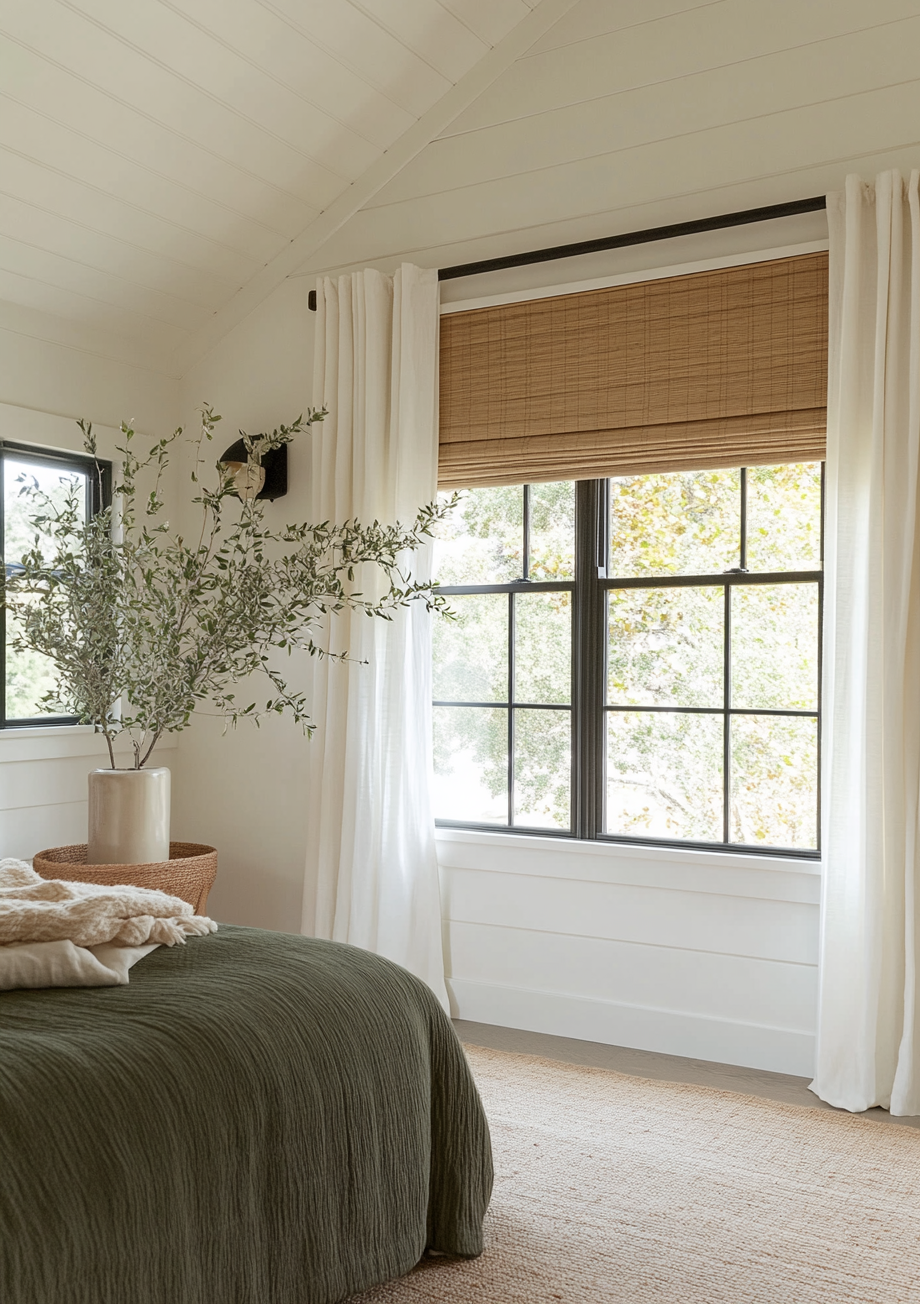
A standard double-pane window carries an STC (Sound Transmission Class) rating of 26-30; a triple-glazed system hits 40-48 - a 12-to-18-point gap that determines whether street noise is background or a constant presence. The connection to energy performance is direct: the same gaps, thin seals, and single-point latches that let sound in also let heat and cold through. A window that transmits outdoor noise clearly is almost always underperforming thermally as well.
How Do You Know Whether to Repair or Replace?
Repair - weatherstripping ($12-$40) or caulk ($8-$20) - is the right choice when the glass unit is intact and the problem is air infiltration around the frame; replacement is required when the IGU seal has failed, the frame is warped or rotted, or the window's U-Factor exceeds your climate zone's ENERGY STAR threshold. Most homeowners default to one of two mistakes: ignoring a fixable problem until it becomes irreparable, or replacing a window that needed $15 of weatherstripping. The diagnostic question is simple: is the problem in the frame and seals, or is it in the glass itself?
What Can Weatherstripping and Caulk Actually Fix?
Weatherstripping and caulk address air infiltration around the window frame - a $12-$40 fix that genuinely solves the problem when the glass unit is intact and the frame is structurally sound. They cannot restore a failed IGU seal, correct a warped or rotted frame, or improve a window's U-Factor by a single point. Caulk seals the gap between the window frame and the rough opening on both interior and exterior sides. Weatherstripping seals the gap where the moving sash meets the fixed frame. Both are worth renewing every 5-7 years regardless of window age - they're among the highest-ROI home maintenance tasks available.
European-style tilt and turn windows (https://oknoplast.us/tilt-and-turn-windows/)address the sash-seal problem structurally: their 6-8 point compression locking mechanism closes the sash against the frame perimeter simultaneously, eliminating the gap that single-latch double-hung windows leave at the sash corners. That's the gap weatherstripping is compensating for - but tilt & turn eliminates it by design.
Warning Sign | Action | Estimated Cost | Why |
Draft around frame (glass intact) | Repair | $12-$40 | Weatherstripping or caulk solves frame air infiltration |
Condensation between panes | Replace | $300-$900+ per window | Failed IGU seal cannot be resealed; argon fill is gone |
Warped, rotted, or painted-shut frame | Replace | $400-$1,200 per window | Frame deformation breaks the compression seal permanently |
U-Factor above zone ENERGY STAR threshold | Replace | $400-$1,200 per window | No repair restores thermal performance; glazing must change |
Single-pane glass with no storm window | Replace or add storm | $150-$400 (storm) / $400-$1,200 (replace) | Storm window buys time; replacement is the long-term fix |
Visible gap at sash corners (double-hung) | Repair | $12-$40 | V-strip weatherstripping closes sash-corner gaps reliably |
Sources: DOE Building Technologies Office; NFRC; Remodeling Magazine Cost vs. Value Report 2024; contractor cost averages.
What Does Window Replacement Cost - and How Much Can You Get Back?
The federal Energy Efficient Home Improvement Credit (IRC §25C) covers 30% of window replacement costs up to $600 per window - with a $1,200 annual household cap - for NFRC-certified units meeting ENERGY STAR zone thresholds, with no income limit for primary residences. On a 6-window project at an average installed cost of $800 per window ($4,800 total), the credit returns $1,200 - cutting net project cost to $3,600 before any energy savings or resale premium is factored in.
How the Federal Tax Credit Works - and Who Qualifies

The §25C credit covers 30% of combined product and installation costs up to $600 per qualifying window, resets each tax year, and applies to primary residences regardless of income level. A homeowner replacing windows across two consecutive tax years can claim up to $1,200 per year - $2,400 total - within the annual cap. To claim: retain the manufacturer's tax credit certification statement (a separate document from the NFRC label), and file IRS Form 5695 with your federal return. No pre-approval or pre-registration is required.
State-level rebates and utility incentive programs layer on top of the federal credit. The full database of available programs by state and utility is maintained at dsire.org - worth checking before any window project, since incentives vary significantly by location and utility provider.
Factor | Detail |
Average installed cost per window | $400-$1,200 (varies by size, glazing, and frame material) |
Federal §25C tax credit | 30% of cost, up to $600/window - $1,200 annual household cap |
Net cost after credit (6-window project at $800 avg.) | $4,800 total − $1,200 credit = $3,600 net |
Annual energy savings (Northern Zone, pre-2000 double-pane → triple-glazed) | 12-24% reduction in heating and cooling costs (DOE estimate) |
Estimated payback period | 7-12 years depending on climate zone, fuel type, and window count |
Resale value recovery | 67-73% of project cost recouped at sale (Remodeling Magazine Cost vs. Value 2024) |
Additional rebates | State and utility programs available at dsire.org (database of all U.S. incentives) |
OKNOPLAST U.S. lead time | 8-10 weeks (NJ / NY / PA / MA dealer network) |
OKNOPLAST's NFRC-certified window systems meet ENERGY STAR zone thresholds across all four U.S. climate zones and qualify for the full §25C credit. Their U.S. product line and dealer network covers NJ, NY, PA, MA, NC, CO, and MT, with an 8-10 week lead time from order to installation.


Comments