


Wabi Sabi Meaning: The Design Mindset That Fixes the “Why Doesn’t This Feel Right?” Problem

There’s a very specific kind of frustration we hear from clients: “Everything matches, everything is new, I’ve followed the rules… so why does it still feel off?” It’s the design version of following a recipe perfectly and ending up with a meal that somehow tastes like nothing.
The wabi sabi meaning is often explained in a way that sounds poetic, then promptly disappears into mist. But when you translate it into design decisions, it becomes surprisingly practical. It gives you permission to stop polishing your home into something generic, and start building a space that has character, evidence of life, and a point of view.
In this post, we’re breaking down the wabi sabi meaning in plain language, then showing you how to use it room by room without turning your house into a themed set. You’ll learn what it is, what it isn’t, and which small changes make the biggest difference.
At A Glance
-Wabi sabi meaning in plain English and why it matters in real homes
-Common myths that make wabi sabi feel confusing or inaccessible
-How to spot “forced perfection” and fix it quickly
-Materials, finishes, and shapes that align with wabi sabi design
-How to apply wabi sabi meaning room by room without going rustic
-What to stop buying if you want your home to feel more personal
1. Wabi Sabi Meaning: What It Actually Means in Design Terms

The wabi sabi meaning comes from Japanese aesthetics and is often summarised as appreciating
imperfection, impermanence, and authenticity. In interiors, that translates into a simple idea: a home doesn’t have to look flawless to look intentional.
Wabi sabi isn’t “messy” or “unfinished.” It’s a preference for materials that show their nature and their age, for shapes that aren’t factory-perfect, and for spaces that look collected rather than assembled in one online basket. It’s also about restraint: fewer pieces, chosen carefully, with enough breathing room for each one to register.
If your home feels off, it’s often because it’s trying too hard to be consistent. The wabi sabi meaning gives you a framework for keeping things edited while allowing contrast, texture, and lived reality to show.
Designer Tip: If your room feels flat, add one element that shows time or the hand of a maker: aged wood, linen with visible weave, hand-thrown ceramics, or stone with variation.
YOU MAY LIKE

2. Wabi Sabi Meaning: The Myths That Keep People Stuck

A lot of people think they love wabi sabi, until they try to apply it and end up with confusion, clutter, or a room that feels like it’s playing dress-up. Let’s clear the myths that cause most of the damage.
-Myth: Wabi sabi meaning is the same as rustic or farmhouse-Truth: Wabi sabi can be modern, architectural, or minimal, as long as materials feel honest and the styling isn’t overly polished
-Myth: Wabi sabi meaning means buying “imperfect” décor on purpose-Truth: The point isn’t novelty imperfection. It’s choosing objects with real character, not artificial distressing
-Myth: Wabi sabi meaning means you shouldn’t care about styling-Truth: Wabi sabi rooms are edited. They just don’t look mass-produced
-Myth: Wabi sabi meaning is only beige, off-white, and muted tones-Truth: Colour can work beautifully, especially earthy reds, deep greens, charcoal, indigo, and chalky whites, as long as the finishes aren’t overly glossy
Designer Tip: If you’ve been trying to “buy wabi sabi,” pause and edit first. Remove the extras before adding anything new.
3. Wabi Sabi Meaning: Why “Perfect” Homes Can Feel Wrong

Here’s the uncomfortable truth: a room can be expensive, coordinated, and technically correct, and still feel like it belongs to no one. That usually happens when everything is the same level of newness, the same level of finish, and the same level of predictability.
When every surface is pristine and every item matches, your eye has nowhere to land. It’s like listening to music where every note is the same volume. Wabi sabi meaning brings back contrast: matte against polished, rough against smooth, old against new, straight lines against handmade curves.
This is also why wabi sabi is so effective for fixing that “something feels off” problem. It gives you a reason to introduce one slightly irregular piece, one aged element, or one unexpected material that breaks the showroom effect.
Designer Tip: Choose one feature to “de-perfect”: swap a glossy accessory for a matte one, add a vintage side table, or introduce a handmade piece with visible texture.
Let’s Map Out Your Space Together
If you're planning a makeover and want a designer’s eye on how stick on tiles could work in your home, we’d love to help you visualise the transformation. Book a free 30-minute consultation and let’s sketch out a layout that feels tailored to your space.
4. Wabi Sabi Meaning: The Core Design Elements That Make It Work

When wabi sabi looks right, it usually has a few consistent design ingredients. Not trends. Ingredients.
First: honest materials. Wood that looks like wood. Stone that looks like stone. Linen that looks like linen.
Second: variation in finish. Too much shine fights the concept. Third: shape contrast. Handmade pieces often introduce gentle irregularity that balances straight cabinetry and clean architectural lines.
Finally: negative space. Wabi sabi meaning is not about filling shelves. It’s about letting the right objects have presence.
Designer Tip: If you’re unsure whether something fits wabi sabi, ask one question: does it look like a real material, or a printed imitation of one?
5. Wabi Sabi Meaning: How to Apply It Without Turning Your Home Into a Theme

A common fear is that wabi sabi will push a home into “styled like a set,” especially if you start adding too many obvious cues: too many rough pots, too many wooden beads, too many beige throws, too many dried stems.
Instead, apply the wabi sabi meaning through a few targeted choices.
-In your finishes: choose matte paint, limewash-style effects, plaster, brushed metal, or honed stone where appropriate
-In your textiles: choose linen, cotton, wool, or textured weaves with visible structure-In your objects: choose fewer items, larger in scale, and more tactile
-In your layout: leave breathing room around key pieces so the room doesn’t feel busy
Wabi sabi isn’t about making everything look “natural.” It’s about making your home look less manufactured.
Designer Tip: Keep your modern pieces. Add wabi sabi through finishes and one or two tactile elements, not a full décor swap.
6. Wabi Sabi Meaning: Room-by-Room Moves That Have the Biggest Impact

You don’t need a full redesign to bring in the wabi sabi meaning. You need a few specific shifts that change the feel of the room quickly.
In the living room, swap out perfectly matching accessories for one sculptural piece with texture. In the dining room, prioritise a table with grain variation and a finish that won’t punish everyday use. In the bedroom, choose bedding with visible weave and avoid overly shiny fabrics. In the kitchen, consider cabinet hardware with a brushed finish and reduce countertop styling to a few functional items.
The goal is not to make rooms look sparse. The goal is to make them look deliberate.
Designer Tip: Start with one room and one surface. Change that, then reassess before continuing.
7. Wabi Sabi Meaning: Colour and Pattern Without Losing the Point

People assume wabi sabi means avoiding pattern and colour. In reality, it just asks you to be selective.
Colour works best when it reads as grounded rather than neon-bright or overly crisp. Think chalky whites, earthy reds, clay tones, mineral greens, charcoal, inky blues.
Pattern works best when it feels woven, printed by hand, or naturally irregular rather than high-contrast and overly graphic. The wabi sabi meaning isn’t “no pattern.” It’s “no visual noise.”
Designer Tip: If you love pattern, keep it to one statement piece per room and let the rest of the surfaces stay quieter.
8. Wabi Sabi Meaning: The Finishes That Quietly Make a Room Look More Expensive
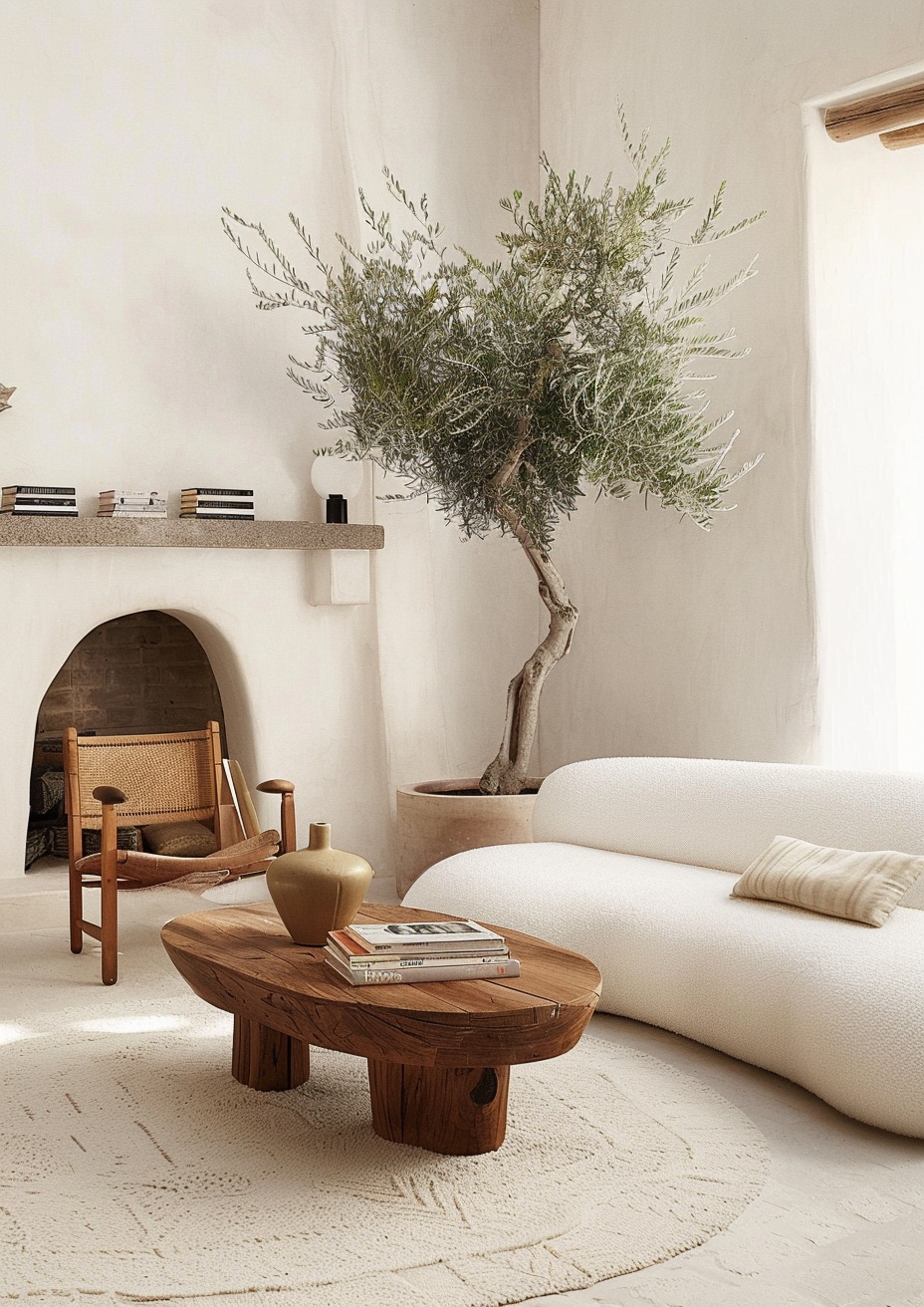
Wabi sabi doesn’t require expensive pieces, but it does benefit from finish choices that don’t scream “brand new.”
Matte walls, brushed metals, honed stone, limewash effects, microcement-style surfaces, and aged timber instantly change the mood of a space. Gloss and high-shine lacquer can still work, but if everything is reflective, wabi sabi has nowhere to land.
This is also where craftsmanship matters. A simple item with a considered finish often looks more elevated than a decorative item with a busy silhouette.
Designer Tip: Reduce shine first: swap glossy accessories, choose brushed hardware, and keep reflective finishes as accents rather than defaults.
Your Renovation, Simplified
If you’re diving into a big home update, our Ultimate Renovation Planner can make the entire process far easier. From material planning to budgeting, it’s designed to keep your project organised while
helping you visualise every detail. Explore the planner and plan your makeover with clarity.
9. Wabi Sabi Meaning: What to Stop Buying If You Want Your Home to Feel More Personal

This is the part no one loves to hear, but it works.
-Stop buying tiny decorative objects that only exist to fill space
-Stop buying sets of matching accessories made to look “styled”
-Stop buying faux versions of natural materials when you can choose a simpler real one
-Stop buying furniture that’s the same finish, same colour, same era, same silhouette-Stop treating every empty surface like it needs something on it
Wabi sabi meaning rewards restraint. The more you edit, the stronger each remaining piece becomes.
Designer Tip: Before buying anything new, remove three things from view. If you still feel the room needs something, you’ll buy with better judgement.
10. Wabi Sabi Meaning: How to Mix Old and New Without Looking Random

One of the easiest ways to bring wabi sabi meaning into a home is to mix time periods. But it needs structure, not chaos.
Keep your “new” pieces as the functional foundation: sofa, bed, cabinetry, main lighting. Then layer in “older” pieces for character: a vintage stool, an aged mirror, a worn wood sideboard, handmade ceramics. The contrast is what makes the room feel collected rather than staged.
You don’t need antiques everywhere. One or two pieces that introduce time and texture can shift the entire perception of the space.
Designer Tip: If your room feels like a showroom, add one older piece with a different finish temperature: weathered wood against crisp paint, or brass against black metal.
11. Wabi Sabi Meaning: The Checklist for Knowing You’ve Done It Right

A wabi sabi room doesn’t announce itself. It just feels more believable.
You’ve used the wabi sabi meaning well when the space has variation in texture, a mix of finishes, and a sense that the room can handle living. When styling feels minimal but not empty. When the room looks intentional without looking over-controlled.
If you’re still unsure, take one photo of the room. If everything blends into one flat layer, you need contrast. If every surface is busy, you need editing. Wabi sabi sits in the middle.
Designer Tip: Photograph the room in daylight. Fix what you notice first in the photo, not what you think you “should” change.
Conclusion
If your home looks finished but still doesn’t feel right, you don’t need to start over. You need a new framework for what “right” means.
The wabi sabi meaning gives you that framework. It helps you replace forced perfection with materials that feel real, choices that show personality, and rooms that can handle daily life without demanding constant upkeep. The result isn’t a themed aesthetic. It’s a home that looks considered, personal, and genuinely lived in.
FAQ: Wabi Sabi Meaning
What is the wabi sabi meaning in interior design?
Wabi sabi meaning in interior design refers to appreciating imperfection, time, and authenticity through honest materials, edited styling, and finishes that don’t look overly manufactured.
Does the wabi sabi meaning mean a home should look unfinished?
No. Wabi sabi meaning is not about unfinished rooms. It’s about intentional restraint, tactile materials, and avoiding overly polished, mass-produced styling.
Can the wabi sabi meaning work in modern homes?
Yes. Wabi sabi meaning works especially well in modern homes because it balances clean lines with texture, finish variation, and handmade shapes.
How do I start using the wabi sabi meaning without redecorating everything?
Start by editing surfaces, reducing matching sets, and adding one tactile element such as linen, aged wood, handmade ceramics, or a matte finish.
Start Your Dream Home Transformation
Our online design packages were created to make the entire process smoother, clearer, and far more enjoyable — no stress, no second-guessing. Whether you’re refreshing one room or reimagining your whole home, we guide you every step of the way with layouts, visuals, and a fully personalised design plan.
See our interior and exterior design packages to get started.
Author Bio
Beril Yilmaz is the founder of BY Design And Viz, an online interior and exterior design studio specialising in clear layouts, thoughtful architectural details, and design decisions that support how people actually live. With a background in architecture and a practical design approach, her work focuses on creating homes that feel considered, functional, and intentionally designed.


Comments