


Where Should Outdoor Pendant Lights Actually Hang?

An outdoor kitchen can look perfectly finished during the day. The grill is built in, the stone countertop is clean, the stools are in place, and a pergola or patio roof gives the whole setup a clear sense of structure.
Then the sun goes down.
The grill may be bright enough to cook on, but the person chopping vegetables is working in shadow. Guests sitting at the bar can barely see their plates. String lights create a warm atmosphere overhead, yet they do very little for the actual food-prep surface.
This is why planning outdoor kitchen island lights is not simply a matter of hanging a few decorative fixtures above the center of an island. A useful lighting plan has to balance task visibility, seating comfort, glare, sightlines, mounting structure, and outdoor exposure at the same time. For homeowners comparing warm, covered-patio-friendly fixtures, outdoor pendant lighting can be a helpful starting point because it shows how shade shape, woven texture, and fixture scale change the mood and function of an outdoor kitchen.
The most reliable approach is to decide where the light needs to go first, then choose the fixture that can deliver it. In Rowabi Lighting’s outdoor rattan designs, this usually means thinking beyond decoration: the fixture should soften the patio structure, bring warmth to the island, and still make sense for a covered outdoor environment.
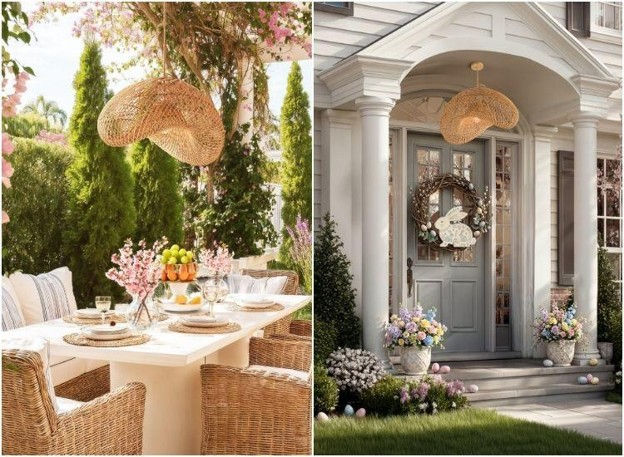
Image by Rowabi.
Start With What Happens at the Island
Before choosing pendants, recessed lights, or decorative fixtures, consider how the island is actually used after dark. Two islands of the same size may need completely different lighting depending on what happens around them.

Cooking island
If the island includes a grill, burners, sink, or primary preparation surface, task visibility should come first. The cook needs enough direct light to see food color, knife work, controls, and hot surfaces clearly.
A decorative fixture may contribute to the overall lighting, but it should not be the only source illuminating an active cooking area. In many covered outdoor kitchens, a pendant works best when it supports the mood while recessed lights, adjustable downlights, or grill lights handle the sharpest task visibility.
Bar and seating island
An island used mainly for drinks, casual meals, or entertaining needs a different balance. Guests should be able to see their food and one another without sitting directly beneath a harsh beam or staring into a bright bulb.
Here, softer ambient light can play a larger role, provided the countertop still receives enough illumination to remain practical.
Hybrid BBQ island
Many outdoor kitchens combine both functions. One side holds the grill and preparation area, while the opposite side has stools for family or guests.
This type of layout usually benefits from at least two lighting layers: stronger task light on the working side and softer ambient light around the seating side.
That distinction matters because an outdoor kitchen should not automatically copy an indoor kitchen lighting plan. Outside, there is often less surrounding light, more contrast between bright and dark areas, greater exposure to wind, and fewer reflective walls to spread illumination around the space.
Light the Work Surface, Not Just the Island
One of the most common lighting mistakes is centering a fixture visually without checking whether the light actually lands where someone is working.
Imagine a ten-foot island with a grill positioned near one end and a cutting board area near the other. A pendant placed exactly at the geometric center may look balanced from across the patio, but its brightest area could fall on an unused section of countertop.
Instead, identify the functional zones first:
● the primary preparation area;
● the grill and control area;
● the sink, if one is present;
● the serving area;
● the seating positions.
Once those zones are clear, decide which light source is responsible for each one. For example, recessed or directional downlights can provide focused illumination over a grill or food-prep area, while hanging fixtures can bring softer light closer to the bar or social side of the island.
This is where material and shade design matter. A fixture like the outdoor kloe rattan pendant light gives a useful example of how an outdoor-rated woven pendant can bring texture, warmth, and a more residential feeling to a covered patio island without making the workspace feel overly formal. It is the kind of fixture that works best when it is placed with purpose, above a seating zone, serving area, or relaxed dining corner rather than treated as the only light source for the entire outdoor kitchen.

The important principle is simple: a pendant centered over the island is not necessarily centered over the work.
When Outdoor Pendant Lighting Makes Sense
When an island sits beneath a solid patio roof, pavilion, or appropriately designed pergola, outdoor pendant lighting can help define the cooking or seating zone while bringing useful light closer to the countertop.
Pendants tend to work particularly well when the outdoor kitchen has a clear overhead mounting point and the island functions as a fixed gathering area rather than part of a walkway.
They can also solve a visual problem that recessed lighting alone sometimes leaves behind. Downlights may illuminate the countertop effectively, but the space can still feel flat or disconnected after dark. A pendant adds a visible layer between the roof structure and the island, helping the kitchen feel more like an intentional outdoor room.
This is one reason woven fixtures are often used under covered outdoor structures. Their texture can visually soften hard materials such as stone counters, stainless-steel appliances, timber beams, and concrete flooring.
Rowabi Lighting, for example, focuses on decorative lighting fixtures with an emphasis on woven and natural-material designs. Within an outdoor kitchen context, that type of fixture is most useful when the design goal is to combine a defined lighting zone with a warmer visual material rather than relying entirely on architectural downlights.
Pendant lighting is less suitable when the fixture would hang in the middle of a walking route, where no appropriate overhead structure exists, or where wind and weather exposure exceed the fixture's intended installation conditions.
Position Pendants Around Sightlines and Seating
Correct pendant placement is about more than height above the countertop. You also need to consider what people will see when they are cooking, sitting, and talking across the island.
Over a cooking island
A fixture above a cooking island should help illuminate the work surface without becoming a visual barrier between the cook and everyone on the opposite side.
Large shades can be especially noticeable in an outdoor kitchen because there may be fewer surrounding objects competing for attention. If the fixture hangs too low, someone working at the grill may constantly be looking around or underneath it to speak with guests.
Before installation, stand where the cook normally stands and look toward each seating position. The fixture should feel overhead, not directly in the conversation line.
Over an outdoor bar
For outdoor bar lighting, avoid positioning the bottom of a fixture at the eye level of seated guests. A pendant that appears appropriately scaled while the space is empty can become distracting once stools are occupied.

Think about both seated and standing sightlines. Someone sitting at the bar should be able to speak comfortably with a person standing on the kitchen side without a shade or bright exposed bulb sitting between their faces.
Between cooking and seating zones
A larger island does not always need every fixture aligned down its exact centerline. In some layouts, lighting can reinforce the functional separation between the working side and the social side.
For instance, directional lights may handle the grill and preparation area while one or two decorative pendants define the seating portion of the island.
A fixture such as the Outdoor Kloe Rattan Pendant Light can make sense in this type of covered outdoor setting when a woven decorative pendant is appropriate for the mounting location and the installation conditions match the manufacturer's requirements. Rather than treating it as the primary task light for the entire BBQ area, it can form part of a layered plan around a fixed island or seating zone.
Do not hang a pendant just because there is a beam
Outdoor structures often make fixture placement look deceptively simple. A pergola beam or pavilion joist may provide an obvious mounting point, but that does not automatically make it the correct lighting position.
Before using the beam location, compare it with the countertop, grill, stools, and walking route below.
Beam location and useful light location are not always the same thing.
Use More Than One Layer of BBQ Island Lighting
Good bbq island lighting usually comes from several light sources doing different jobs instead of one fixture trying to handle everything.
Task lighting
Task lighting should serve the areas where accuracy and safety matter most. Depending on the outdoor kitchen, this may include:
● recessed downlights over the preparation counter;
● directional lighting near the grill;
● dedicated lighting around a sink or serving area;
● fixture placement that minimizes shadows from the person cooking.
For outdoor BBQ island lights, this layer should generally be planned before decorative lighting because it directly affects how usable the kitchen is after sunset.
Ambient lighting
Ambient lighting provides broader illumination and helps the kitchen feel comfortable rather than overly bright in a few isolated areas.
This layer may include outdoor kitchen pendant lights, ceiling-mounted fixtures, wall lights, or other sources that distribute light across the surrounding space.
In a covered outdoor kitchen, pendants can be especially useful because they lower the apparent light source and visually connect the overhead structure with the countertop below.
Accent and safety lighting
Lower-level lighting can make a significant difference once the main cooking lights are turned on. Common additions include:
● under-counter LED lighting;
● toe-kick lighting;
● step lights;
● path lighting around the kitchen;
● subtle lighting around nearby seating or landscape features.
These sources help people move around the space safely without forcing the entire patio to operate at the brightness level required for food preparation.
String lights can also create atmosphere, but they should not be expected to do the job of food-prep lighting. Their value is usually visual warmth and general ambiance rather than precise illumination over a cutting board or grill.
Plan Pergola Kitchen Lighting Around the Structure
A pergola creates useful mounting opportunities, but pergola kitchen lighting requires more planning than simply attaching a fixture to the nearest beam.
First, consider how open the pergola actually is. Some structures have a solid or nearly solid roof, while others allow significant exposure to wind and moisture through widely spaced slats.
Second, look at fixture movement. A long suspended pendant may behave differently beneath an open pergola than beneath a sheltered porch roof.
Finally, map the structural grid against the island below. If the ideal light position does not line up with a beam, the mounting strategy should be addressed as part of the installation rather than shifting the light to a less useful position just for convenience.
“Outdoor” Does Not Mean Every Fixture Works Everywhere
The word “outdoor” can describe very different environments.
A fixture installed under a deep covered patio experiences different conditions from one mounted beneath an open pergola. A screened porch differs again from a partially covered BBQ island, while a completely exposed island may receive direct rain and stronger wind.
That is why the installation location matters as much as the visual style of the fixture.
Covered does not automatically mean dry.
Wind-driven rain, humidity, condensation, and seasonal weather can still reach areas beneath roofs and pergolas. Before selecting any fixture, check:
● the manufacturer's stated location rating;
● whether it is intended for damp or wet conditions where applicable;
● mounting and installation instructions;
● clearance requirements;
● any limitations related to exposure or suspension.
Avoid assuming that a decorative fixture is suitable for every exterior location simply because it appears in an outdoor setting. Likewise, terms such as “waterproof” should only be used when the manufacturer specifically makes that claim.
A Simple Outdoor Kitchen Lighting Plan Before Installation
Before permanent wiring or fixture installation begins, walk through the kitchen after sunset if possible and map the space in the order people actually use it.
Mark the grill and primary prep zones. These areas need the clearest task lighting.
Mark every seating position. Look at where guests' eyes will be when seated.
Identify the overhead structure. Note roofs, beams, pergola members, and possible mounting points.
Choose the task-light source first. Make sure grill controls, cutting surfaces, and sinks remain visible.
Add an ambient lighting layer. Use pendants, ceiling fixtures, or wall lighting to make the wider space comfortable.
Check sightlines. Stand and sit around the island before finalizing pendant positions.
Verify the fixture rating. Match the fixture to the actual degree of outdoor exposure.
Review power and control locations. Consider how different lighting layers will be switched or dimmed.
Test brightness in the evening. Outdoor contrast is difficult to judge accurately during daylight.
Use qualified professional installation where permanent electrical work is required.
This planning sequence also prevents a common mistake: choosing a visually attractive fixture first and then trying to make the rest of the lighting plan work around it.
Conclusion
The best outdoor kitchen island lights are not necessarily the largest fixtures, the brightest fixtures, or the ones placed perfectly in the geometric center of the countertop.
They are the lights that support what actually happens around the island.
A cooking zone needs clear task visibility. A bar needs comfortable light without glare. A hybrid BBQ island needs both. Decorative pendants can help define the space and bring light closer to the countertop, while downlights, wall fixtures, and low-level lighting handle other parts of the job.
When the position, sightlines, lighting layers, structure, and outdoor exposure are considered first, fixture selection becomes much easier.
The best outdoor kitchen island lights are the ones that make cooking easier, conversation comfortable, and the island genuinely usable after dark.


Comments