


All White vs Brilliant White: The Comparison That Actually Helps You Decide

All White and Brilliant White sound like they should be close cousins, and on a colour card they can look it. On a wall, they are not. All White is Farrow & Ball's undiluted base - no added pigment, no engineered brightness, just the softest, most sympathetic white the brand makes. Brilliant White is Benjamin Moore's crisp, cool-toned bright white, built specifically for contrast and definition rather than softness. Both read as very light, very usable whites. Only one of them is actually warm.
I have specified both across UK projects and the choice is never interchangeable. All White reflects light evenly and never turns cold; Brilliant White reflects light with an edge, and that edge is either exactly what a scheme needs or the reason it feels clinical.
This guide covers the LRV and undertone difference in detail, which rooms each colour actually suits, how they pair together on walls and trim, and a light test you can run before committing to either one.

At a Glance
| All White | Brilliant White |
Brand | Farrow & Ball | Benjamin Moore |
LRV | 94 - the highest LRV in the Farrow & Ball range, softened by trace warmth | 84 - still very high, but noticeably less luminous than All White |
Colour category | Whitest of Farrow & Ball's whites - an undiluted base rather than a mixed neutral | A true cool white built for contrast and definition, not a soft neutral |
Undertones | None added - it is the paint base itself, and reads warm-neutral rather than blue | A distinct cool blue-grey undertone - the defining trait of a genuine 'brilliant' white |
Character | Soft, quiet, and forgiving - it recedes into a room rather than announcing itself | Crisp, graphic, and assertive - it reads as a considered design choice, not a default |
North-facing | Excellent - the trace warmth stops the grey cast that north light usually pulls from bright whites | Risky - the cool undertone can turn flat or slightly clinical without direct light to warm it |
South-facing | Beautiful - the softness tempers strong sunlight without dulling the brightness | Excellent - direct light activates the cool crispness and the white reads genuinely brilliant |
Open-plan | Strong - reads consistently warm-neutral across zones with mixed light and material temperatures | Weak - the cool undertone can read inconsistently warmer or cooler depending on each zone's light |
On walls | A quiet, light-maximising backdrop that works in almost any room, including the trickiest low-light ones | A high-contrast backdrop best used deliberately, not as a default all-over wall colour |
On cabinets | The safer choice across most kitchens, especially with warm wood or mixed materials | Best in contemporary kitchens with cool stone and stainless steel, where the crispness reads intentional |
Use together? | Yes - All White on walls with Brilliant White on trim creates deliberate, graphic contrast | Brilliant White on trim against All White walls is the classic pairing; the reverse rarely works |
Trim for each | Brilliant White OC-150 for crisp definition, or Strong White for a softer, more tonal step up | Its own tone is the standard trim choice; pair walls in All White for warmth without competing |
Style fit | Period properties, coastal interiors, Scandi-minimal schemes, quietly modern spaces | Contemporary, graphic, high-contrast modern interiors |
Architect's pick | When the brief needs maximum light without any hint of cold or clinical | When the brief specifically wants a crisp, high-contrast, unmistakably 'white' white |
Farrow & Ball All White No.2005 - What It Really Looks Like

All White has an LRV of 94, which puts it at the very top of the Farrow & Ball range and among the brightest whites available from any brand.
It contains no other pigment than the base itself - that is the point. There is no added blue, grey, or cream to soften or sharpen it. In most UK light this reads as a warm, sympathetic white rather than a stark one, because the base carries a whisper of warmth on its own.
It does not turn grey in poor light. That is the trait most bright whites fail on. All White holds its softness in a north-facing hallway just as reliably as it holds its brightness in a south-facing kitchen. It is still unmistakably white - just never a cold one.
For the single-colour deep dive on this exact shade - full LRV breakdown, room-by-room verdicts, and where it goes wrong - the Farrow & Ball All White guide covers every application in detail.
Benjamin Moore Brilliant White OC-150 - What It Really Looks Like

Brilliant White has an LRV of 84, which is still a very bright white but sits a full 10 points below All White.
The name is accurate in a different way than All White's. Where All White is bright because it reflects light evenly, Brilliant White is bright because of contrast - a cool blue-grey undertone gives it edge and definition against warmer materials. It does not fade into a room. It defines it.
In flat or artificial light the cool undertone can tip toward clinical, particularly in a north-facing room. There is nothing ambiguous about this trait - it is either exactly the crispness the brief wants, or it is a problem.
For a closer look at how a genuinely cool, high-LRV Benjamin Moore white performs against a warmer neighbouring shade, the Chantilly Lace vs White Dove guide walks through the same cool-versus-warm undertone question in more depth.
The Real Difference Between All White and Brilliant White

The simplest way to explain it: All White is bright because it holds no pigment at all. Brilliant White is bright because of a cool undertone that creates contrast. They arrive at similarly high brightness from opposite directions, and that is why they behave so differently on a wall.
All White sits at LRV 94 against Brilliant White's 84 - a 10-point gap that is large enough to see clearly in person. Side by side, All White looks softer and slightly warmer even though neither colour contains warm pigment; Brilliant White looks noticeably cooler, crisper, and more graphic by comparison. The LRV gap explains the brightness. The undertone explains the personality.
The pairing question comes up constantly, and it has a clear answer. All White on walls with Brilliant White on trim is the classic combination - the cool trim creates genuine definition against the soft, warm-neutral wall without a clash, because the contrast is the point. Brilliant White on walls with All White on trim is far less common and rarely recommended - the walls read cold and the trim looks like it is trying to warm them up rather than define them. For the closest thing to an off-cluster case study on how a very different Farrow & Ball near-white pairs against its trim partners, theFarrow & Ball Strong White vs Wevet guide covers the same wall-and-trim logic within the Farrow & Ball range.
Not sure which one works for your room? A colour consultation is included in all our design packages - book directly here. |
When to Choose All White

Choose All White when the room needs every available bit of daylight bounced around without looking clinical.
These are the conditions where it is the right answer:
North-facing rooms, hallways with borrowed light only, and small rooms with limited window area. Period properties where a stark, blue-white would look anachronistic against original joinery and cornicing. Rooms where the brief is 'as light as possible' but the client has already rejected anything that reads clinical or new-build.
Avoid All White where the brief specifically wants graphic, high-contrast crispness - its softness will read as slightly flat next to a genuinely cool white trim or a bold accent colour.
When to Choose Brilliant White
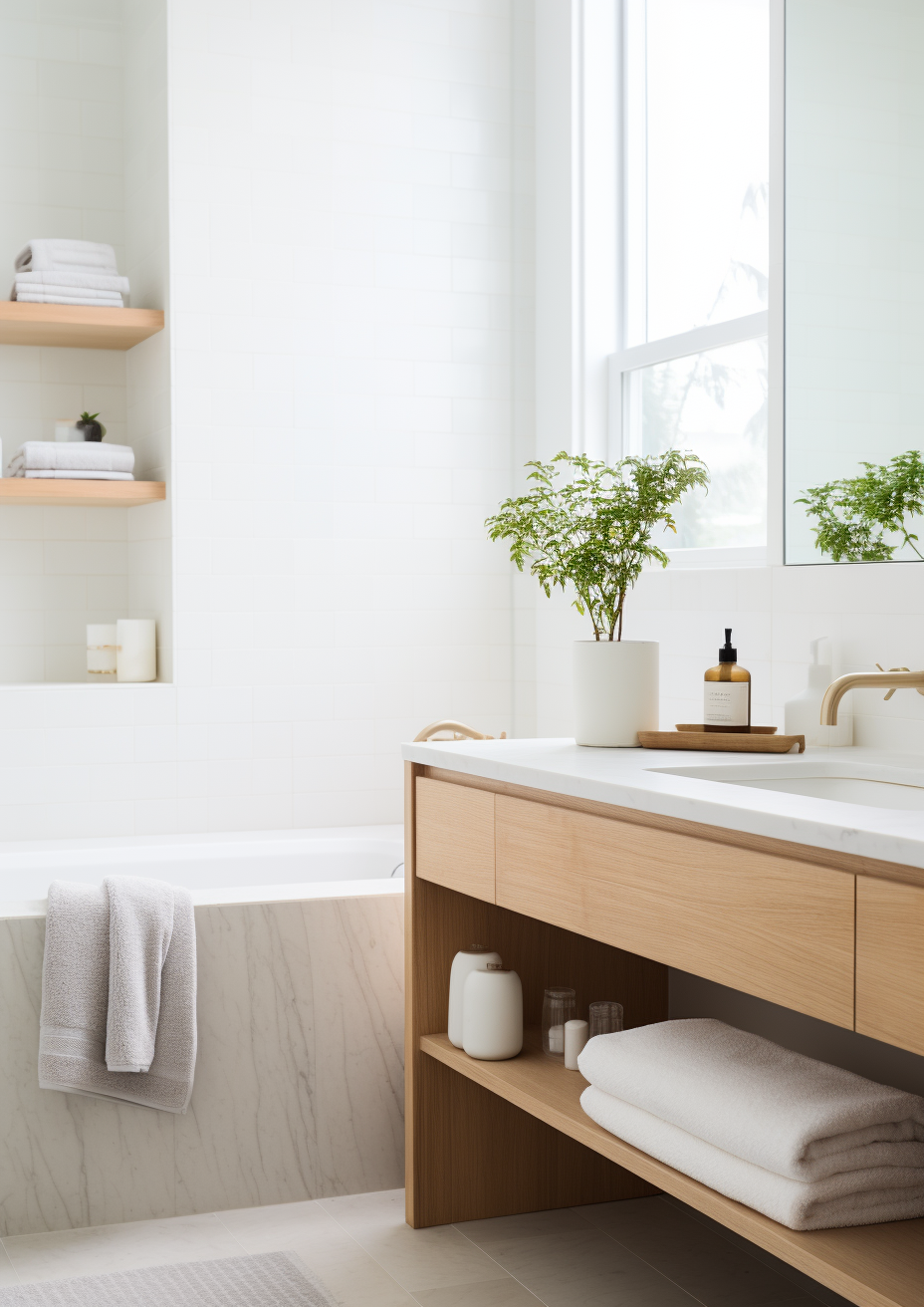
Choose Brilliant White when the brief specifically wants crisp, high-contrast definition rather than softness.
These are the situations where it outperforms All White:
Contemporary and graphic interiors where the walls need to read as a deliberate, cool-toned choice. Trim, ceilings, and joinery in almost any scheme, where its cool crispness creates clean lines against warmer wall colours. South-facing rooms with strong natural light, where the cool undertone activates rather than flattens.
Avoid it in north-facing rooms or anywhere the brief is softness over definition - its assertiveness is a liability in low light, not an asset.
How the Pairings Differ

For All White on walls, the most natural trim choice is Brilliant White OC-150 - a genuine step down in LRV that reads as intentional contrast rather than a mismatch. Strong White is the gentler alternative when full contrast feels like too much.
For Brilliant White on walls, keep it to accent zones or feature rooms rather than an entire open-plan scheme - its cool assertiveness works best contained. All White on adjoining rooms or hallways keeps the transition from feeling cold.
For flooring, All White is the more forgiving of the two. It sits comfortably against warm wood, pale limestone, and cool porcelain alike. Brilliant White prefers cool-toned stone, polished concrete, or pale oak with a cool cast - warm honey-toned wood can fight its blue-grey undertone.
For hardware, All White suits aged brass, brushed gold, and matte black equally well. Brilliant White is sharpest with chrome, brushed nickel, and matte black - the cool metals reinforce rather than compete with its undertone.
Architect's Verdict - All White or Brilliant White?
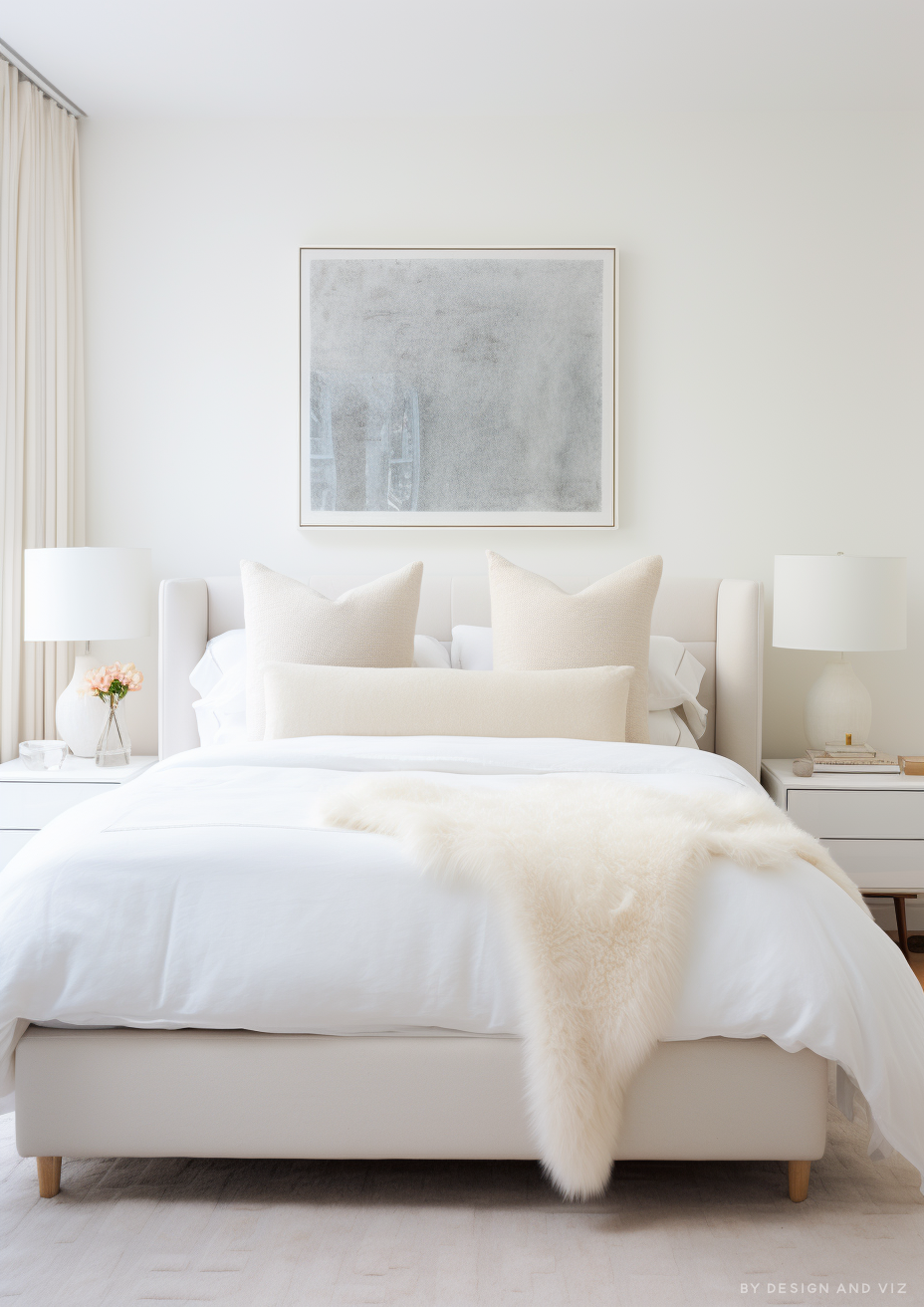
For most homes - particularly period properties, low-light rooms, or anywhere the brief is warmth without commitment to colour - All White is the more reliable choice.
All White is right when the goal is maximum brightness that never tips cold. It is the safer bet in the rooms most homes actually have: north-facing bedrooms, narrow hallways, kitchens with mixed material temperatures. It rewards you with light and never punishes you with a clinical cast.
Brilliant White is right when the brief specifically calls for crisp, high-contrast definition - trim against a warmer wall, a graphic modern scheme, a south-facing room with strong light to activate the cool undertone. It is a more deliberate choice and performs best when used deliberately.
The test I always use for this pairing: buy sample pots of both, paint patches side by side on the same wall, and check them against your worst light - typically a north-facing wall in flat afternoon overcast. A pass looks like All White staying soft and warm-neutral with no grey cast, and Brilliant White still reading crisp rather than sliding into flat or clinical. If Brilliant White looks lifeless in that test, move it to trim only and let All White carry the walls.
Frequently Asked Questions

Is Brilliant White brighter than All White?
No - All White actually has the higher LRV at 94 versus 84 for Brilliant White. Brilliant White looks brighter in photographs because of its cool, high-contrast undertone, but in terms of raw light reflectance, All White reflects more.
Can I use All White and Brilliant White in the same house?
Yes, and it is a well-established combination. All White on walls with Brilliant White on trim is the classic pairing - the cool trim creates clean definition against the soft, warm-neutral wall. The reverse combination is rarely recommended.
Which is better for a north-facing room?
All White handles north-facing rooms far better than Brilliant White. Its trace warmth prevents the grey cast that cool whites pick up in flat, indirect light. Brilliant White can look clinical in the same conditions without direct sun to warm it up.
Does Brilliant White look blue on the walls?
In flat or artificial light, it can read slightly cool or grey rather than a true blue, but the cool undertone is unmistakable next to a warmer white like All White. In strong natural light it reads crisp rather than blue. Always test with a large sample patch before committing.
Which is better for trim and woodwork?
Brilliant White is the stronger choice for trim in most schemes. Its cool, high-contrast undertone creates clean definition against warmer wall colours including All White. All White on trim works only when the walls are already a cool or bold colour that needs softening.
What is the LRV of All White vs Brilliant White?
All White has an LRV of approximately 94 and Brilliant White has an LRV of approximately 84. The 10-point gap is large enough to see clearly in person - All White is the brighter, softer colour of the two despite Brilliant White's name.
Final Thought
All White and Brilliant White are both excellent near-white paints, but they are not interchangeable. The choice between them is not about which one is 'more white' - it is about whether the room needs softness or definition.
If your room fights for daylight and the brief is warmth without colour, All White will give you brightness that never turns cold. If the brief calls for crisp, deliberate contrast - especially on trim - Brilliant White delivers definition that All White cannot. Buy sample pots of both, paint large patches side by side, and check them in your room's worst light. The answer will be clear within a day.
Want a complete colour scheme built around All White or Brilliant White? Our design packages cover full palette selection, finish recommendations, and 3D visualisations - see our packages. |
About the Author
Beril Yilmaz is a qualified architect and interior designer based in the UK. She runs BY Design And Viz, a design platform covering paint colour reviews, interior design guidance, and residential design projects. Beril has specified both Farrow & Ball All White and Benjamin Moore Brilliant White across residential projects in the UK and internationally - All White in period properties and low-light rooms needing warmth without colour, Brilliant White on trim and joinery where crisp definition against a softer wall colour is the goal, often specifying both together in the same scheme with Brilliant White on trim against All White walls.


Comments