


Covered Patios: The Real Secrets To Creating a Functional Outdoor Space You’ll Use Daily

There’s something incredibly satisfying about stepping into an outdoor area that finally works the way you always imagined. A covered patio can be that moment — if you design it with intention.
Here’s the thing about covered patios: everyone wants one, but very few know how to make theirs genuinely work for the way they live. You might have a picture in your mind of long summer evenings, weekend lunches, or a morning coffee spot, yet the finished result often ends up unused because the layout, materials, or features weren’t planned with everyday life in mind.
What makes a covered patio successful isn’t just the structure overhead. It’s how the space supports the flow of your routine, enhances your home’s exterior, and becomes a natural extension of the rooms inside. When that alignment clicks, your patio suddenly becomes one of the most valuable and frequently used areas of your home.
In this guide, we’re breaking down the real design decisions that create that transformation. From the roof style to the layout, lighting, flooring, and year-round usability, you’ll learn what actually matters — and what most homeowners overlook. By the end, you’ll know exactly how to design a covered patio you’ll use every single day.
At A Glance
How covered patios extend your living space
The best layout choices for daily use
Roof designs that suit your home
Ways to control sun and weather exposure
Lighting, flooring and material guidance
Designer-backed tips for long-lasting results
1. Covered Patios: Defining the Purpose Before Designing Anything

Before choosing beams or tiles or that outdoor dining set you’ve been eyeing, start with a purpose statement for your covered patio. Most unused patios happen because homeowners design the structure first and the lifestyle second. Your patio will only become a daily-use space if the design directly supports your routine.
Think about the real reason you want this upgrade. Is it for morning quiet time, weekend gatherings, dining outdoors, extending your kitchen, or creating a multi-use family zone? Each of these leads to a completely different layout, roof choice, and furniture plan. Once the purpose is clear, the entire design falls into place more easily and more confidently.
Designer Tip: Write down one single sentence describing your patio’s main job. Make every design decision support that purpose — nothing extra, nothing that distracts.
2. Covered Patios: Choosing the Right Roof Style for Your Home

The roof is the defining feature of a covered patio, and it does far more than provide shade. It sets the architectural tone, impacts natural airflow, changes how much daylight enters adjacent rooms, and defines how weatherproof your outdoor area will be. The best choice depends on your home’s shape, the direction of the sun, and the overall exterior design.
Gable roofs add height and airflow. Flat roofs create a streamlined, contemporary look. Pergola-style covers introduce filtered shade, while solid roofs offer full protection. Some homeowners opt for hybrid versions with partial screening or adjustable louvers. The key is aligning the roof to your home’s proportions rather than creating a disconnected add-on.
Designer Tip: Stand back from your home and visualise the roofline. The covered patio should feel like it naturally continues the architecture — not compete with it.
3. Covered Patios: Planning the Layout Like an Outdoor Room
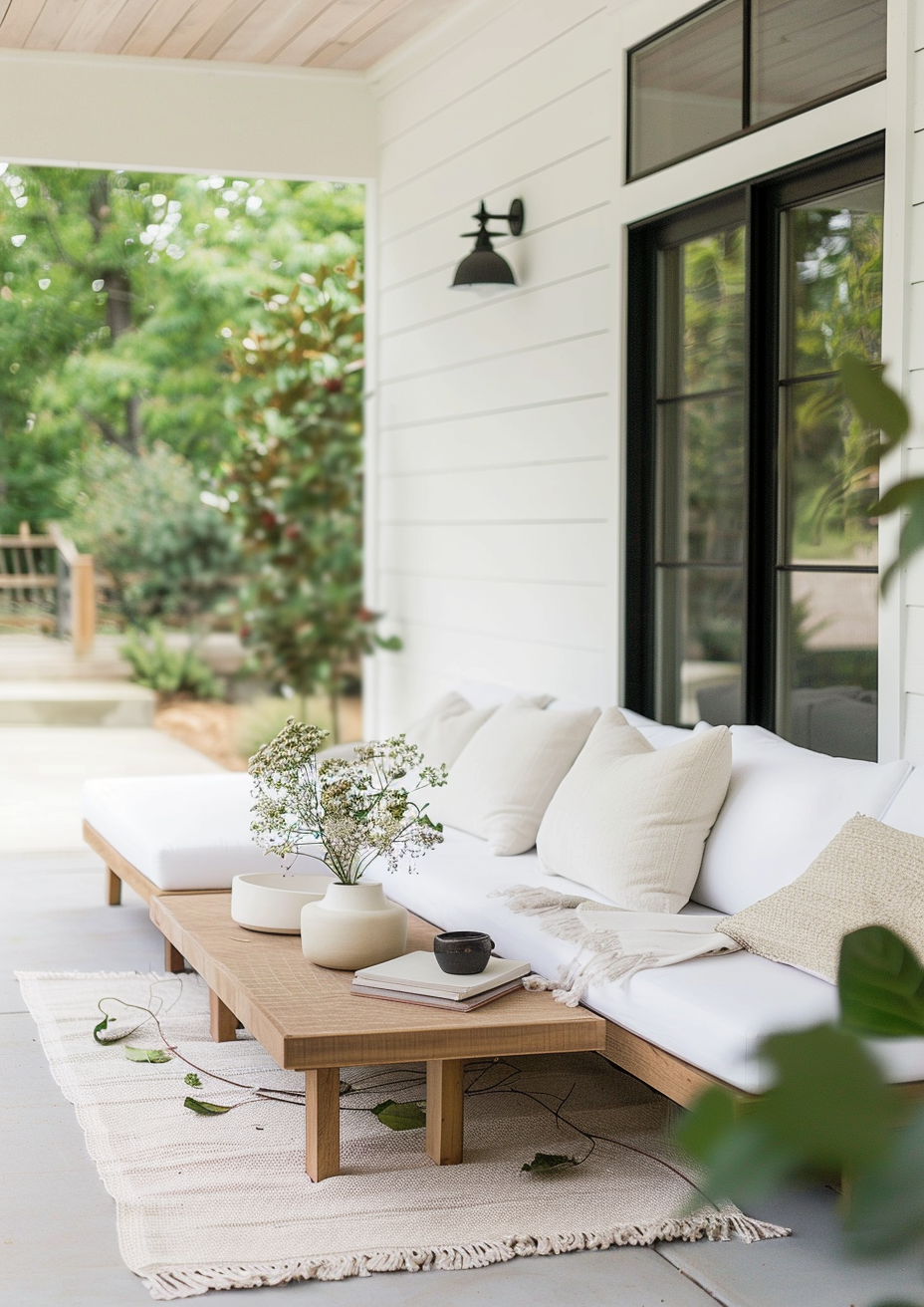
A covered patio works best when it’s designed with the mindset of an interior room. That means treating the area as a functional zone rather than a wide-open slab of space. Without clear zoning, furniture often becomes scattered, circulation feels awkward, and the patio ends up underused.
Create a dedicated layout with an anchor point — a dining table, a sectional, or an outdoor kitchen element. From there, shape the rest of the patio around that function. Thoughtful spacing between furniture pieces ensures flow, while intentional placement ensures you can move naturally from indoors to outdoors without obstacles.
Designer Tip: Don’t push all furniture to the perimeter. Create a central focal point that gives the patio structure and purpose.
If you want help turning your ideas into a clear exterior plan, we’d love to guide you. Explore how our design process works — we make every step simple, visual, and tailored so you can move forward confidently.
4. Covered Patios: Selecting Flooring That Supports Daily Use

Your flooring choice determines how the patio feels underfoot, how it connects visually to the interior, and how well it handles long-term use. This is one of the most impactful decisions, yet it’s often rushed.
Here are options that consistently perform well:
Porcelain tiles for durability and low maintenance
Composite decking for a natural-looking, uniform surface
Natural stone for character and long-term resilience
These materials hold up well across seasons and work with a wide range of architectural styles.
Designer Tip: Choose flooring that visually links to your home’s interior materials — even a subtle connection strengthens the indoor-outdoor flow.
5. Covered Patios: Why Lighting Is the Element Most Homeowners Underestimate

Lighting is often treated as the finishing touch, but for covered patios, it’s a foundational element. Thoughtful lighting ensures the space remains usable after sunset, supports different activities, and adds atmosphere instantly. Without a solid lighting plan, even the best-designed patio loses usability in the evenings.
Combine overhead fixtures with accent lighting. Think pendant lights over dining zones, subtle wall sconces near seating areas, and pathway lighting that guides movement. Layering lighting gives your patio flexibility — bright enough for hosting, gentle enough for winding down.
Designer Tip: Install dimmers outdoors as well. Adjustable lighting is one of the quickest ways to control mood and functionality.
6. Covered Patios: Creating Shade and Weather Protection Beyond the Roof

A roof alone isn’t always enough. The most functional covered patios use additional elements to control climate, wind, and sun exposure. These additions help make the patio usable across more months of the year.
You can incorporate:
Pull-down screens for shade and wind protection
Louvered side panels for adjustable airflow
Outdoor curtains for privacy and flexibility
These simple upgrades add layers of functionality and dramatically increase how often you’ll use the space.
Designer Tip: Think seasonally. Design the patio for the hottest day and the rainiest day, not just ideal weather.
If you’re exploring covered patio ideas and want expert clarity on layout, materials or finishes, our virtual exterior design packages make the process effortless. We help you make confident decisions without any guesswork.
7. Covered Patios: Connecting the Patio Seamlessly to Your Interior
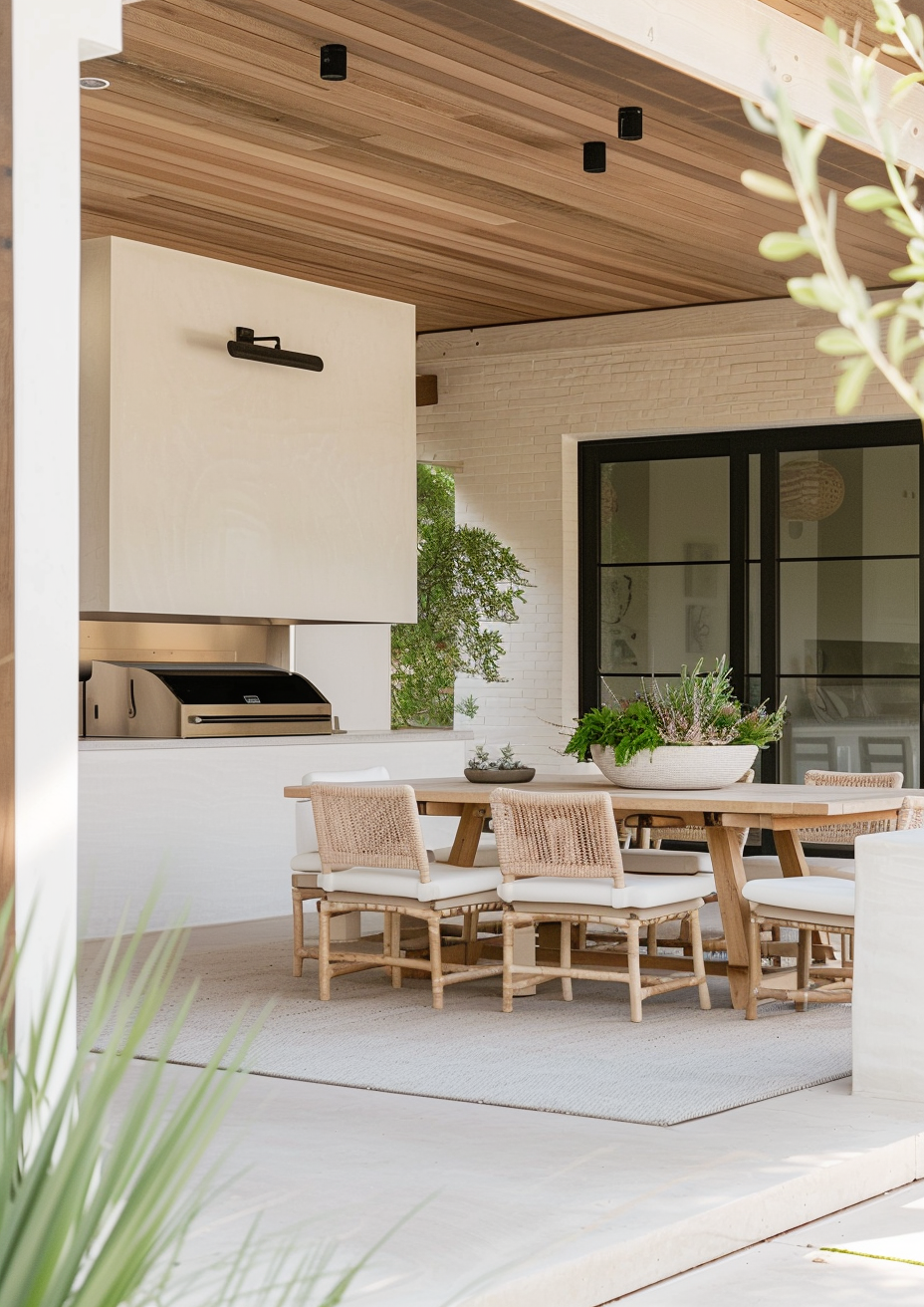
A covered patio shouldn’t feel like a separate zone. When done well, it becomes a continuation of the home’s internal layout. That’s where alignment in scale, materials, and layout becomes essential.
Consider how people move through the ground floor. The patio should feel like the next chapter of that flow. Using coordinated colours, repeating certain materials, and mirroring interior layout principles helps create that effortless transition without making the space feel repetitive.
Designer Tip: Match at least one finish — flooring tone, hardware colour, or wood texture — to something inside your home to create a consistent visual story.
8. Covered Patios: Designing for Furniture That Truly Fits the Space

Oversized furniture can overwhelm a small patio, while small-scale pieces can look lost under a large roof. Proportion plays a huge role in how often you’ll actually use the space.
Choose furniture that respects traffic flow, works with the structure of the patio, and encourages people to sit, gather, or dine comfortably. Outdoor-specific fabrics and cushions also ensure the space remains practical long-term.
Designer Tip: Tape out the furniture footprint on your patio before buying. This prevents the most common scale mistakes.
9. Covered Patios: Adding Heating, Cooling and Seasonal Comfort

Year-round usability is one of the biggest advantages of a covered patio — but only if you design for temperature control. Adding heating elements, ceiling fans, or even subtle radiant options helps you extend the use of the space far beyond summer.
This is where daily use really becomes possible. When a patio supports your comfort in different conditions, you naturally gravitate to it more often.
Designer Tip: Place heating elements to support seating zones, not the centre of the space.
10. Covered Patios: The Features That Make a Patio Feel Complete

Small details make a large difference in outdoor spaces. Built-in storage, outdoor-rated artwork, side tables, planters, and hardware choices complete the look and functionality of a covered patio.
Your goal is to avoid a “half-finished” feeling. When the small details are intentional, the patio feels like a proper room — not a leftover space.
Designer Tip: Use outdoor-safe materials for all accessories to ensure the patio remains easy to maintain.
Conclusion
A covered patio becomes a daily-use space when every design choice serves a purpose. Once you understand the structure, layout, lighting, materials, and climate control, you begin to see how these elements work together to create a functional exterior that enhances your home.
With clear planning and designer-led decisions, your covered patio has the potential to become one of the most valuable areas of your home — not just architecturally, but in how often you use and enjoy it. Whether you’re hosting, relaxing, or extending your living space, the right design choices make all the difference.
FAQ: Covered Patios
Are covered patios worth the investment?
Yes, because they extend your usable living space, add value to your home, and make outdoor areas functional across more of the year.
What is the best roof type for a covered patio?
The best roof is the one that aligns with your home’s architecture and the patio’s purpose, whether that’s a gable, flat, or hybrid option.
How do I make my covered patio usable year-round?
Combine a solid roof with lighting, climate control, and practical weather protection elements like screens or panels.
How big should a covered patio be?
It should be large enough to support its intended purpose while allowing clear circulation. Scale the patio to your furniture and layout needs.
If you’re ready to turn your covered patio ideas into a clear, personalised design plan, we’re here to make the entire process seamless. Let’s create an outdoor space that finally works the way you’ve imagined — your transformation starts with us.
Author Bio
Beril Yilmaz is the designer behind BY Design And Viz, creating detailed interior and exterior concepts for homeowners who want clarity, structure, and beautiful long-term results. Her work blends practical planning with aesthetic direction, making every project feel achievable and tailored to the homeowner’s real lifestyle.


Comments