


Dover White vs Alabaster: Which Sherwin Williams White Is Right for Your Room?

Updated: Aug 4
Dover White SW 6385 and Alabaster SW 7008 are two of Sherwin Williams' most popular warm whites — and two of the most frequently confused. They share the same warm white family, similar LRV values, and a broadly similar character on the paint card. On a full wall in a real room they behave quite differently, and choosing the wrong one is one of the most common paint mistakes in warm neutral interiors.
This guide covers exactly how Dover White and Alabaster differ — undertones, LRV, lighting behavior, trim pairings, and the specific rooms and situations where each one performs at its best. The full breakdown of Alabaster on its own — its coordinating colors, room-by-room behavior, and best pairings — is in the Sherwin Williams Alabaster review.

Quick Reference: Dover White vs Alabaster
| Dover White SW 6385 | Alabaster SW 7008 |
LRV | 82 | 82 |
Undertone | Warm creamy yellow, slightly more yellow than Alabaster | Warm white, softer yellow — more restrained |
Character | Warmer, creamier, more committed to yellow warmth | Warmer but more versatile — bridges warm and neutral |
Best rooms | Living rooms, bedrooms, traditional interiors | Any room — kitchens, bathrooms, open plan |
Works with | Warm woods, warm stone, warm neutrals | Warm and cool materials, wide range of styles |
Caution | Can read yellow in strong south-facing light | Performs more consistently across light conditions |
Understanding the Key Difference
Both Dover White and Alabaster have an LRV of 82 — the numbers are identical. The difference is entirely in the undertone. Dover White carries a slightly warmer, more pronounced yellow-cream quality than Alabaster. Alabaster's warmth is real but more restrained — it sits more softly between warm and neutral, which is what gives it the broader versatility that has made it one of the most specified whites in residential design.
The simplest way to understand it: Dover White commits more fully to warmth; Alabaster hedges slightly. In rooms with warm materials, warm floors, and warm lighting this distinction matters less — both look beautiful. In rooms with cooler materials, modern fixtures, or mixed undertone environments, Alabaster's more restrained warmth handles the competing tones more gracefully.
For the cross-brand comparison of Alabaster against BM Cloud White - a creamier off-white that sits three LRV points above and commits more directly to warmth - the Alabaster vs Cloud White guide covers every condition and a clear verdict.
Undertones: The Detail That Changes Everything
Dover White SW 6385 — Undertone

Dover White has a warm creamy yellow undertone that is more pronounced than Alabaster's — it reads clearly as a warm white with real yellow warmth in most light conditions. In warm south-facing rooms or rooms with warm wood floors and warm artificial lighting, Dover White looks rich, inviting, and considered. The warmth is genuine and immediate.
In rooms with cool north-facing light, Dover White's yellow undertone can read as slightly more obvious — in very cool light it can tip towards looking slightly yellowed rather than warmly white. This is the same risk that affects any warm white with a pronounced yellow undertone, and it is the main reason Dover White requires more careful consideration of room orientation and lighting than Alabaster does.
For the cross-brand comparison of Dover White and Benjamin Moore Swiss Coffee -- two warm off-whites at the same LRV with different undertone characters -- the Swiss Coffee vs Dover White guide covers every condition and a clear verdict on which one suits your room.
For how Dover White compares to SW Accessible Beige - the committed warm beige-greige 24 LRV points below where Dover White on trim is a legitimate choice for fully warm schemes - the Dover White vs Accessible Beige guide covers the category difference and the wall-and-trim pairing.
Alabaster SW 7008 — Undertone

Alabaster has a warm undertone that sits more softly between yellow and neutral — it reads as warm white rather than creamy white, and that distinction gives it a wider range of compatibility. It works alongside cool materials without clashing, holds its quality in north-facing rooms better than Dover White, and transitions naturally between warm and cool elements in the same space.
This is what makes Alabaster the more widely specified of the two. Its warmth prevents the cold, clinical quality of higher-LRV whites, but its restraint prevents the yellow quality from becoming a problem in mixed lighting or mixed material environments. For the full picture of how Alabaster coordinates with other colors, the Alabaster coordinating colors guide covers every pairing.
For the comparison of Alabaster against Pure White - the near-neutral SW white that is Alabaster's most natural trim pairing - the Alabaster vs Pure White guide explains the undertone difference and which one belongs on walls versus trim.
How They Behave in Different Light

North-Facing Rooms
Alabaster is the more reliable choice in north-facing rooms — its warm undertone offsets the cool blue quality of north-facing light without tipping into yellow. Dover White also works in north-facing rooms, but its more pronounced yellow undertone requires careful testing — in some north-facing rooms it reads as creamy in a way that feels warm and inviting; in others the yellow becomes more visible and the color feels slightly off.
The rule for north-facing rooms: test both colors on large sample boards viewed at multiple times of day before committing. If Dover White looks warmly white in your specific north-facing room it is a beautiful choice; if it tips yellow, Alabaster is the safer option.
For how Dover White compares to BM White Dove - the grey-cream warm white at almost identical LRV that is significantly more versatile across orientations - the Dover White vs White Dove guide covers how the direct vs restrained warmth difference plays out on a wall.
South-Facing Rooms
Both Dover White and Alabaster perform well in south-facing rooms, but Dover White requires more careful consideration — in strong direct southern light its yellow undertone can be amplified to the point where it reads as clearly cream rather than white. Alabaster holds its quality more consistently in strong light, reading as crisp warm white rather than creamy.
In a south-facing room with warm wood floors and warm furnishings, Dover White's extra creaminess can look intentional and beautiful — the warmth reads as richness rather than yellow. The surrounding materials determine whether Dover White's warmth is an asset or a liability in strong light.
For how Dover White compares to SW Creamy - the more buttery, more committed warm white 1 LRV point below where the near-identical brightness hides a real undertone character difference - the Dover White vs Creamy guide covers why they should never go on adjacent surfaces and which one your brief calls for.
Artificial Lighting
Warm artificial lighting — incandescent or warm LED at 2700K to 3000K — deepens the warm undertone of both colors. Dover White reads as genuinely creamy in warm evening light, which creates a cozy, enveloping quality that suits traditional and warm-contemporary interiors. Alabaster deepens to a soft warm white under the same conditions — slightly less creamy than Dover White but still warm and inviting.
Cool daylight bulbs above 4000K are not recommended alongside either color — they strip the warmth from both and make the yellow undertone read as flat rather than warm. For both Dover White and Alabaster, warm bulbs at 2700K to 3000K are the correct lighting choice.
Not sure which white works in your specific room? Book a color consultation here. |
Trim Pairings

Dover White as a Wall Color — Best Trim
When Dover White is on the walls, Pure White SW 7005 is the most reliable trim color — it provides clean definition without fighting the creaminess of the walls. Extra White SW 7006 on trim alongside Dover White walls creates a sharper, more contemporary contrast that can actually make the yellow quality of the walls more visible — use it only if the crisper look is specifically what you want.
Avoid Alabaster on trim alongside Dover White walls — two warm whites at similar LRV values with slightly different undertones on walls and trim creates an undertone conflict that reads as unresolved rather than tonal. Keep trim clearly lighter and crisper than the walls.
Alabaster as a Wall Color — Best Trim
Pure White on trim is the most consistent choice alongside Alabaster walls for the same reasons — warm enough to complement the wall color, crisp enough to create definition. For a warmer, more traditional scheme, Alabaster on walls with Alabaster on trim in a higher sheen (eggshell to semi-gloss) creates a sophisticated tonal relationship. The sheen difference provides definition without the undertone conflict of two different colors. For how Alabaster compares to Snowbound - the composed, grey-based Sherwin-Williams white it sits closest to on the LRV scale - the Snowbound vs Alabaster guide covers the warm-versus-cool undertone split and the classic wall-and-trim pairing between the two.
Dover White or Alabaster as Trim Colors
Both Dover White and Alabaster are frequently used as trim colors alongside deeper wall colors. Alabaster on trim is the more versatile choice — its restrained warmth works alongside both warm and cool wall colors. Dover White on trim works best alongside clearly warm wall colors like greige, warm gray, or warm beige — its more pronounced warmth can fight cooler wall colors.
For how Dover White compares to SW Pure White - the near-neutral trim white 2 LRV points above that is the standard trim choice for Dover White walls - the Dover White vs Pure White guide explains the role difference and why this wall-and-trim combination works so reliably.
Where Each Color Works Best

Use Dover White When...
• The room has warm wood floors, warm stone, or predominantly warm materials
• The interior style is traditional, farmhouse, or warm-contemporary
• Warm artificial lighting is used throughout the space
• You want a white that reads clearly warm and creamy rather than clean and neutral
• The room is south or east-facing with warm natural light
For how Dover White compares to Sherwin Williams Greek Villa -- a brighter, sandier warm white in the same LRV range -- the Greek Villa vs Dover White guide covers that comparison directly.
Use Alabaster When...
• The room has mixed warm and cool materials
• The interior style is contemporary, transitional, or organic modern
• You need a white that works across multiple rooms with different orientations
• The room is north-facing or receives limited direct natural light
• You want the most versatile warm white available across the widest range of conditions
Room-by-Room Recommendations
Kitchen

Alabaster is the stronger kitchen choice for most homes — its broader versatility handles the range of materials in a kitchen (appliances, stone countertops, tile backsplash) more gracefully than Dover White's more committed warmth. On kitchen cabinets Alabaster reads as a clean, sophisticated warm white that works alongside both cool quartz and warm stone countertops.
Dover White on kitchen cabinets works beautifully in kitchens with a deliberately warm, traditional character — warm wood countertops, warm stone tile, warm hardware. In a kitchen with modern fixtures or cool-toned countertops, Dover White's yellow undertone can read as slightly outdated.
Living Room

Both colors work well in living rooms — the choice depends on the warmth of the surrounding materials. Dover White in a living room with warm wood floors, warm fabric sofas, and warm brass accents reads as rich and inviting. Alabaster in the same room reads as slightly cleaner and more contemporary. Neither is wrong — the choice is a matter of how warm you want the white to read.
Bedroom
Dover White's extra creaminess makes it particularly appealing in bedrooms — the warm quality creates an enveloping, restful atmosphere that suits the function of the room. In warm evening lamplight Dover White deepens to a soft cream that feels genuinely cozy. Alabaster in a bedroom reads as a softer, lighter warm white — slightly less enveloping but more flexible if the bedroom has varied lighting.
Bathroom

Alabaster is generally the more reliable bathroom choice — bathrooms often contain cool materials (ceramic tile, chrome, stone) that conflict with Dover White's more pronounced yellow undertone. Alabaster's restrained warmth prevents the cold quality of a pure white bathroom without introducing the yellow conflict that Dover White can create alongside cool fixtures. In a bathroom with warm stone, warm tile, and warm brass, Dover White can work beautifully — but it requires more careful material coordination.
How Dover White Compares to Other Sherwin Williams Whites

Dover White sits in the same warm white family as Alabaster, Creamy, and Shoji White — but each has a distinct character. Creamy SW 7012 is warmer and more obviously yellow than Dover White; Dover White is warmer than Alabaster; Alabaster is more versatile than both. The full breakdown of how Creamy and Alabaster differ is in the Creamy vs Alabaster guide.
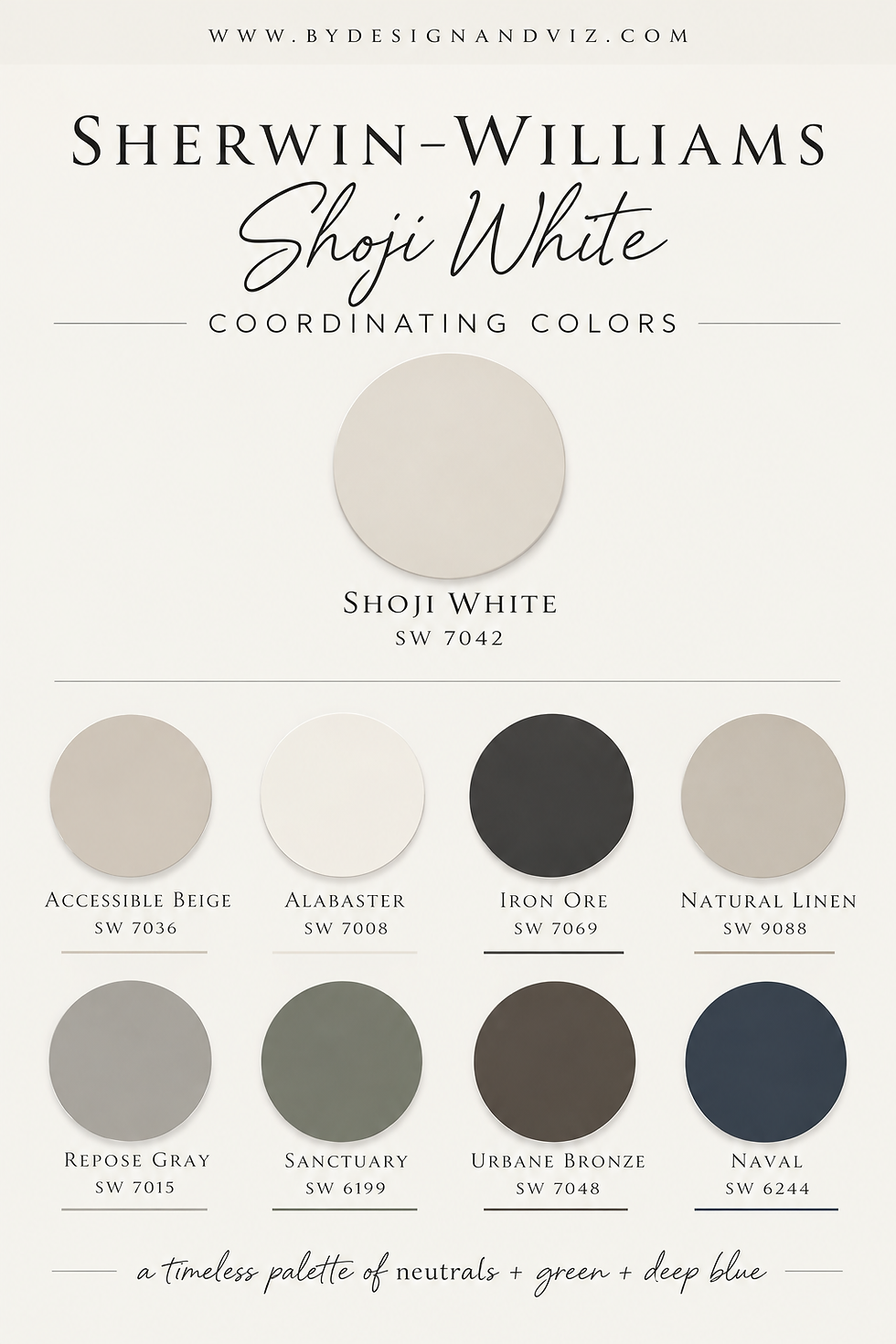
Shoji White SW 7042 has a different undertone character — its greige quality gives it a more complex, slightly cooler warmth than Dover White or Alabaster. The full comparison is in the Shoji White vs Alabaster guide. For the complete overview of where Dover White and Alabaster sit within the full Sherwin Williams white range, the best Sherwin Williams white paint colors guide covers every option.
The Verdict

Alabaster is the more versatile of the two and the right choice for most homes — its warm undertone is real enough to prevent the clinical quality of bright whites, but restrained enough to work across a wider range of materials, orientations, and interior styles. If you are unsure which to choose, Alabaster is the safer starting point.
Dover White is the right choice when you specifically want a warm white that commits to its creaminess — when the room has warm materials, warm lighting, and a traditional or warm-contemporary brief that calls for genuine creamy warmth rather than clean warm white. In those conditions Dover White is beautiful and the slightly more committed warmth is an asset rather than a risk.
Test both in your specific room before deciding. The LRV is identical — the undertone is everything.
Frequently Asked Questions
Is Dover White warmer than Alabaster?
Yes — Dover White has a slightly more pronounced warm yellow-cream undertone than Alabaster. Both are warm whites, but Dover White commits more fully to the creamy direction. Alabaster's warmth is more restrained, which gives it broader versatility across different materials and light conditions.
Can Dover White and Alabaster be used together?
Using Dover White and Alabaster together in the same room is not recommended — two warm whites with slightly different undertones at similar LRV values on adjacent surfaces creates an undertone conflict that reads as unresolved. If you want a tonal white-on-white scheme, use the same color in different sheens rather than two different colors.
Which is better for cabinets — Dover White or Alabaster?
Alabaster is the more reliable cabinet color for most kitchens and bathrooms because its restrained warmth works alongside a wider range of countertop materials and fixture finishes. Dover White on cabinets works beautifully in kitchens with warm wood countertops and warm hardware — but requires more careful material coordination to prevent the yellow undertone from clashing with cooler surfaces.
Does Dover White look yellow on the wall?
Dover White can read as yellow in rooms with strong south-facing light or cool north-facing light — the warm undertone is amplified by strong light and can appear yellowed rather than warmly white. In rooms with balanced natural light and warm artificial lighting it reads as a beautiful creamy warm white. Always test Dover White in your specific room before committing.
What is the difference between Dover White and Alabaster Sherwin Williams?
The LRV is identical at 82 — the difference is entirely in the undertone. Dover White has a slightly warmer, more pronounced yellow-cream quality. Alabaster has a softer, more restrained warm undertone that bridges warm and neutral more naturally. Dover White suits rooms where you want clear creamy warmth; Alabaster suits rooms where you need versatility across different materials and light conditions.
Want help choosing between Dover White and Alabaster for your specific room? See our design packages here. |
About the Author
Beril Yilmaz is a qualified architect and interior designer based in the UK. She runs BY Design And Viz, a design platform covering paint color reviews, interior design guidance, and residential design projects. Beril specifies Sherwin Williams whites including Dover White and Alabaster for residential projects across the UK.



Comments