


Forest Green Color: Undertones, Hex Codes and How to Use It

Forest green is one of those colors that everyone recognizes and almost no one can define precisely -- it sits in the deep, natural green territory that evokes woodland, moss, and dark foliage, but its exact character shifts significantly depending on the undertone, the depth, and the context it appears in. Used correctly in an interior or on an exterior, forest green is one of the most sophisticated and enduring colors available. Used incorrectly, it reads heavy, dated, or simply wrong for the space.
This guide covers exactly what forest green is -- its hex codes, undertones, variations, and how to use it confidently in interior and exterior design.
What Color Is Forest Green?

Forest green is a deep, natural green that sits between emerald green and olive green on the color spectrum -- darker and more muted than emerald, warmer and less yellow than a true olive. Its defining quality is an organic, natural depth that reads as grounded and sophisticated rather than bright or energetic. It takes its name from the color of dense woodland foliage -- the deep, slightly shadowed green of trees seen from a distance rather than the bright green of a single leaf in direct sunlight.
The key characteristic that separates forest green from other deep greens is its undertone balance -- it carries both cool blue-green qualities and warm yellow-brown qualities depending on the specific variant and the light it is viewed in. This undertone complexity is what gives forest green its natural, organic quality and also what makes it more challenging to work with than a simpler, cleaner green.
Forest Green Hex Codes and Variations
Name | Hex | Character |
Forest Green | The classic mid-depth forest green -- balanced, natural, neither too dark nor too bright | |
Dark Forest Green | Deeper, moodier -- the version that reads almost hunter green in low light | |
Light Forest Green | Softer, more sage-adjacent -- suits interiors that want green without drama | |
Forest Green + Brown | The earthy, mossy variant with visible warm undertone |
The classic forest green hex code is #228B22 -- this is the most widely referenced digital definition of the color and represents the balanced mid-depth forest green that reads as neither too dark nor too bright. In print and digital design it is the standard reference point. In paint and interior design, forest green covers a wider range and the specific variant matters significantly for how the color behaves on walls and surfaces.
Forest Green Undertones
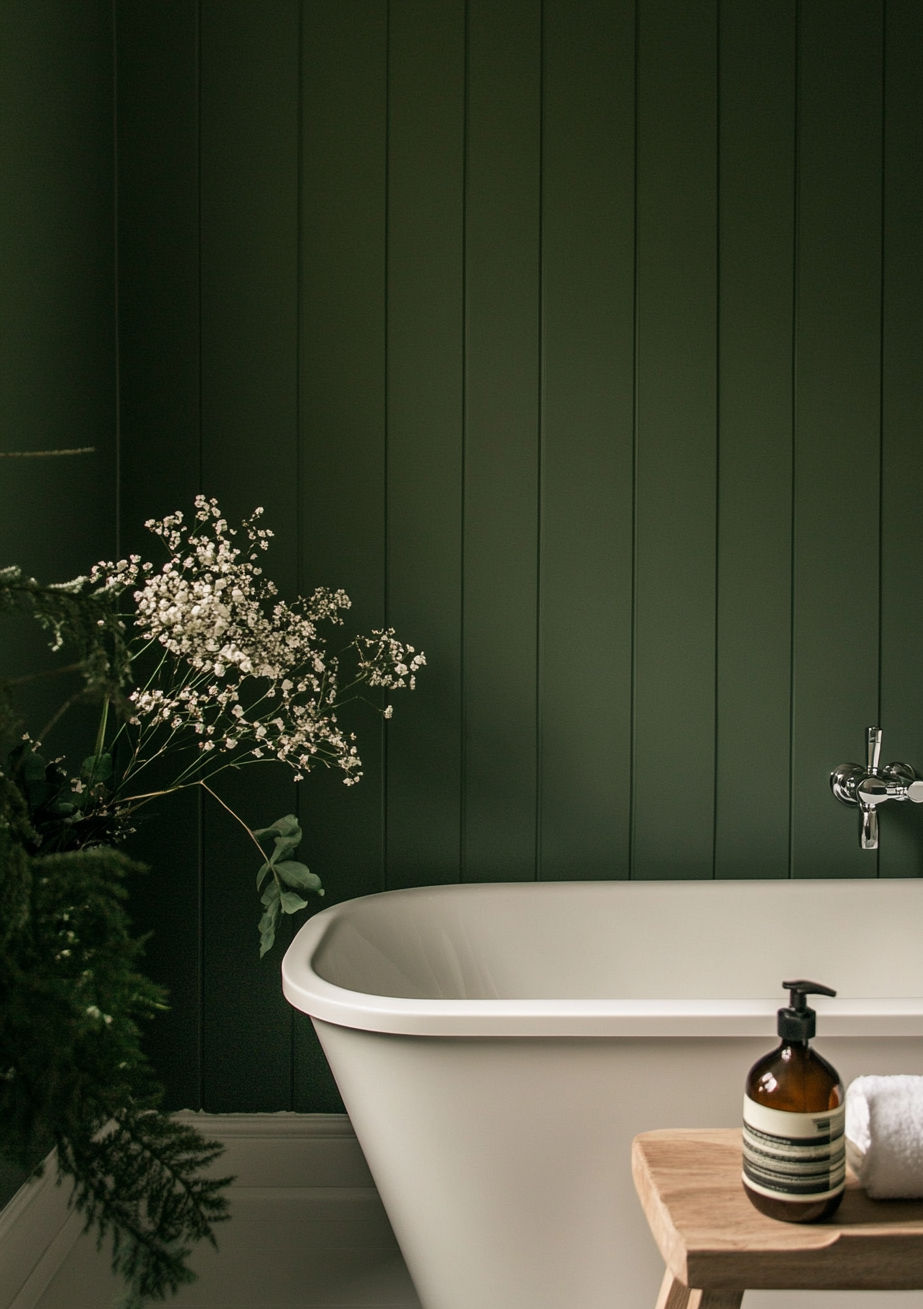
Forest green's undertone is the most important thing to understand before using it in an interior -- and it is more complex than most people expect. Forest green is not a pure cool green or a pure warm green: it carries both.
The cool side: Forest green has a blue-green quality that becomes more visible in cool north-facing light or under cool artificial lighting. In those conditions it can shift toward a cooler, slightly teal-adjacent quality that reads as sophisticated but distinctly cool.
The warm side: Forest green also carries yellow-brown undertones that become more visible in warm south-facing light or under warm artificial lighting. In those conditions it reads as a richer, more earthy, moss-like green that feels deeply organic and natural.
The practical implication: always test forest green in the specific room and under both natural and artificial light before committing. The color can shift enough between conditions that what looks perfect in a showroom can read quite differently once it is on four walls.
Forest Green in Interior Design
Walls

Forest green on walls is one of the most impactful color choices available in interior design -- it creates immediate depth, drama, and a sense of connection to the natural world that few other colors achieve. It works best in rooms with good natural light and sufficient volume -- large living rooms, dining rooms, and studies where the depth of the color becomes an asset rather than a liability. In small rooms with limited light, forest green on all four walls can feel overwhelming and heavy. In those situations, a single feature wall or forest green used on cabinetry or joinery is more effective.
Cabinetry and Joinery

Forest green on kitchen cabinets, built-in bookshelves, or fitted joinery is one of the most popular and enduring interior applications of the color -- it creates a rich, sophisticated character that suits both traditional and contemporary interiors. On kitchen island units it creates a beautiful focal point against white perimeter cabinets. On fitted bookshelves it creates a dramatic backdrop that makes books and objects read more vividly. The key is pairing forest green joinery with warm neutral walls -- off-white, warm greige, or warm stone -- to prevent the space feeling dark.
Accents and Soft Furnishings

For those not ready to commit to forest green on walls or cabinetry, it works exceptionally well as an accent color -- velvet sofas, linen cushions, curtains, and throws in forest green add depth and richness to a neutral room without the commitment of a painted surface. Forest green velvet in particular has become one of the most specified upholstery colors in contemporary interior design, and for good reason -- the texture of velvet enhances the depth and complexity of the color in a way that flat fabric does not.
Forest Green Color Combinations

Forest green pairs best with warm neutrals, natural materials, and warm metals -- the organic quality of the color is enhanced by materials that share its natural character.
With warm white or off-white: the most classic and versatile combination -- forest green depth against warm white freshness creates a clean, sophisticated contrast that works in almost any interior style.
With warm brass and gold: forest green and brass is one of the most enduringly popular combinations in interior design -- the warm yellow of brass complements the cool-warm complexity of forest green beautifully.

With warm wood: medium to dark warm wood tones -- walnut, oak, teak -- relate naturally to forest green's organic character and create a rich, layered natural material palette.
With terracotta and burnt orange: a bolder combination that works particularly well in maximalist or eclectic interiors -- the warm earthiness of terracotta sits opposite forest green on the color wheel and creates a vibrant, natural contrast.
With navy blue: a sophisticated dark palette that works in studies and dining rooms where a moody, dramatic atmosphere is the brief.
For a full guide to colors that work alongside green in interior design, the green color combinations guide covers the full range of green pairings.

Want help incorporating forest green into your home? Book a color consultation here -- bydesignandviz.com/book-online |
Forest Green vs Other Deep Greens

Forest Green vs Emerald Green
Emerald green is brighter, more jewel-like, and more obviously cool than forest green -- it sits closer to a pure mid-green on the spectrum without the brown-warm undertone that forest green carries. Emerald reads as more energetic and more clearly 'green'; forest green reads as more natural, more muted, and more sophisticated. For interiors that need a strong green statement without the heaviness of forest green, emerald is the better choice. For interiors that need organic depth and natural warmth, forest green is the better choice. The full breakdown of emerald green is in the emerald green color guide.
Forest Green vs Olive Green
Olive green is warmer and more yellow-brown than forest green -- it sits closer to the yellow-green territory and reads as more earthy and less obviously 'green' than forest green. Forest green reads as a truer, deeper green with natural depth; olive reads as a more muted, earthy neutral that can sometimes be mistaken for a warm greige in poor light. For interiors that want a warm, earthy green that works as a neutral, olive is the better choice. For interiors that want the full depth and drama of a classic green, forest green is the better choice.
Forest Green vs Hunter Green
Hunter green is darker and cooler than forest green -- it sits in the very deep, almost black-green territory and has a stronger blue undertone. Forest green is more balanced -- it reads as a true mid-depth green with natural warmth. Hunter green creates more drama and more obvious depth; forest green creates a more approachable, natural depth that suits a wider range of interior styles.
Forest Green for Exteriors
Forest green is one of the most successful exterior colors available -- particularly for traditional, cottage, and organic modern architectural styles. On an exterior facade it reads as a rich, natural, sophisticated color that complements almost every landscape setting. It suits painted render, timber cladding, and painted brick equally well. Forest green front doors are among the most popular exterior color choices in the UK and US, consistently appearing on designer shortlists for their ability to create a welcoming, high-impact entrance without the harshness of black or the predictability of navy. For a full guide to using green on exteriors, the green exterior house colours guide covers the full range of green exterior applications.
Best Forest Green Paint Colors

Farrow and Ball Calke Green No.80 -- one of the most specified forest greens in UK interior design. A deep, rich green with strong blue-green undertones that reads as sophisticated and dramatic. At its best in rooms with good natural light.
Farrow and Ball Mizzle No.266 -- a slightly softer, more complex forest green with visible warm undertones. More approachable than Calke Green and suits a wider range of interior styles.
Little Greene Racing Green -- a classic, deep forest green with balanced undertones. One of the most popular forest green paint options for both interiors and exteriors.
Sherwin Williams Cascades SW 6477 -- a deep, cool forest green that suits contemporary and coastal interiors.
Benjamin Moore Forest Green 2047-10 -- a balanced mid-depth forest green that is one of the most widely used references for the color in North American interior design.
For the best green paint colors across the full green spectrum -- from sage to forest to emerald -- the best green paint colours guide covers all the key options.
Frequently Asked Questions

What hex code is forest green?
The most widely used forest green hex code is #228B22 -- this is the standard digital reference for the color. Darker variants sit around #0B6623 and lighter, more sage-adjacent variants sit around #4F7942. In paint systems there is no single universal forest green -- each brand has its own interpretation of the color at slightly different depths and undertones.
Is forest green warm or cool?
Forest green carries both warm and cool qualities -- it has blue-green cool undertones that become more visible in cool light and yellow-brown warm undertones that become more visible in warm light. This dual undertone character is what gives it its natural, organic quality. In most rooms it reads as a balanced green without a strong temperature bias, but in extreme light conditions the undertone can shift noticeably in one direction.
What colors go with forest green?
Forest green pairs best with warm white, warm brass, warm wood tones, terracotta, and navy -- all colors and materials that complement its organic, natural character. Avoid cool grays and cool whites alongside forest green -- the contrast between the warmth of the green and the coolness of the gray can create an uncomfortable clash.
Is forest green good for a bedroom?
Forest green works beautifully in bedrooms with good natural light and sufficient room volume -- it creates a rich, enveloping atmosphere that feels genuinely restful. In small bedrooms with limited light it can feel heavy and dark. A useful middle ground for smaller bedrooms is forest green on a single feature wall behind the bed rather than all four walls -- this captures the depth and character of the color without overwhelming the space.
Is forest green on trend?
Forest green has moved beyond trend into the territory of an enduring classic in interior design -- it has appeared consistently on designer shortlists for over a decade and shows no sign of retreating. Its organic, natural quality has strong resonance with the biophilic design movement and the broader shift toward natural materials and earthy color palettes that has defined residential interior design in recent years.
Final Thought
Forest green is one of the most rewarding colors to work with in interior design when it is used with understanding -- its undertone complexity means it rewards careful testing and considered application. In the right room with the right materials and light, it is one of the most beautiful and sophisticated colors available. Always test with a large sample in the specific room before committing -- the difference between forest green at its best and forest green in the wrong conditions is significant.
Need help using forest green in your home? See our design packages here -- bydesignandviz.com/#interiordesignpackages |
About the Author
Beril Yilmaz is a qualified architect and interior designer based in the UK. She runs BY Design And Viz, a design platform covering paint color reviews, interior design guidance, and residential design projects.


Comments