


Salty Dog vs Naval: Two Deep SW Navies Compared by an Architect

Salty Dog and Naval are Sherwin Williams' two most compared deep navy blues -- both dark, both sophisticated, and both appearing on shortlists for the same brief. On a paint chip in a showroom they look almost identical. On a wall in a real room the undertone difference between them becomes visible, and for someone choosing between two deep navies for a significant design decision that difference matters.
This guide covers exactly how Salty Dog and Naval differ in undertone, depth, light behavior, and best application -- with a clear verdict on which one suits which situation.

Quick Reference -- Salty Dog vs Naval
| Salty Dog SW 9177 | Naval SW 6244 |
LRV | ~3 | ~4 |
Undertone | Deep navy with slight green-teal quality | Deep navy with neutral-charcoal base |
Temperature | Slightly cooler, more blue-green | Neutral-cool, cleaner navy |
Depth | Marginally darker, more complex | Slightly brighter, more classic navy |
North-facing rooms | Very dark -- needs good light or accent lighting | Very dark -- same consideration |
South-facing rooms | Rich and dramatic, teal quality visible | Rich and dramatic, cleaner navy character |
Best trim | Extra White SW 7006, Pure White SW 7005 | Extra White SW 7006, Pure White SW 7005 |
Exteriors | Striking, slightly more distinctive | Excellent, more widely proven |
Best for | Coastal, maximalist, bold interiors | Contemporary, traditional, versatile |
Verdict | More distinctive, slightly more complex | More versatile, more widely documented |
What Is Salty Dog?

Salty Dog SW 9177 is a deep navy blue from Sherwin Williams with an LRV of approximately 3 -- placing it at the very dark end of the color spectrum alongside other deep statement colors. It is part of the SW Coastal Cool collection and its name signals its intended character: a deep, rich blue with a coastal, seafaring quality that goes slightly beyond the clean classic navy territory of Naval.
Salty Dog's undertone carries a slight green-teal quality that gives it a more complex, coastal character than Naval's cleaner navy. In strong natural light -- particularly south-facing light -- this green-teal quality becomes more visible and the color reads as a rich, complex deep blue-green rather than a straightforward navy. Under neutral or artificial light the difference from Naval is subtle but present. Salty Dog is the more distinctive and more situation-specific of the two -- it rewards deliberate specification in coastal and maximalist interiors where its complexity is an asset.
What Is Naval?
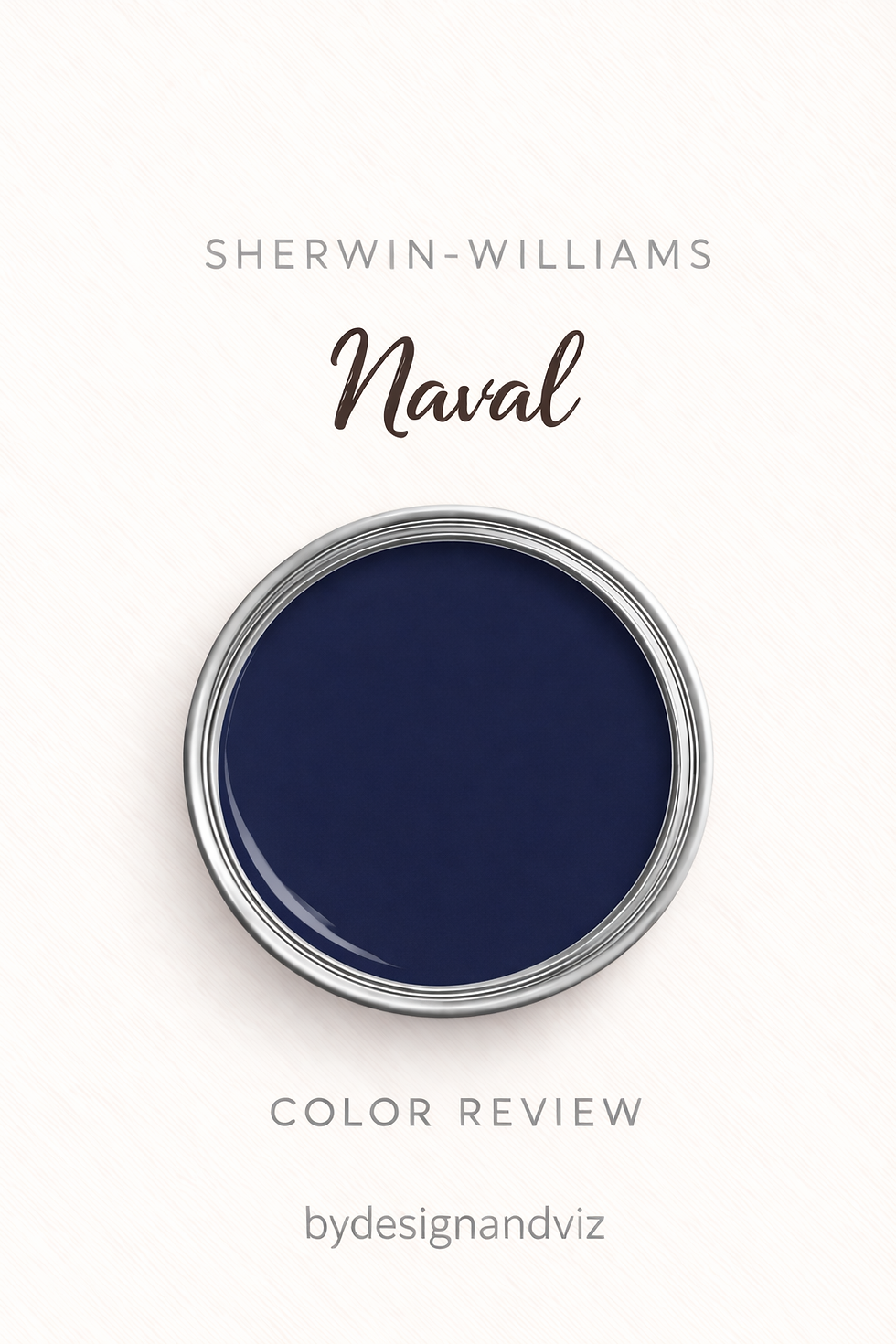
Naval SW 6244 is Sherwin Williams' most popular deep navy and one of the most widely specified dark blues in residential design. At LRV approximately 4 it is fractionally brighter than Salty Dog -- the difference is minimal but at this depth even a small LRV difference is perceptible on a wall.
Naval's undertone is neutral-cool with a charcoal base -- it reads as a clean, classic navy without the green-teal complexity of Salty Dog. This cleaner, more neutral character is exactly what makes Naval so versatile and so widely used -- it works in contemporary, traditional, coastal, and farmhouse interiors equally well without demanding specific material pairings or room orientations to perform at its best. The full breakdown of Naval's undertone behavior, room-by-room performance, and best pairings is in the Naval review.
Salty Dog vs Naval -- The Key Differences

Undertone
This is the most important difference between the two colors -- and it is subtle enough that it requires a side-by-side comparison in the specific room's light conditions to see clearly. Naval's undertone is neutral-charcoal -- clean, classic, and unambiguous navy. Salty Dog's undertone carries a slight green-teal quality that gives it more complexity and a more distinctive character. In most light conditions the difference is subtle. In strong south-facing natural light Salty Dog's green-teal quality becomes more clearly visible and the color reads as noticeably more complex than Naval.
Depth
Both colors are extremely dark -- LRV 3 and 4 respectively -- and in practice the depth difference between them is almost imperceptible on a wall. Both will read as very dark, dramatic colors in any room. The LRV difference is not the reason to choose one over the other -- the undertone difference is.
Versatility
Naval is the more versatile of the two across different interior styles and room orientations -- its cleaner, more neutral undertone means it adapts more gracefully to varied conditions and works alongside a wider range of material palettes. Salty Dog's green-teal quality makes it more distinctive but also more demanding -- it works beautifully in coastal and maximalist interiors where that complexity is part of the design intent, but can feel slightly unexpected in traditional or contemporary interiors where a cleaner navy is the brief.
Documentation and Reference
Naval has a significantly larger body of real-world photography, designer references, and comparison content than Salty Dog -- it has been widely specified for longer and appears on far more design shortlists. This matters practically: if you are working from photographic references or trying to match a specific look you have seen, Naval is much more likely to be the color in the image than Salty Dog.
Want expert guidance choosing the right navy for your home? Book a color consultation here -- bydesignandviz.com/book-online |
Salty Dog vs Naval -- Room by Room
Living Rooms

Both work dramatically in living rooms but for slightly different characters. Naval on living room walls creates a deep, sophisticated, classic navy atmosphere that suits contemporary, traditional, and coastal styles equally. Salty Dog creates a slightly more complex, coastal-maximalist atmosphere -- the green-teal undertone gives it a more distinctive character that suits rooms with natural materials, rattan, warm wood, and coastal references particularly well. In a living room with warm wood floors and natural textiles, Salty Dog's slight warmth in the undertone creates a beautiful layered effect. In a living room with cooler materials and cleaner lines, Naval's neutral base is the stronger choice.
Bedrooms
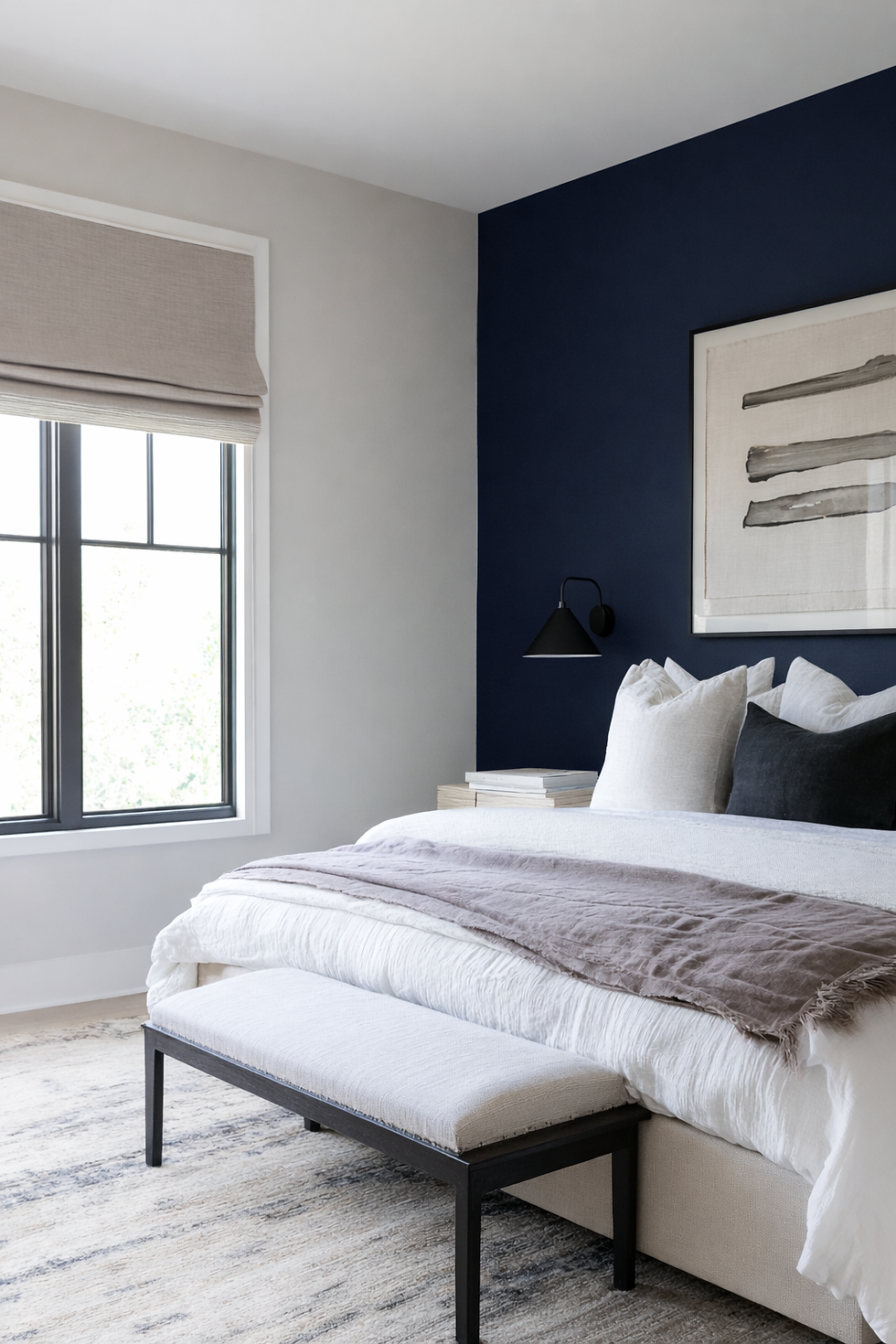
Deep navies in bedrooms create genuinely enveloping, moody atmospheres that many people find deeply restful -- the darkness absorbs light and creates a cocoon-like quality. Both Salty Dog and Naval work in bedrooms. Naval is the safer choice for most bedroom situations -- its neutral base means it reads as a classic, sophisticated navy regardless of the room's material palette or orientation. Salty Dog suits bedrooms with a coastal or maximalist character where the color's additional complexity enhances rather than complicates the design.
Kitchens and Cabinetry

Naval on kitchen cabinets is one of the most widely specified dark cabinet colors in contemporary residential design -- it creates a high-impact, sophisticated finish that pairs beautifully with white or marble countertops, brass or nickel hardware, and warm wood open shelving. Salty Dog on cabinets creates a slightly more unusual, more distinctive result -- its green-teal quality gives the cabinets a coastal, maximalist character that suits specific kitchen styles beautifully but is more demanding of the surrounding material palette.
Exteriors

Both are striking exterior colors that create high-impact, design-forward facades. Naval on an exterior is one of the most popular and widely referenced deep navy exterior choices -- its clean undertone reads beautifully at scale and suits contemporary, farmhouse, and coastal architectural styles. Salty Dog on an exterior creates a slightly more complex, distinctive character -- the green-teal undertone is more visible at exterior scale in strong direct light and gives the facade a coastal depth that Naval does not quite match. For a full guide to deep blue exterior colors, the blue exterior house colours guide covers the full range.
Bathrooms
Both colors work beautifully in bathrooms -- the depth and drama of a deep navy creates a spa-like, enveloping atmosphere that suits the bathroom context naturally. Salty Dog has a slight edge in bathrooms with a coastal character -- the green-teal undertone resonates with the water-adjacent quality of the space. Naval works in a wider range of bathroom styles -- from traditional with brass fixtures to contemporary with chrome and marble.
What to Pair With Salty Dog

Trim: Extra White SW 7006 or Pure White SW 7005 -- crisp whites that provide maximum contrast against Salty Dog's depth and prevent the green-teal undertone from dominating.
Floors: Warm wood, natural stone, terracotta, woven natural materials -- Salty Dog's coastal character relates naturally to organic, warm floor materials.
Accents: Warm brass, aged bronze, natural linen, rattan, warm terracotta -- materials that complement the coastal warmth within Salty Dog's undertone.
Style: Coastal, maximalist, eclectic, organic modern with bold color.
What to Pair With Naval

Trim: Extra White SW 7006 or Pure White SW 7005 -- the same crisp whites that work with Salty Dog also suit Naval's clean navy character.
Floors: Warm wood in any tone, warm stone, marble, cool stone -- Naval's neutral base means it works alongside a wider range of floor materials than Salty Dog.
Accents: Warm brass, polished nickel, warm white, soft cream, warm terracotta, muted sage green.
Style: Contemporary, traditional, coastal, farmhouse, transitional -- Naval's versatility makes it one of the most style-agnostic deep navies available.
For a full guide to the colors that work alongside navy blue in interior design, the colors that go with navy blue guide covers the full range of navy pairings.
The Verdict

Choose Salty Dog if: the interior style is coastal or maximalist, your material palette is warm and organic, you want a deep navy with more complexity and distinctiveness than Naval, and you are prepared to test it carefully in your specific room's light conditions.
Choose Naval if: you want a deep navy with broad versatility across interior styles, the room has mixed or varied light conditions, you want the reassurance of the most widely documented deep SW navy, or the brief is a clean classic navy without a coastal or complex undertone character.
For most rooms and most people, Naval is the safer and more reliable choice -- its neutral base and large reference library make it easier to work with across a wider range of conditions. Salty Dog is a beautiful and distinctive alternative for the right brief -- but its green-teal undertone means it rewards deliberate specification more than Naval does. For a full guide to navy blue paint colors across all brands, the navy blue paint colours guide covers all the key options.
Frequently Asked Questions
Is Salty Dog darker than Naval?
Salty Dog at LRV ~3 is marginally darker than Naval at LRV ~4 -- the difference is tiny and almost imperceptible on a wall. Both colors read as very dark, deep navies. The more meaningful difference between them is undertone, not depth.
Does Salty Dog look green?
In strong south-facing natural light, Salty Dog's green-teal undertone can become more clearly visible -- it reads as a deep blue-green rather than a straightforward navy. Under neutral or artificial light the green quality is subtle. Whether this is a feature or a problem depends entirely on the design intent -- in a coastal interior it is beautiful; in a traditional or contemporary interior it can feel unexpected.
Can I use Salty Dog and Naval in the same house?
Not on adjacent or visible surfaces -- the undertone difference between them, while subtle, is visible enough that placing them side by side will create an unintentional clash. Used in clearly separate rooms they can both appear in the same house, but there is no strong reason to use both when either one works well on its own.
Which is better for kitchen cabinets -- Salty Dog or Naval?
Naval is the stronger kitchen cabinet choice for most situations -- its clean neutral undertone means it pairs gracefully with the widest range of countertop materials and hardware finishes. Salty Dog on kitchen cabinets works beautifully in a coastal kitchen with warm stone, natural wood, and brass
hardware where its complexity is complemented by the surrounding materials.
Is Salty Dog good for exteriors?
Yes -- Salty Dog is a striking and distinctive exterior color that suits coastal, farmhouse, and contemporary architectural styles. Its green-teal undertone is more visible at exterior scale in strong direct light, which gives it a more complex, distinctive facade character than Naval. For exteriors where a cleaner classic navy is the brief, Naval is the more reliable choice.
Final Thought
Salty Dog and Naval are close enough that for many rooms either will deliver the deep, dramatic navy effect you are looking for -- the choice between them ultimately comes down to whether you want the slight additional complexity and coastal character of Salty Dog or the cleaner, more neutral navy of Naval. Both are excellent colors. Sample both at large scale in your specific room under both natural and artificial light before committing -- at this level of depth, the undertone difference only becomes clearly visible in the actual conditions of the room.
Need help choosing the right navy for your home? See our design packages here -- bydesignandviz.com/#interiordesignpackages |
About the Author
Beril Yilmaz is a qualified architect and interior designer based in the UK. She runs BY Design And Viz, a design platform covering paint color reviews, interior design guidance, and residential design projects.


Comments