


SW Alabaster vs BM Fog Mist: The Comparison That Actually Helps You Decide

Alabaster and Fog Mist end up on the same shortlists more often than you might expect. Both are popular, both are light, and both appear on mood boards when the brief is a soft, sophisticated neutral that reads as something more considered than plain white. On a paint chip under a warm shop light they can look deceptively close. On a wall in a real room they create atmospheres that could not be more different - and putting them on adjacent surfaces is one of the most common and most visible decorating mistakes I encounter.
Alabaster is a warm off-white - its cream-yellow undertone is clearly warm and inviting. Fog Mist is a cool neutral - its grey-green undertone is clearly cool and misty. These two colors are not on a spectrum from one to the other. They belong to opposite undertone families, and using warm Alabaster trim alongside cool Fog Mist walls - or vice versa - makes both colors look worse. Understanding that is the most practically valuable thing this comparison can give you.
This guide covers exactly how Alabaster and Fog Mist differ in undertone, LRV, light behavior, and room application - with a clear verdict on which one to choose and when.

At a Glance
| Alabaster SW 7008 | Fog Mist OC-31 |
Brand | Sherwin Williams | Benjamin Moore |
LRV | 82 - warm off-white with body | ~74 - deeper, cool neutral with presence |
Undertone family | Warm - cream-yellow with greige anchor | Cool - grey-green, misty, restrained |
Character | Warm, inviting, broadly versatile off-white | Cool, fresh, quietly sophisticated neutral |
Warmth | Clearly warm in most conditions | Cool - reads as a restrained grey-green neutral |
North-facing | Excellent - warmth counteracts cool light | Very good - cool undertone stays resolved |
South-facing | Beautiful - warm and glowing | Good - green can emerge in strong direct light |
Use together? | Never on adjacent surfaces - undertones conflict | Never on adjacent surfaces - see above |
Trim pairing | Pure White SW or Extra White SW | Chantilly Lace BM or Simply White BM |
Style fit | Traditional, transitional, organic modern, farmhouse | Contemporary, Japandi, coastal, organic modern |
Architect's pick | When warmth and versatility are the brief | When cool, restrained, misty character is the brief |
SW Alabaster SW 7008 - What It Really Looks Like

Alabaster has an LRV of 82 and a warm cream-yellow undertone anchored by a subtle greige base. It sits firmly in the warm white family - warm enough to feel genuinely inviting, restrained enough not to tip into obvious yellow territory. That greige anchor is what gives Alabaster its broad adaptability: it bridges warm and cool material palettes more naturally than most committed warm whites.
Alabaster reads as clearly and consistently warm in almost every light condition. North-facing rooms, south-facing rooms, under warm and cool artificial lighting - the warmth holds reliably. It is SW's most broadly versatile warm white and suits the widest range of interior styles of any SW white. For the full comparison of Alabaster against other SW warm whites, the Creamy vs Alabaster guide covers how it sits in the SW warm white family.
For the comparison of Alabaster against SW Westhighland White - the brighter, lower-chroma warm white that works as a clean trim partner for Alabaster walls - the Westhighland White vs Alabaster guide covers the undertone and brightness difference in full.
BM Fog Mist OC-31 - What It Really Looks Like

Fog Mist has an LRV of approximately 74 - eight points below Alabaster, a gap that is clearly visible on a wall. The undertone is cool grey-green: misty, restrained, and quietly sophisticated. In most conditions the green quality sits in the background and Fog Mist reads as a cool neutral - more grey than green, with a freshness that warmer neutrals cannot deliver.
In strong south-facing direct light the green component can emerge more visibly - the color reads as a soft sage-grey rather than a purely neutral grey. In north-facing cool indirect light, Fog Mist is actually at its best - the cool misty character feels resolved and considered rather than cold. Fog Mist is one of the most reliably beautiful cool neutrals in the BM range for the right brief. For the full depth on its behavior across every room condition, the Benjamin Moore Fog Mist review covers everything.
The Real Difference Between Alabaster and Fog Mist

Alabaster is warm. Fog Mist is cool. They are not subtle variations of the same neutral - they belong to opposite undertone families. That single distinction is more important than any other detail in this comparison.
Side by side in the same room, the difference is unmistakable. Alabaster reads as cream and inviting. Fog Mist reads as misty and restrained. The 8-point LRV gap compounds the visual difference - Alabaster is noticeably brighter and lighter, Fog Mist has more presence and depth on a wall.
The most critical practical point: Alabaster and Fog Mist must never be used on adjacent surfaces. I have been called into rooms where Alabaster trim has been applied alongside Fog Mist walls and the result is consistent - the warm cream of the Alabaster makes the cool grey-green of the Fog Mist look colder and more obviously green by contrast. The undertone conflict is clearly visible and creates a result that reads as unresolved. The same applies in reverse: Fog Mist trim alongside Alabaster walls makes the warm white look yellowed by comparison. Keep these two colors in entirely separate spaces.
The trim rules are completely different for each color. Alabaster on walls needs Pure White SW or Extra White SW on trim - warm-family crisp whites. Fog Mist on walls needs Chantilly Lace BM or Simply White BM on trim - neutral to near-neutral crisp whites. Never use Alabaster on trim alongside Fog Mist walls, and never use Fog Mist on trim alongside Alabaster walls. For the full Fog Mist trim and pairing context, the Fog Mist vs Pale Oak guide covers how Fog Mist sits in the BM neutral family.
Not sure which one works for your room? A color consultation is included in all our design packages - book directly here. |
When to Choose Alabaster
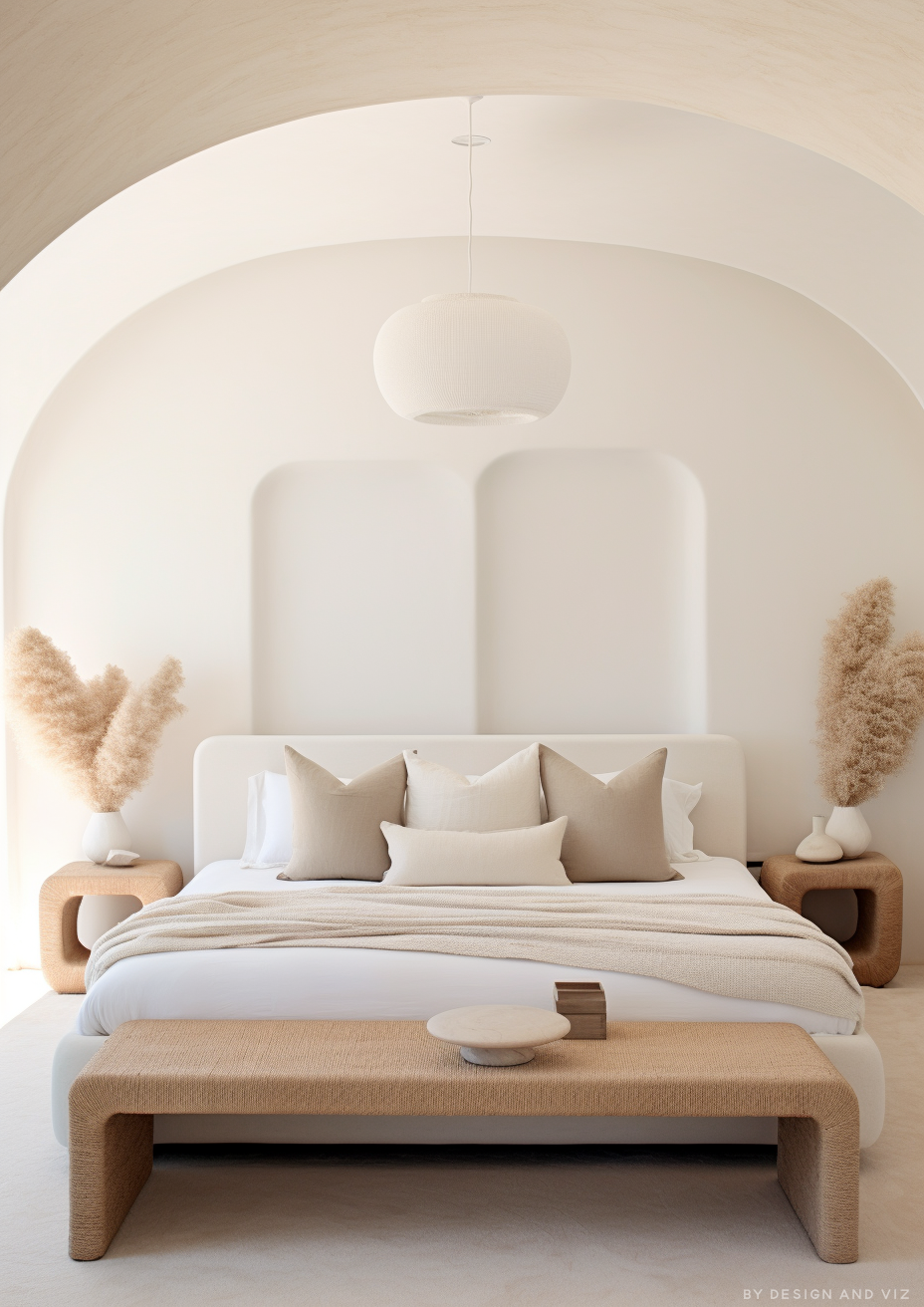
Choose Alabaster when warmth is specifically the brief. Traditional, transitional, and organic modern interiors with warm wood, warm stone, and brass hardware. North-facing rooms where the warm undertone counteracts cool indirect light. Open-plan spaces where a consistent warm off-white is needed across multiple orientations. Any brief where the white needs to feel genuinely inviting and warm rather than cool and restrained.
Avoid Alabaster in any room where Fog Mist is also present - on adjacent walls, on adjacent trim, or in the same open-plan space. The undertone conflict is real and clearly visible. For how Alabaster compares across the BM white family, the Alabaster vs Chantilly Lace guide gives useful cross-brand context.
When to Choose Fog Mist

Choose Fog Mist when cool, restrained, and quietly sophisticated is the brief. Contemporary, Japandi, and coastal interiors where warmth is not specifically required. North-facing rooms where a cool neutral resolves beautifully in indirect light. Rooms with white oak floors, pale natural wood, and brushed nickel or matte black hardware where the cool grey-green quality ties naturally into the material palette. Any room where previous warm whites have felt too obviously warm or too committed to cream.
Avoid Fog Mist in warm traditional interiors where the cool grey-green will fight the warm material palette. Avoid it alongside Alabaster on any adjacent surface. And test carefully in south-facing rooms - the green component can emerge more visibly in strong direct light than the chip suggests.
How the Pairings Differ

For Alabaster on walls, Pure White SW 7005 or Extra White SW 7006 on trim provides clean, considered definition. The near-neutral quality of Pure White creates a warm-to-crisp contrast that reads as resolved and intentional.
For Fog Mist on walls, Chantilly Lace OC-65 on trim is the most reliable choice - its near-neutral crispness suits Fog Mist's cool character without adding warmth that fights the undertone. Simply White OC-117 works as a marginally softer alternative. Warm cream whites - White Dove, Alabaster, Linen White - will make Fog Mist look colder and greener by contrast. Avoid them entirely alongside Fog Mist.
For flooring, the two colors suit completely different materials. Alabaster works with warm wood in any tone, warm stone, terracotta. Fog Mist works with white oak, pale natural wood, limestone, and cool stone. Mixing warm Alabaster walls with white oak floors works well. Mixing Fog Mist walls with dark warm walnut floors creates an undertone conflict - the cool wall and the warm floor pull against each other.
For hardware, Alabaster suits aged brass, unlacquered brass, and warm metals. Fog Mist suits brushed nickel, matte black, and polished chrome. These hardware preferences reflect the opposite undertone directions of the two colors - warm metals activate Alabaster, cool metals resolve Fog Mist.
Architect's Verdict - Alabaster or Fog Mist?

These two colors are not competing alternatives in the usual sense - they serve completely different briefs. The question between them is not 'which is better?' but 'which direction does my room need to go?'
Choose Alabaster when the brief is warm, inviting, and broadly versatile. It suits more rooms, more orientations, and more interior styles than Fog Mist. It is the more broadly reliable choice for most homes.
Choose Fog Mist when the brief is cool, fresh, and quietly restrained. In a contemporary or Japandi interior with the right materials and orientation, Fog Mist delivers a quality that Alabaster cannot achieve. The misty grey-green character is distinctive and beautiful in exactly the right conditions.
The test: hold large samples of each separately in your room - not side by side, which will exaggerate the contrast. Which one makes the room feel right in the morning light? That is your answer.
Frequently Asked Questions

Is Alabaster warmer than Fog Mist?
Yes - significantly. Alabaster has a warm cream-yellow undertone that reads as clearly warm in most conditions. Fog Mist has a cool grey-green undertone that reads as cool and misty. They are at opposite ends of the warm-cool spectrum for whites at this LRV range.
Can I use Alabaster and Fog Mist in the same house?
In entirely separate rooms with no visual connection, yes. In the same open-plan space, on adjacent walls, or on walls and trim together - no. The warm cream of Alabaster makes Fog Mist look colder and greener by contrast. The cool grey-green of Fog Mist makes Alabaster look yellowed by contrast. Keep them completely separated.
Why does Alabaster make Fog Mist look green?
It is an undertone contrast effect. The warm cream of Alabaster creates a visual reference point that makes the cool grey-green of Fog Mist appear more obviously green by comparison. Every color reads differently depending on what is placed next to it - and warm cream next to cool grey-green creates one of the most visible undertone conflicts available in the white-to-neutral range.
Which is better for a north-facing room?
Both actually work in north-facing rooms - but for opposite reasons. Alabaster's warmth counteracts the cool blue quality of indirect north light. Fog Mist's cool character resolves naturally in indirect north light - the cool misty quality reads as settled rather than cold. The choice between them for a north-facing room comes down entirely to whether the brief is warm or cool.
What is the LRV of Alabaster vs Fog Mist?
Alabaster SW 7008 has an LRV of 82 and Fog Mist OC-31 has an LRV of approximately 74. The 8-point gap is clearly visible on a wall - Alabaster reads as noticeably brighter and lighter. But the LRV difference is secondary to the undertone difference, which is what makes these two colors fundamentally unsuitable for use on adjacent surfaces.
Final Thought
Alabaster and Fog Mist are both excellent colors for the right brief. The choice between them is not about which is better - it is about which undertone direction your room, your materials, and your brief actually need.
If the brief is warm, inviting, and broadly adaptable - Alabaster. If the brief is cool, restrained, and quietly sophisticated - Fog Mist. And whichever you choose, keep the other one completely out of the same space. Buy sample pots, paint large patches in your actual room, and look at them across a full day. The answer will be immediately clear.
Want a complete color scheme built around Alabaster or Fog Mist? Our design packages cover full palette selection, finish recommendations, and 3D visualizations - see our packages. |
About the Author
Beril Yilmaz is a qualified architect and interior designer based in the UK. She runs BY Design And Viz, a design platform covering paint color reviews, interior design guidance, and residential design projects. Beril has applied both Sherwin Williams Alabaster and Benjamin Moore Fog Mist across residential projects in the UK and internationally - and has been called in to resolve the undertone conflict between them more than once.


Comments