


Sanctuary vs Natural Linen: The Comparison That Actually Helps You Decide

These two rarely get shortlisted together, and once you understand why, the comparison becomes genuinely useful. Sherwin Williams Sanctuary is a quiet blue-green, and Natural Linen is a warm tan-beige - they sit in entirely different undertone families, which means the choice between them is not about undertone nuance. It is about which job the room actually needs done.
I have specified both, though almost never as competitors. Sanctuary shows up when a room needs a cool, restorative backdrop. Natural Linen shows up when a room needs warmth without going beige-heavy. Here is how I tell them apart and where each one actually belongs.
This guide covers the undertone difference, the light conditions each color needs to perform, and the rooms where one is clearly the better answer than the other.

At a Glance
| Sanctuary | Natural Linen |
Brand | Sherwin-Williams | Sherwin-Williams |
LRV | 56 - mid-tone, softly reflective, reads calm rather than bright | 63 - brighter and more light-reflective than Sanctuary by a meaningful margin |
Colour category | Quiet blue-green neutral - restrained, cool, and deliberately calming rather than crisp | Warm tan-beige neutral - part of the broadly-used warm off-white family |
Undertones | Soft grey-green with a whisper of blue - shifts noticeably between blue and green depending on the light | Warm tan with a soft yellow-beige base - present but not aggressive |
Character | Restorative and enveloping; performs best as an accent or feature color rather than an all-over neutral backdrop | Versatile warm neutral built to carry an entire home's backdrop without dominating it |
North-facing | Strong - the cool undertone holds its composure in flat light without turning muddy | Reliable - the warm base keeps cool light from reading grey or flat |
South-facing | Good, but watch it - strong warm light can pull the green forward more than expected | Excellent - warm light amplifies the tan without pushing toward yellow |
Open-plan | Weak as a whole-space neutral - too specific in mood to read consistently across zones with mixed light | Strong - consistent across zones and holds up well against mixed material temperatures |
On walls | Best used as a feature wall or in a single defined room, not stretched across an open floor plan | A dependable whole-house neutral that works from hallway to living room without needing a rethink room to room |
On cabinets | Excellent on a vanity or kitchen island as a considered accent; overwhelming across full-height cabinetry | Strong across most kitchens, particularly with warm wood and brass; less resolved against very cool stone |
Use together? | Yes - Sanctuary as an accent wall or island color with Natural Linen carrying the rest of the room works well | Yes - Natural Linen as the primary wall color with Sanctuary reserved for one accent room or feature wall |
Trim for each | Extra White SW 7006 or Alabaster SW 7008 for a clean, quiet contrast | Alabaster SW 7008 or Extra White SW 7006 for crisp, warm-compatible definition |
Style fit | Coastal, transitional, spa-inspired bedrooms and bathrooms | Transitional, farmhouse, warm traditional interiors |
Architect's pick | When the brief calls for one calm, cool-toned room - a primary bedroom or bathroom retreat | When the brief needs one reliable neutral to carry the whole house |
Sherwin-Williams Sanctuary SW 9583 - What It Really Looks Like

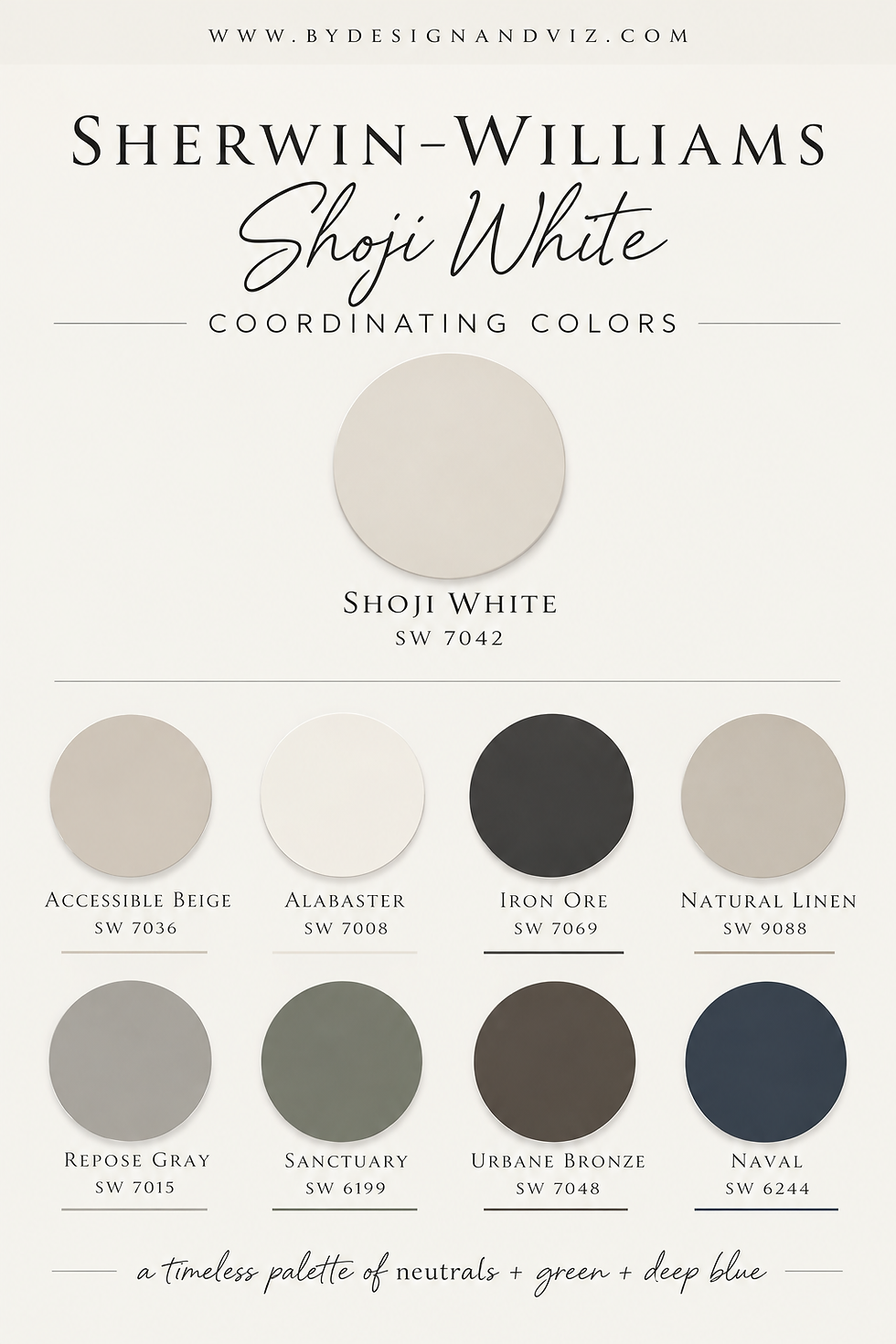
Sanctuary has an LRV of approximately 56, which puts it in the mid-tone category - deeper and quieter than most whites or off-whites this site covers. The undertone is a soft grey-green with a whisper of blue, and it genuinely shifts between the two depending on the light hitting it.
In cooler, north-facing light it leans distinctly blue - almost a muted slate. In warmer light it settles into a softer, more herbal green. This is not a color that holds one fixed identity across a day. It does not hedge on being calm, but it does shift character, which is exactly what makes it work so well in a single, deliberately mood-driven room.
Sanctuary is not built to be a whole-house neutral. It is built to be noticed, quietly. For a look at how Sanctuary performs against a true warm-white rival rather than a different-family neutral like Natural Linen, the Sanctuary vs Alabaster guide covers the undertone contrast in more detail.
Sherwin-Williams Natural Linen SW 9109 - What It Really Looks Like

Natural Linen has an LRV of approximately 63, noticeably brighter than Sanctuary, with a warm tan-beige undertone that sits comfortably in Sherwin-Williams' well-used warm off-white family. The warmth is present but restrained - it does not tip toward yellow the way some warm neutrals do.
This is a color built for consistency. Under cool north light it stays warm without turning grey. Under strong south light it stays warm without turning yellow. It does not need ideal conditions to perform. That reliability is the entire point.
It is one of the more dependable warm neutrals for carrying an entire home's backdrop from room to room. For how it stacks up against a closer tonal rival rather than a cool-toned outlier like Sanctuary, the Natural Linen vs Accessible Beige guide walks through the undertone comparison that actually matters when two beiges are close.
The Real Difference Between Sanctuary and Natural Linen

The simplest way to explain it: Sanctuary and Natural Linen are not really rivals. One is a cool, mood-driven accent color. The other is a warm, whole-house workhorse. Confusing them for competitors misses what each one is actually built to do.
The LRV gap is real - seven points, with Natural Linen the brighter of the two - but the number understates the difference. Sanctuary's blue-green undertone and Natural Linen's tan-beige undertone put them in different color families entirely. They do not compete for the same wall in the same room.
This is why the pairing works better than the comparison does. Natural Linen carrying the main living spaces while Sanctuary is reserved for a single bedroom or bathroom lets each color do the job it is actually good at. For a closer look at how Natural Linen performs against a true tonal rival rather than a different-family neutral, the Natural Linen vs Alabaster guide covers the undertone test that actually matters when two colors are close.
Not sure which one works for your room? A colour consultation is included in all our design packages - book directly here. |
When to Choose Sanctuary

Choose Sanctuary when the room needs a deliberate, cool-toned mood shift rather than another extension of the house's main neutral. It belongs in primary bedrooms built as a retreat, bathrooms meant to feel like a quiet escape, and powder rooms where a small, contained dose of color has real impact.
Avoid it in open-plan spaces, hallways, or anywhere it needs to read consistently against warm materials and shifting light throughout the day. It is a specific-purpose color. Stretched too far, it loses the quality that makes it work in the first place.
When to Choose Natural Linen

Choose Natural Linen when the brief is one reliable, warm neutral for the whole house rather than a single statement room. It performs consistently across hallways, living rooms, and open-plan spaces where the color needs to hold its character under mixed light and material temperatures throughout the day.
It is also the safer choice whenever Sanctuary feels like too specific a commitment. Natural Linen does not ask the room to build itself around a mood. It simply works, room after room, without demanding a rethink.
How the Pairings Differ

For Sanctuary, keep it contained. Use it on an accent wall, a powder room, or a primary bedroom, with Extra White or Alabaster trim to let the blue-green read clearly without competing with warm woodwork.
For Natural Linen on walls, Alabaster or Extra White trim gives clean definition without fighting the warm undertone - this is the safer, more tested combination for whole-house application.
Sanctuary reads best against warm or mid-tone wood - it needs a warm anchor so the cool undertone does not tip the room cold. Natural Linen is more forgiving and works with a wider range of wood tones, from pale oak to richer walnut.
Sanctuary suits brushed nickel and matte black, which reinforce its cool, quiet character. Natural Linen works well with aged brass and warm gold, echoing its own warmth, though it handles cooler metals more gracefully than most warm neutrals.
Architect's Verdict - Sanctuary or Natural Linen?

For most homes, Natural Linen is the more useful color to specify first. It is a genuine whole-house neutral - reliable across rooms, light conditions, and material palettes in a way Sanctuary was never designed to be.
Sanctuary earns its place when a room needs a deliberate mood shift - a primary bedroom that should feel like a retreat, a bathroom that should feel like a spa rather than an extension of the hallway. It is a specific-purpose color, and it performs best when treated that way rather than stretched across open-plan space.
Natural Linen is the color to reach for when the brief is "warm, reliable, and easy to live with" across an entire home. It does not need a special room to justify it. It just works, consistently, room after room.
The test I always use here is different from a typical close-undertone comparison, because these two are rarely fighting for the same wall. Paint a Sanctuary sample in the room you are considering as a retreat space, and check it in your dimmest north-facing light - the worst case for any blue-green. If it still reads calm rather than murky, it passes. Then hold Natural Linen against your warmest, most south-facing wall to confirm it does not tip yellow. If both pass their respective worst-case test, you likely need both colors, not just one.
Frequently Asked Questions

Are Sanctuary and Natural Linen close in undertone?
No - they sit in different color families entirely. Sanctuary is a cool blue-green, and Natural Linen is a warm tan-beige. This is not a close-undertone comparison the way most paint pairings on this site are.
Can I use Sanctuary and Natural Linen in the same house?
Yes, and it works well. Natural Linen as the primary whole-house neutral with Sanctuary reserved for one accent room - a bedroom or bathroom - lets each color do the job it performs best.
Which is better for a whole-house neutral?
Natural Linen. It is built for consistency across rooms, light conditions, and material palettes. Sanctuary is a mood color, not a workhorse neutral, and using it across an entire home tends to feel heavy rather than calming.
Does Sanctuary look blue or green?
Both, depending on the light. In cooler or north-facing light it leans blue; in warmer light it leans more green. This shift is part of its character rather than a flaw, but it means testing in your actual room matters more than usual.
Which is better for a bathroom?
Sanctuary, in most cases. Its cool, quiet undertone reads as calming and spa-like in a way Natural Linen, as a warm neutral, is not built to do. Natural Linen is the better choice for a powder room that needs to match a warm-toned main living space.
What is the LRV of Sanctuary vs Natural Linen?
Sanctuary has an LRV of approximately 56, and Natural Linen has an LRV of approximately 63. The seven-point gap makes Natural Linen noticeably brighter, but the bigger difference is the undertone family, not the reflectance.
Final Thought
Sanctuary and Natural Linen are not competing for the same wall, and that is the most useful thing to understand before specifying either one. The choice is not which is better - it is which job the room needs done.
If the brief is a calm, cool-toned retreat, Sanctuary is the right answer. If the brief is a reliable, warm neutral that can carry an entire home, Natural Linen is the more dependable choice. Many homes end up using both, each in the room built for it.
Want a complete colour scheme built around Sanctuary or Natural Linen? Our design packages cover full palette selection, finish recommendations, and 3D visualisations - see our packages. |
About the Author
Beril Yilmaz is a qualified architect and interior designer based in the UK. She runs BY Design And Viz, a design platform covering paint colour reviews, interior design guidance, and residential design projects. Beril has specified both Sanctuary and Natural Linen across residential projects in the UK and internationally - Sanctuary in primary bedrooms and bathrooms built as calm, restorative retreats, Natural Linen as the whole-house neutral carrying the rest of the scheme, often specifying both together in the same home.




Comments