


What Is a Riad? Why This Traditional Moroccan Home Is the Ultimate Design Inspiration

Stepping into a riad often feels like discovering a secret. From the outside, these homes are modest and understated, blending quietly into the narrow streets of Morocco’s historic cities. But once the door closes behind you, the experience changes completely. Light, air, greenery, and intricate craftsmanship unfold inward, creating a private world designed for calm, beauty, and balance.
Riads are deeply rooted in Moroccan culture and Islamic architecture, yet they feel remarkably relevant today. Their inward-facing layouts, natural materials, and connection to nature align seamlessly with modern ideas of wellness, privacy, and intentional living. Whether restored as private residences or reimagined as boutique hotels, riads offer lessons in thoughtful design that transcend trends.
In this guide, we’ll explore what is a riad, how it functions, and what defines its architecture and interiors. From courtyards and tiles to spatial planning and sensory details, this article breaks down everything you need to understand the essence of a riad—and why its design continues to inspire homes around the world.
At a Glance: What You’ll Learn in This Guide
What a riad is and how it differs from other traditional homes
Why courtyards are central to riad architecture
The materials, tiles, and decorative elements that define riad design
How riads are structured, lived in, and adapted for modern use
1. What is a Riad: The Meaning Behind the Name

At its core, a riad is a traditional Moroccan house built around an interior courtyard or garden. The word “riad” comes from the Arabic term riyad, meaning garden or orchard. This definition is essential, because unlike Western homes that open outward, riads are designed inward, centering life around a protected, private green space.
Historically, riads were urban homes for wealthy families, scholars, and merchants. They were most commonly built within the medinas—dense, historic city centers—where privacy, shade, and security were essential. The design reflects Islamic values of modesty and introspection, offering little indication of what lies inside from the street.
This inward focus isn’t just symbolic. It’s practical. Thick exterior walls block heat, noise, and dust, while the central courtyard allows light and air to circulate naturally throughout the home. The result is an environment that feels serene, balanced, and surprisingly cool, even in hot climates.
2. What is a Riad: Why the Courtyard Is the Heart of the Home

The courtyard is the defining feature of a riad. Every major room opens onto it, making it both the visual and functional center of the house. Rather than hallways, circulation happens around this open space, reinforcing a sense of connection and flow.
Courtyards are often designed as gardens, featuring orange trees, palms, jasmine, or climbing vines. A small fountain or pool is common, adding sound, movement, and cooling humidity to the air. This combination of greenery and water creates a microclimate that naturally regulates temperature.
Beyond function, the courtyard serves an emotional purpose. It’s a place for gathering, reflection, and rest. Light shifts throughout the day, casting patterns across tile and plaster. At night, lanterns or candles transform the space into something intimate and magical. In many ways, the courtyard defines the rhythm of daily life within a riad.
3. What is a Riad: The Role of Zellige Tiles

One of the most recognizable elements of riad design is zellige tilework. These small, hand-cut ceramic tiles are arranged in intricate geometric patterns, often covering floors, walls, fountains, and tabletops. Each piece is cut individually, then assembled like a mosaic, making zellige both labor-intensive and deeply artisanal.
Zellige patterns follow strict mathematical principles rooted in Islamic art, avoiding figurative imagery and instead celebrating repetition, balance, and symmetry. The result is decorative but never chaotic, rich but disciplined.
Color palettes vary by region and era, ranging from classic cobalt blue, emerald green, and white to warmer earth tones. In riads, zellige is often used strategically—lining the lower portion of walls, surrounding fountains, or framing architectural details—creating visual interest without overwhelming the space.
Let’s Map Out Your Space Together
If you're planning a makeover and want a designer’s eye on how stick on tiles could work in your home, we’d love to help you visualise the transformation. Book a free 30-minute consultation and let’s sketch out a layout that feels tailored to your space.
4. What is a Riad: Architectural Layout and Spatial Flow
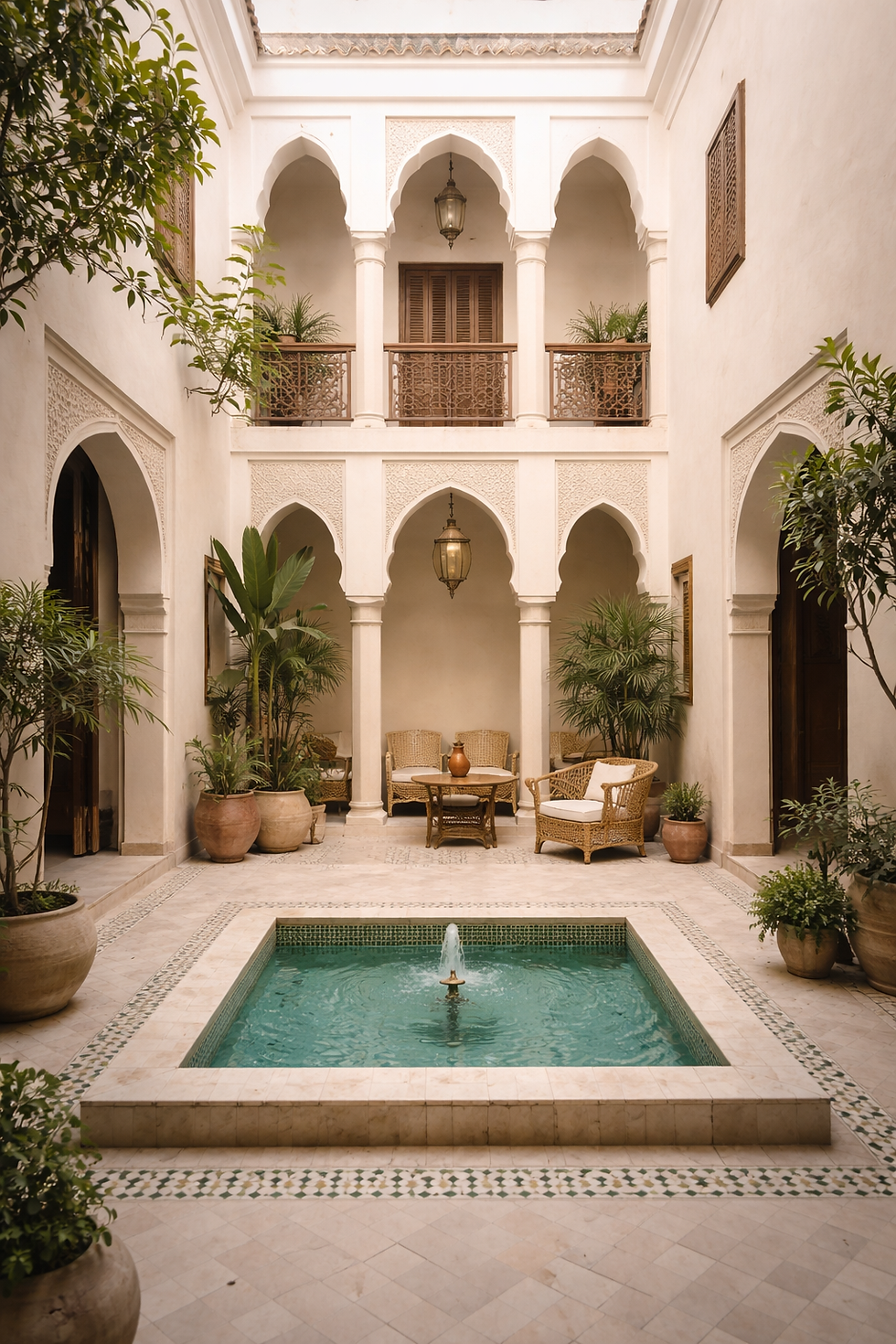
Riads typically follow a clear and intentional layout. Rooms are arranged symmetrically around the courtyard, often on multiple levels. This symmetry reinforces harmony and order, which are central principles in traditional Moroccan architecture.
The ground floor usually housed communal spaces such as salons, dining rooms, and reception areas. Upper floors were reserved for private bedrooms and family quarters. Staircases are often tucked discreetly into corners, preserving the openness of the central space.
Unlike modern open-plan homes, riads balance openness with separation. Rooms are distinct, yet visually connected through doors, arches, and balconies that overlook the courtyard. This layered approach creates privacy without isolation and encourages movement and interaction throughout the home.
5. What is a Riad: Materials That Define the Aesthetic

Traditional riads rely on natural, locally sourced materials that age beautifully over time. Walls are often finished in tadelakt, a lime-based plaster polished with soap to create a smooth, water-resistant surface. Tadelakt has a soft sheen and subtle movement, adding depth without shine.
Woodwork plays a significant role as well. Cedar is commonly used for doors, ceilings, and screens, prized for its durability and fragrance. Carved details, whether intricate or restrained, add warmth and craftsmanship to interiors.
Stone, clay, and terracotta appear throughout riads, grounding the space and reinforcing its connection to the earth. These materials don’t just define the look of a riad—they contribute to its thermal performance, acoustic comfort, and tactile richness.
6. What is a Riad: Light, Shade, and Climate Control

Riad design is a masterclass in passive climate control. Rather than relying on large exterior windows, light enters from above and from the courtyard, diffusing gently into surrounding rooms. This approach minimizes glare and heat gain while maintaining brightness.
Overhangs, arcades, and covered walkways create layers of shade, allowing residents to move comfortably throughout the day. The courtyard acts as a chimney, drawing hot air upward and promoting natural ventilation.
Water features enhance this cooling effect. As air passes over fountains or pools, it cools and humidifies, creating a more comfortable interior environment. Long before air conditioning, riads were designed to work with nature rather than against it.
Your Renovation, Simplified
If you’re diving into a big home update, our Ultimate Renovation Planner can make the entire process far easier. From material planning to budgeting, it’s designed to keep your project organised while
helping you visualise every detail. Explore the planner and plan your makeover with clarity.
7. What is a Riad: Decorative Details and Ornamentation

While riads are architecturally restrained, their decorative details are rich and intentional. Carved plaster panels, known as gebs, often frame doorways and windows, featuring floral motifs and calligraphy. These details add softness and intricacy without clutter.
Metalwork is another defining feature. Lanterns, screens, and hardware are often handcrafted, casting patterned shadows that shift with the light. Textiles—such as rugs, cushions, and throws—introduce color and comfort, balancing the solidity of stone and plaster.
Importantly, decoration in a riad is never random. Every pattern, material, and placement serves a purpose, contributing to a cohesive whole that feels layered rather than busy.
8. What is a Riad: Privacy as a Design Principle
Privacy is central to the riad concept. Exterior walls are typically blank or minimally detailed, protecting the interior from view. Windows facing the street are small or positioned high, while interior-facing openings are generous and inviting.
This inward orientation creates a sense of refuge. The home becomes a sanctuary from the outside world, where family life unfolds without intrusion. Even in riads converted into hotels, this sense of privacy remains a defining feature, offering guests an experience that feels personal and secluded.
For modern homeowners, this approach offers inspiration for creating calm, introverted spaces that prioritize well-being over display.
9. What is a Riad: How Riads Are Used Today

Today, many riads have been restored and repurposed as boutique hotels, guesthouses, or cultural spaces. These adaptations often retain original architectural features while introducing modern comforts such as updated plumbing, lighting, and climate systems.
Private riads are also gaining attention beyond Morocco, inspiring courtyard homes and inward-focused layouts in other climates. Designers and homeowners alike are drawn to the balance of tradition and livability that riads represent.
Rather than feeling outdated, riads feel increasingly relevant—proof that good design principles endure.
10. What is a Riad: Lessons for Modern Home Design
Riads offer valuable lessons for contemporary living. They demonstrate how architecture can foster connection, tranquility, and sustainability without excess. By prioritizing proportion, natural materials, and thoughtful circulation, riads achieve a sense of luxury rooted in experience rather than size or spectacle.
Elements such as courtyards, layered lighting, and tactile finishes can be adapted to modern homes in subtle ways. Even small gestures—like an interior garden or a tiled water feature—can echo the spirit of a riad.
Ultimately, riads remind us that the most meaningful spaces are those designed with intention, respect for context, and an understanding of how people truly live.
Conclusion
Understanding what is a riad goes far beyond defining a building type. A riad is a philosophy of living—one that values privacy, harmony, craftsmanship, and a deep connection to nature. Its design principles have stood the test of time, offering insights that remain relevant in today’s fast-paced, outward-facing world.
Whether you’re drawn to riads for their beauty, their cultural significance, or their architectural intelligence, they offer a powerful reminder that the best spaces are often the most inwardly focused. In a world that constantly demands attention, riads invite us to turn inward, slow down, and reconnect with our surroundings.
Frequently Asked Questions
What is a riad in simple terms?
A riad is a traditional Moroccan home built around a central courtyard or garden, designed for privacy, comfort, and natural climate control.
How is a riad different from a regular house?
Unlike outward-facing homes, riads open inward, with most rooms facing the courtyard rather than the street.
Are riads only found in Morocco?
Riads originated in Morocco, especially in cities like Marrakech and Fez, but their design principles now inspire homes worldwide.
Can riad design work in modern homes?
Yes. Courtyards, natural materials, and inward-focused layouts can be adapted to contemporary architecture in many climates.
Why are riads popular as boutique hotels?
Their intimate scale, privacy, and serene atmosphere make riads ideal for unique, experience-driven hospitality.
Start Your Dream Home Transformation
Our online design packages were created to make the entire process smoother, clearer, and far more enjoyable — no stress, no second-guessing. Whether you’re refreshing one room or reimagining your whole home, we guide you every step of the way with layouts, visuals, and a fully personalised design plan.
See our interior and exterior design packages to get started.
Author Bio
Beril Yilmaz is the founder of BY Design And Viz, an online interior and exterior design studio specialising in clear layouts, thoughtful architectural details, and design decisions that support how people actually live. With a background in architecture and a practical design approach, her work focuses on creating homes that feel considered, functional, and intentionally designed.


Comments