


White Heron vs Simply White -The Benjamin Moore White Comparison That Actually Matters

White Heron OC-17 and Simply White OC-117 are two of Benjamin Moore's most widely used whites -- and two of the most frequently confused. They sit within a fraction of an LRV point of each other, which means on a paint chip under store lighting they look almost identical. On four walls in a real room they create noticeably different atmospheres. The difference is entirely in the undertone: White Heron reads slightly cooler and crisper; Simply White reads slightly warmer and more inviting. Getting this choice wrong is one of the most common and most avoidable paint mistakes in the BM range.
This guide covers exactly how White Heron and Simply White differ in undertone, character, light behavior, and room application -- with a clear verdict on which one suits which situation.

At a Glance -- Side by Side
| White Heron OC-17 | Simply White OC-117 |
LRV | ~89.5 | ~89.5 |
Undertone | Slightly cool -- clean white with faint grey quality | Slightly warm -- clean white with faint yellow quality |
Character | Crisp, fresh, architectural | Bright, warm, inviting |
North-facing | Excellent -- cool undertone suits indirect light | Good -- warm undertone prevents coldness |
South-facing | Excellent -- reads clean and architectural | Excellent -- warmth glows in strong light |
Best for | Contemporary, minimalist, Scandinavian, trim | Transitional, bright open-plan, trim, ceilings |
Pairs with | Cool greys, navy, charcoal, natural wood | Warm neutrals, greiges, warm wood, earthy tones |
Trim choice | Strong choice on trim with cool wall colors | Best-in-class trim alongside warm wall colors |
White Heron OC-17 — What It Actually Is
White Heron OC-17 is Benjamin Moore's cleanest, most architectural white in the near-pure-white range. It sits at LRV approximately 89.5 -- almost identical to Simply White -- but its undertone pulls in a different direction. White Heron has a faintly cool, crisp quality -- not a blue-cool like Chantilly Lace, and not a grey-cool like a shadow white, but a clean, fresh quality that sits just on the cool side of neutral. In most light conditions it reads as a pure, architectural white without obvious warmth or coolness -- simply clean.
The slightly cool quality is what makes White Heron so specifically useful -- it is the white that reads as a true, fresh white rather than a warm white. Where Simply White has a barely-there yellow warmth, White Heron has a barely-there clean crispness. The difference is subtle enough to be invisible on a chip and visible enough to matter on a wall, particularly in rooms where the surrounding materials and light direction are strongly warm or strongly cool.
White Heron suits the homeowner who wants white to read as genuinely white -- clean, architectural, and fresh -- rather than as a warm white with obvious warmth. In contemporary, minimalist, and Scandinavian interiors where the brief is light, clean, and unambiguous, White Heron delivers that result more reliably than Simply White.
Simply White OC-117 — What It Actually Is

Simply White OC-117 is Benjamin Moore's most popular bright warm white and one of the most widely specified whites in American residential design. Benjamin Moore named it Color of the Year for a reason -- at LRV 89.5 it delivers the brightness of a near-pure white while its clean, barely-there yellow undertone prevents the coldness that true pure whites can produce. It reads as warm, fresh, and inviting simultaneously.
Simply White's yellow undertone is so restrained that it does not read as cream or ivory -- it reads as a warm, living white that has just enough character to feel genuine rather than clinical. This is precisely what makes it so broadly successful: it delivers warmth without the depth commitment of a proper off-white like White Dove, and it delivers brightness without the crispness of a cool white like Chantilly Lace. It occupies the sweet spot between those two directions.
Simply White suits the homeowner who wants white to read as warm and inviting while still being clearly and obviously white -- not cream, not ivory, not off-white, but a bright, warm white with genuine life and warmth. The full Simply White review covers its applications in detail. The Simply White review covers its undertone and best uses in full.
The LRV Situation -- Why It's Almost Irrelevant Here

Both White Heron and Simply White have an LRV of approximately 89.5 -- one of the highest LRV ranges available in residential paint. At this LRV level, both colours reflect enormous amounts of light and both read as clearly bright whites in virtually any light condition. Neither will make a room feel dark. Neither will create depth or body on a wall. At this LRV level the LRV is almost not the story -- the undertone is everything.
This is the opposite of many comparisons in the BM range where LRV is the primary differentiator -- comparing Pale Oak to Revere Pewter, for example, is primarily an LRV story. Comparing White Heron to Simply White is almost entirely an undertone story. Two colours at the same LRV with different undertones create the same brightness with different atmospheres -- and that undertone difference is what the choice between them is actually about.
How Each Colour Behaves in Different Light
North-Facing Rooms

This is where the undertone difference matters most and where many people make the wrong choice. In cool, indirect north-facing light, a slightly cool white can read as very cold -- almost grey or blue -- while a slightly warm white reads as clean and fresh. You might expect Simply White to be the automatic choice for north-facing rooms based on this logic.
The reality is more nuanced. White Heron's faintly cool quality does not push it into cold territory in north-facing rooms -- at LRV 89.5 there is enough reflectance that the room reads as bright and airy regardless of the undertone. The cool quality is subtle enough to avoid the cold reading that lower-LRV cool whites produce in north-facing conditions. Simply White's warm undertone is a natural match for north-facing light -- the barely-there warmth prevents any coldness whatsoever.
Verdict for north-facing rooms: both work well, but Simply White is the more reliable and more forgiving choice. White Heron works too but requires more confidence in the surrounding materials being warm enough to prevent any reading of coolness.
South-Facing Rooms

South-facing rooms are where both colours perform at their most confident and where the undertone difference is most readable. In strong, warm natural light Simply White's yellow undertone glows subtly -- the room reads as genuinely warm, bright, and inviting. White Heron in the same conditions reads as clean, crisp, and architectural -- the cool quality is balanced by the warmth of the light and the result is a bright, fresh white atmosphere.
In a south-facing room the choice between them becomes a style question rather than a performance question -- both will look good. Simply White will create a warmer, more organic atmosphere. White Heron will create a cleaner, more contemporary atmosphere. The surrounding materials and interior style should determine which direction to take.
On Trim and Ceilings
Both White Heron and Simply White are widely used as trim colours -- and this is where understanding their undertone becomes most practically valuable. Trim colour is the frame for everything else in the room, and the undertone of the trim white has a significant impact on how the wall colour reads alongside it.
Simply White on trim alongside warm wall colours is one of the most reliable pairings in the BM range -- the barely-there warmth of the trim relates to the warmth of the wall colour and creates a cohesive, harmonious result. It is the trim white used most frequently alongside BM warm neutrals like Revere Pewter, Pale Oak, and Edgecomb Gray. The Simply White vs White Dove guide covers exactly how it compares to White Dove as a trim choice.
White Heron on trim alongside cooler wall colours or alongside contemporary colour schemes is an equally strong choice -- the clean, slightly cool quality prevents the trim from reading as warm in a context where warmth on the trim would create an undertone conflict. In a room with cool grey walls, White Heron trim reads as clean and architectural. Simply White trim in the same room would read as very slightly warm -- potentially creating a subtle undertone tension.
Not sure which white is right for your home? Book a colour consultation here -- bydesignandviz.com/book-online |
White Heron vs Simply White Room by Room
Living Rooms

In a living room with warm floors, warm wood furniture, and a transitional or traditional interior style -- Simply White is almost always the correct choice. The warm undertone relates naturally to the warm materials in the room and the result reads as cohesive and considered. White Heron in the same room can read as slightly at odds with the warmth of the room -- the cool quality creates a subtle disconnect with warm materials that is hard to pinpoint but real.
In a contemporary or minimalist living room with cool materials, grey tones, or a Scandinavian brief -- White Heron is the stronger choice. The clean, architectural quality suits the restraint of the interior style and prevents the warm undertone of Simply White from reading as inconsistent with a cool-palette room.
Kitchens
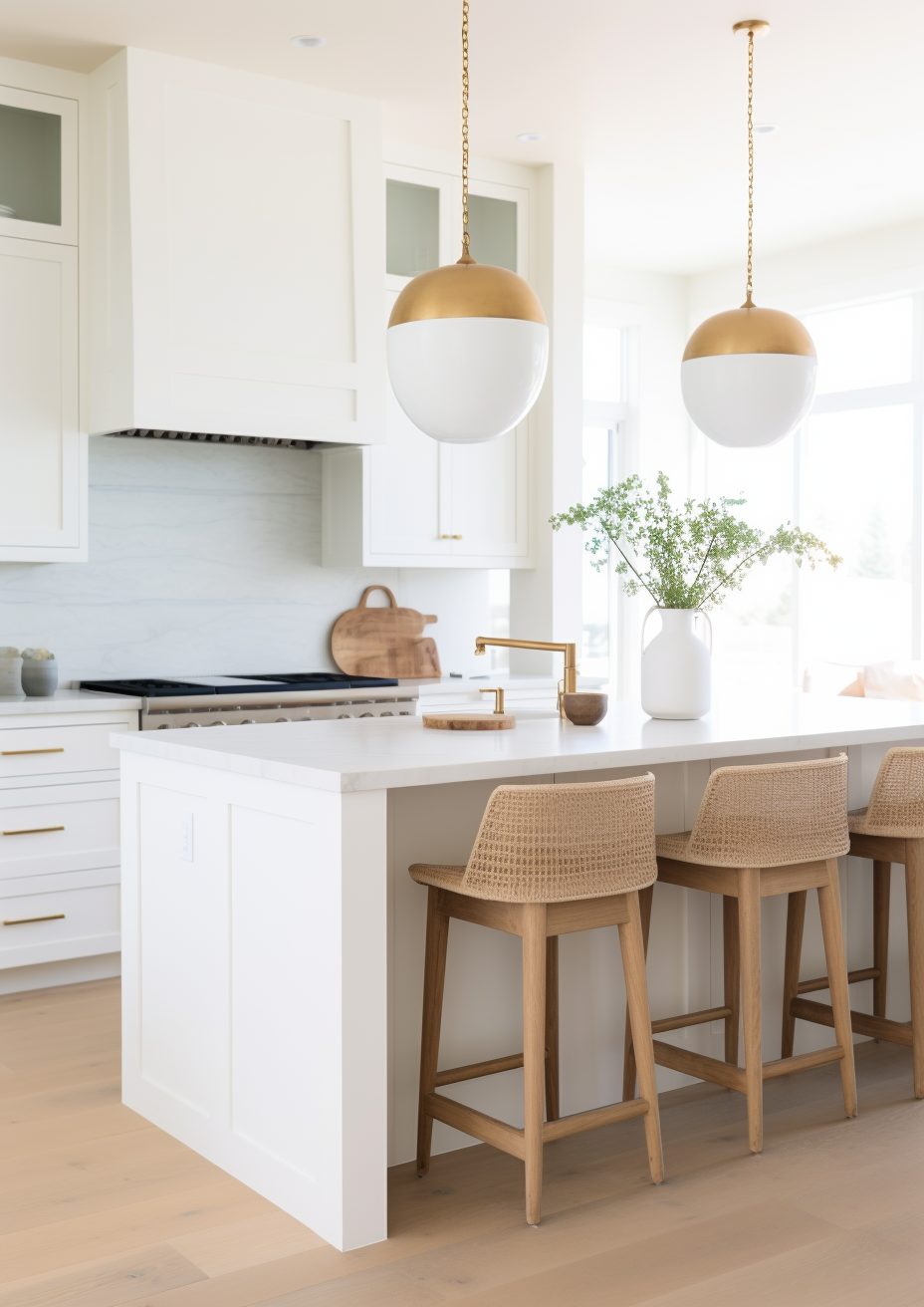
Kitchens are where both colours are most widely used and where the choice between them is most consequential. On kitchen cabinets at this LRV level, both White Heron and Simply White read as bright, clean whites -- the undertone difference is visible but subtle. The surrounding materials determine which performs better.
Simply White on kitchen cabinets is one of Benjamin Moore's most popular cabinet whites -- it works alongside warm stone countertops, warm wood open shelving, and brass hardware particularly well. The warm undertone relates to the warm material palette and the result reads as bright but warm. For kitchens with a warmer material palette, Simply White is the more reliable cabinet white.
White Heron on kitchen cabinets is the choice for cool-palette contemporary kitchens -- alongside grey stone, stainless steel, and chrome hardware, White Heron's clean, slightly cool quality feels more resolved than Simply White's warm undertone would. In a kitchen where the brief is clean and architectural rather than warm and inviting, White Heron is the correct white.
Bedrooms

For most bedrooms where the brief includes warmth and rest, Simply White is the more broadly reliable choice -- the barely-there yellow undertone creates a room that feels fresh without feeling cold, warm without feeling obviously coloured. Under warm artificial lighting in the evening it reads as beautifully clean and inviting.
White Heron in a bedroom creates a cleaner, fresher atmosphere that suits contemporary and minimalist bedrooms where the brief is light, airy, and uncluttered. In a bedroom with a lot of natural light and a minimal material palette, White Heron's architectural quality reads as considered and deliberate.
Bathrooms
Bathrooms are where White Heron's slightly cool quality is often most at home -- alongside white marble, cool stone, chrome fixtures, and a spa-like brief, the clean architectural quality of White Heron suits the context naturally. It reads as crisp, fresh, and clean in a way that Simply White's warmth can occasionally make feel slightly less rigorous.
Simply White in a bathroom with warm stone, brass fixtures, and warm wood accents is equally beautiful -- the warm undertone relates to the warm material palette and creates an inviting, luxurious atmosphere rather than a clinical one. The choice between them in a bathroom depends entirely on whether the material palette is warm or cool.
Which Should You Choose?
Choose White Heron if:

The interior style is contemporary, minimalist, or Scandinavian -- the clean, architectural quality reads as intentional in these contexts.
The material palette is cool or neutral -- grey stone, stainless steel, chrome, bleached wood -- the cool undertone of White Heron resolves naturally with cool materials.
You want white to read as genuinely white -- not warm, not cream, not off-white, but a true clean white that has no obvious warmth.
The room is used primarily in strong natural light -- in bright conditions both whites read well but White Heron's architectural quality is most fully expressed in good light.
Choose Simply White if:

The interior style is transitional, traditional, or warm contemporary -- the warm undertone relates naturally to these contexts.
The material palette is warm -- warm wood, warm stone, brass, natural linen -- the barely-there yellow undertone creates cohesion with warm materials.
You want a warm white that reads as clearly and obviously white -- Simply White delivers warmth at maximum brightness, which is a specific and useful quality.
You are using it on trim alongside warm neutral wall colours -- Simply White is one of the most widely used and most reliable trim whites in the BM range for warm-palette rooms. The Simply White vs Greek Villa guide covers how it compares across different interior contexts.
If you are still unsure:
Sample both at large scale in the actual room -- at LRV 89.5 the difference between these two colours is subtle enough that a small paint chip in a store will not reveal it. A large sample board (at least A3 size) observed in the actual room across different times of day and under both natural and artificial light will make the choice immediately clear. The room's own light and materials will tell you which undertone direction is correct.
White Heron and Simply White vs Other BM Whites

vs Chantilly Lace OC-65 -- Chantilly Lace at LRV ~92 is brighter than both and has a more obviously cool, near-neutral undertone. It is the crispest white in the BM range. White Heron sits between Chantilly Lace and Simply White in the undertone spectrum. The full Chantilly Lace breakdown is in the Chantilly Lace coordinating colors guide.
vs White Dove OC-17 -- White Dove at LRV ~83 is significantly deeper than both White Heron and Simply White and has a more obviously warm, creamy undertone. White Dove reads as a proper warm white with body and depth. White Heron and Simply White read as bright near-whites. The full White Dove comparison is in the Simply White vs White Dove guide.
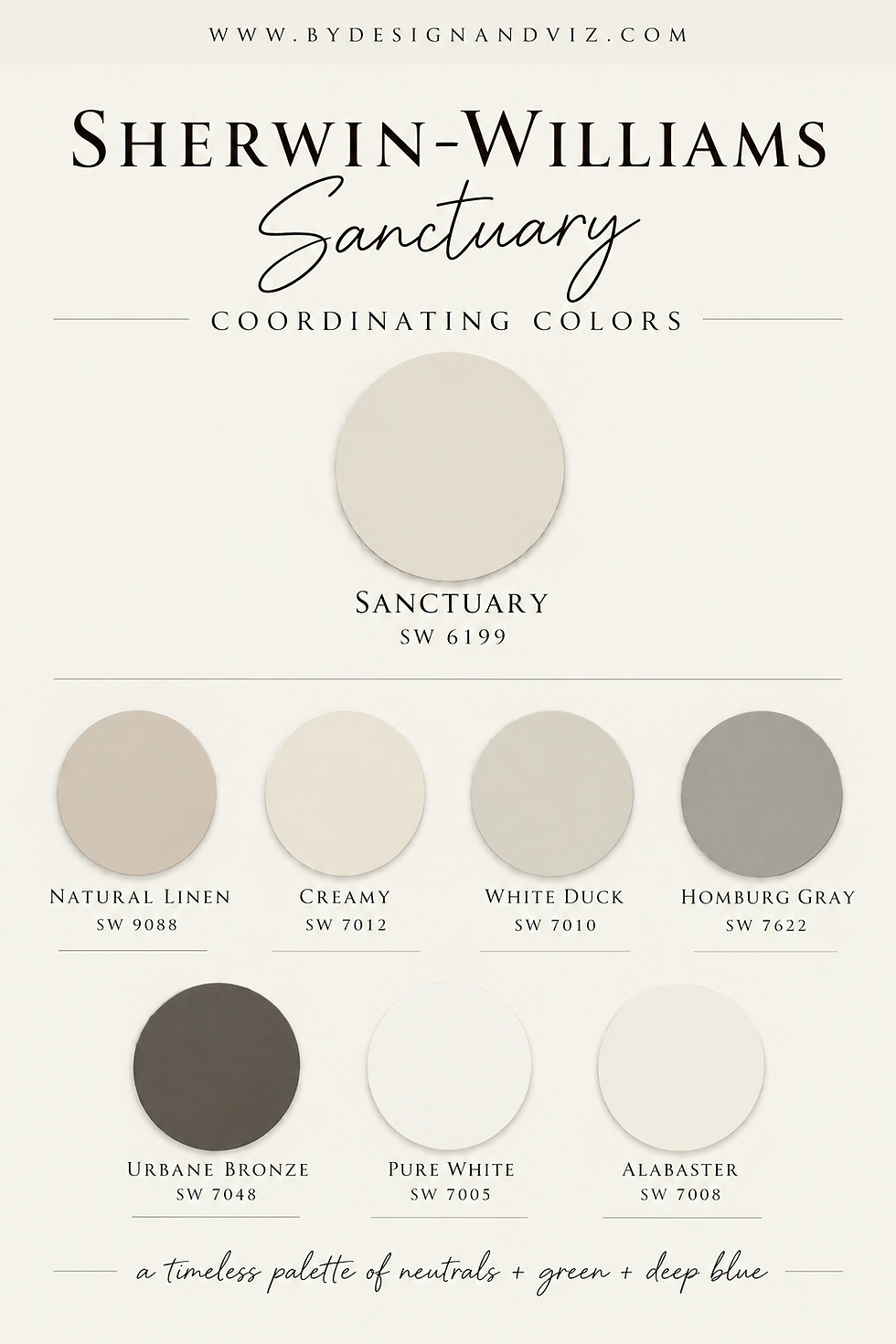
vs Alabaster SW 7008 -- Alabaster is from Sherwin Williams and at LRV 82 is significantly deeper than both BM whites. It has a warm cream undertone that gives it body and warmth that neither White Heron nor Simply White deliver. The full cross-brand comparison is in the Alabaster vs Simply White guide.
Frequently Asked Questions
What is the LRV of White Heron Benjamin Moore?
White Heron OC-17 has an LRV of approximately 89.5 -- placing it at the very bright end of the white spectrum, virtually identical to Simply White OC-117. At this LRV both colours reflect enormous amounts of light and read as clearly bright whites in virtually any condition.
Is White Heron warm or cool?
White Heron is slightly cool -- it sits just on the cool side of neutral with a clean, crisp quality that prevents it reading as warm. It is not a dramatically cool white like some grey-white or blue-white options -- the coolness is subtle and reads as architectural freshness rather than coldness.
Is Simply White warm or cool?
Simply White is slightly warm -- it sits just on the warm side of neutral with a barely-there yellow undertone that prevents the coldness of a pure white. The warmth is so restrained that it reads as a warm white rather than a cream or ivory -- fresh and inviting rather than obviously coloured.
Can White Heron and Simply White be used together?
Using both in the same room is not recommended -- the undertone difference between them, while subtle, will be visible when they are placed side by side on adjacent surfaces. Stick to one white within any single room or on any surfaces that can be seen simultaneously. Mixing them across different rooms of the same house is fine -- in fact, using White Heron in a contemporary kitchen and Simply White in a warmer living room is a perfectly considered approach if the rooms have different briefs and different material palettes.
Which is better for trim -- White Heron or Simply White?
It depends entirely on the wall colour. Simply White on trim alongside warm wall colours is one of the most reliable BM trim pairings available -- the warm undertone relates naturally to warm wall colours. White Heron on trim alongside cool or contemporary wall colours is equally strong -- the clean, slightly cool quality prevents undertone conflicts with cool-palette rooms. Neither is universally better -- both are excellent trim whites in the right context.
Is White Heron the same as Chantilly Lace?
No -- White Heron and Chantilly Lace are different whites. Chantilly Lace at LRV ~92 is brighter and has a more near-neutral, almost cool undertone that reads as a true, clean white in virtually all conditions. White Heron at LRV ~89.5 has a slightly cool but not neutral quality. Chantilly Lace is crisper and more obviously white; White Heron is fractionally softer. The full Chantilly Lace breakdown is in the Chantilly Lace coordinating colors guide.
The Verdict
White Heron and Simply White are not interchangeable despite their near-identical LRVs -- the undertone difference is real and matters in a real room. White Heron is the choice for contemporary, minimalist, and cool-palette interiors where you want white to read as clean, architectural, and crisp. Simply White is the choice for warm, transitional, and traditional interiors where you want white to read as warm, inviting, and fresh. Both are excellent whites in the right context.
The most important decision-making tool is a large sample in the actual room -- not a chip in a store, not a photo on a screen, but a proper painted sample observed across morning, afternoon, and evening light in the room where the colour will live. At this LRV level, the room's own light and materials will tell you immediately which undertone direction is right.
Need help choosing the right white for your home? See our design packages here -- bydesignandviz.com/#interiordesignpackages |
About the Author
Beril Yilmaz is a qualified architect and interior designer based in the UK. She runs BY Design And Viz, a design platform covering paint colour reviews, interior design guidance, and residential design projects.


Comments