


Agreeable Gray vs Edgecomb Gray: The Comparison That Actually Helps You Decide

Updated: Jul 14
Agreeable Gray and Edgecomb Gray are the two greiges most people end up choosing between, and the three LRV points separating them hide the only thing that actually matters: they lean in opposite directions. Agreeable Gray SW 7029 is the more gray of the two, balanced and faintly cool, with a green-violet undertone that can surface in the wrong light. Edgecomb Gray HC-173 is the warmer one, softer and beige-leaning, with a gentle green undertone that keeps it grounded and inviting. Same family, different temperament - and that temperament is the whole decision.
Agreeable Gray reads as a contemporary, near-neutral greige that suits modern and transitional schemes and flexes across a room's orientation. Edgecomb Gray reads as a warm, enveloping greige with a traditional softness that never tips cold. The two are only three LRV points apart - 60 against 63 - but on a north wall under grey UK light they can look like different decisions entirely.
This guide covers exactly how Agreeable Gray and Edgecomb Gray differ in undertone, LRV, light behaviour, and room application - including which one survives a north-facing room and why putting the two anywhere near each other is the mistake to avoid.

At a Glance
| Agreeable Gray | Edgecomb Gray |
Brand | Sherwin-Williams | Benjamin Moore |
LRV | 60 - mid-toned greige, the more gray of the two | 63 - fractionally lighter, warmer and softer |
Colour category | Warm greige leaning gray - the contemporary neutral | Warm greige leaning beige-cream - the gentler neutral |
Undertones | Green-violet over a gray base; the violet can surface in north light and cool LED | Soft green over a warm beige base; stays warm and rarely shifts cool |
Character | Crisp, balanced, slightly cooler greige - versatile and current | Soft, warm, enveloping greige - gentle and traditional-friendly |
North-facing | Risk - the violet undertone can read cool or faintly purple in grey light | Safer - the warm beige base holds and the green undertone keeps it grounded |
South-facing | Excellent - warms into a true, balanced greige | Beautiful - glows warm without tipping yellow |
Open-plan | Excellent - consistent across orientations, with a slight cool shift in north zones | Good - warm and even, can read slightly deeper in low-light corners |
On walls | Balanced greige backdrop with a contemporary edge - recedes cleanly | Warm, soft greige backdrop with a cosseting quality - adds atmosphere |
On cabinets | Popular for transitional and modern-farmhouse cabinetry | Strong for warm traditional and country-kitchen cabinetry |
Use together? | No - three LRV points apart with clashing undertone directions | No - too close to Agreeable Gray to read as a deliberate pairing |
Trim for each | SW Pure White or Extra White | BM White Dove or Chantilly Lace |
Style fit | Contemporary, transitional, modern farmhouse, Scandi-warm | Traditional, transitional, country, warm coastal |
Architect's pick | When you want a versatile greige with a slightly cooler, more current edge | When you want a warmer, softer greige that never reads cold |
SW Agreeable Gray - What It Really Looks Like

Agreeable Gray has an LRV of 60 and sits in the centre of the usable greige range - light enough to keep a room open, deep enough to read as a deliberate colour rather than a defaulted off-white. The base is a true gray warmed just enough to count as greige. What sets it apart from the warmer greiges is the undertone: a green-violet pairing sitting over that gray base. In good warm light the violet is invisible and the colour reads as a clean, balanced greige. In north light and under cool LED it can come forward and tip the whole wall faintly cool or even slightly purple.
Its strength is versatility, not warmth. Agreeable Gray flexes across a room more obligingly than most greiges - it sits comfortably with cool grays, warm woods, and mixed metals without committing hard to any direction. That neutrality is exactly why it became the default greige for transitional and modern-farmhouse interiors. If you are weighing it against the warmer, more beige SW neutral it is most often cross-shopped with, the Accessible Beige review sets out where the SW greige-to-beige line actually falls and which side of it your room wants.
BM Edgecomb Gray - What It Really Looks Like

Edgecomb Gray has an LRV of 63 - three points lighter than Agreeable Gray and noticeably warmer. The base is a warm beige carried into greige territory by a soft green undertone, and that green is the quality that makes it work: it stops the beige reading as bland and gives the colour a grounded, sophisticated softness. There is no violet here and no cool flash. Edgecomb Gray stays where it starts, which is precisely why it is the more predictable of the two in difficult light.
It is a warm greige built for atmosphere. Edgecomb Gray wraps a room rather than receding from it - the warmth gives walls a soft, enveloping quality that suits traditional and transitional interiors where comfort matters more than crispness. In south light it glows; in north light it holds its warmth instead of going cold. For how it behaves against a bright BM white on trim - the most common way it is specified - the Alabaster vs Edgecomb Gray guide covers the wall-and-trim contrast and the light conditions where each one earns its place.
The Real Difference Between Agreeable Gray and Edgecomb Gray

Agreeable Gray is a balanced greige that leans gray and faintly cool. Edgecomb Gray is a warm greige that leans beige and never goes cold. They occupy the same family and sit only three LRV points apart, but they answer different briefs - and the difference you will actually see on a wall is undertone direction, not lightness.
Agreeable Gray rooms feel balanced, versatile, and current - the violet-green undertone keeps it neutral in warm light but leaves it exposed in cool light. Edgecomb Gray rooms feel warm, soft, and enveloping - the green-over-beige undertone holds its warmth in every orientation and gives the room atmosphere rather than crispness. In a south-facing room the two move closer together. In a north-facing room they pull apart, and that is where the choice is genuinely made.
Do not use these two together. Three LRV points is not enough separation to read as a deliberate wall-and-trim relationship, and their undertones lean in opposing directions - the faint cool of Agreeable Gray against the warmth of Edgecomb Gray reads as a mismatch rather than a considered contrast. Choose one as the greige and pair it with a bright white. For where each sits on the wider warm-greige scale alongside the BM benchmarks, the Pale Oak vs Revere Pewter guide maps the light-to-mid greige range these two sit inside and helps you place them against the depth you actually want.
For how Agreeable Gray compares to Swiss Coffee - a bright, restrained Behr off-white built for trim rather than for competing on the wall - the Swiss Coffee vs Agreeable Gray guide covers the LRV gap and the classic wall-and-trim pairing between them.
Not sure which one works for your room? A colour consultation is included in all our design packages - book directly here. |
When to Choose Agreeable Gray

Choose Agreeable Gray when the brief is a versatile, contemporary greige. Modern and transitional interiors where the neutral needs to stay current rather than cosy. South and west-facing rooms where the warm light neutralises the violet and the colour settles into a clean, balanced greige. Open-plan spaces where you want one neutral to hold across several orientations. Cabinetry in transitional and modern-farmhouse kitchens where a slightly cooler greige reads as more contemporary than a warm cream.
Agreeable Gray is the wrong call in a poorly-lit north-facing room. That is precisely where the violet undertone has room to surface, and where the warmer, more forgiving greige is the safer specification.
When to Choose Edgecomb Gray

Choose Edgecomb Gray when the brief is a warm, soft, forgiving greige. Traditional, transitional, and warm coastal interiors where the walls should feel inviting rather than architectural. North-facing rooms and grey-light conditions where a cool flash is the risk you cannot afford - the warm beige base and green undertone keep Edgecomb Gray grounded where Agreeable Gray can wobble. Rooms with warm wood, warm stone, and aged brass where the greige needs to tie into the warm material direction. Cabinetry in country and warm-traditional kitchens.
Edgecomb Gray is the wrong call when the brief is crisp and contemporary. Its softness reads as warmth and comfort, not precision - in a sharp modern scheme that warmth can feel slightly dated against the cleaner, cooler greige.
How the Pairings Differ
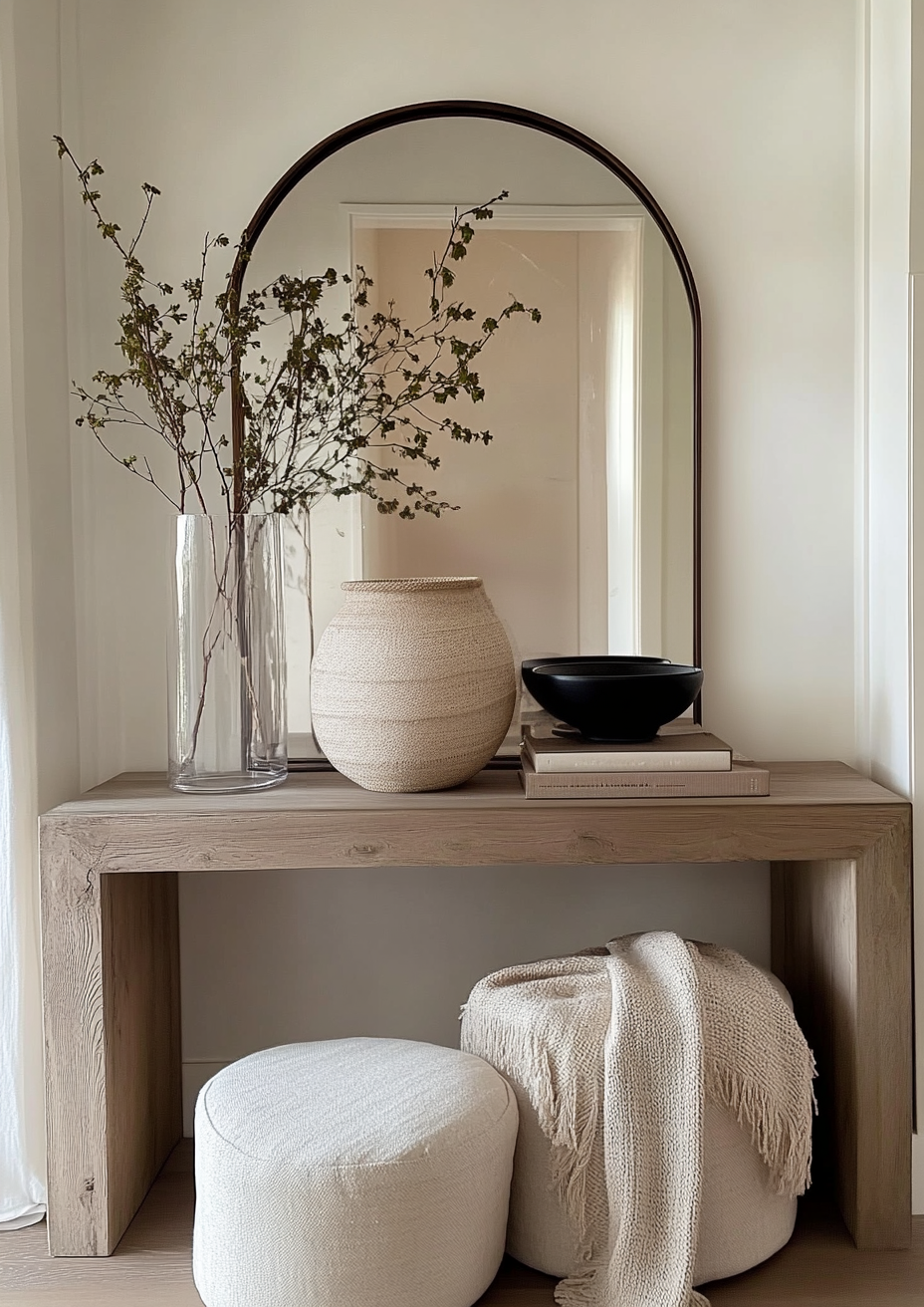
For Agreeable Gray on walls, SW Pure White or Extra White on trim gives the crisp, contemporary boundary the colour is built for - the bright white sharpens the balanced greige and keeps the scheme reading current. A warmer trim white dulls the contrast and works against the colour's contemporary edge.
For Edgecomb Gray on walls, BM White Dove on trim is the most natural pairing - a soft warm white that sits in the same warm family without competing. Chantilly Lace gives a crisper, brighter trim boundary for those wanting more definition against the warm greige walls.
For flooring, Agreeable Gray handles the full range - warm wood, cool stone, and contemporary tile all sit comfortably with its neutral flex. Edgecomb Gray is strongest with warm wood and warm stone, where the beige base and the material direction reinforce each other; cool grey stone alongside Edgecomb Gray can make its warmth read slightly heavier than intended.
For hardware, Agreeable Gray takes every finish including matte black, brushed nickel, and mixed metals - the neutral base does not fight any of them. Edgecomb Gray is strongest with warm metals - aged brass, unlacquered brass, and warm bronze complement the beige warmth, while cool chrome can leave the walls looking warmer by contrast.
Architect's Verdict - Agreeable Gray or Edgecomb Gray?

These two greiges are not interchangeable, and the LRV gap is the least useful way to tell them apart. The decision is undertone direction read against your worst light.
If the brief is a versatile, contemporary greige - balanced, current, flexible across a modern or transitional scheme, comfortable with mixed metals and cool accents - Agreeable Gray is the answer, provided the room has enough warm light to keep the violet undertone in check.
If the brief is a warm, soft, forgiving greige - enveloping, traditional-friendly, grounded in warm materials, and reliable in difficult north light - Edgecomb Gray is the answer, and it is the safer specification whenever a cool flash is the risk you cannot take.
Sample both at large scale on the north-facing wall - the worst case for this comparison - and view them at midday and again under your evening LEDs. A pass for Agreeable Gray is a wall that stays a clean, balanced greige with no violet or cool cast in either condition; if it tips faintly purple at any point, that room wants Edgecomb Gray, which should hold its soft warmth in both.
Frequently Asked Questions
Is Agreeable Gray lighter than Edgecomb Gray?
No - Edgecomb Gray is fractionally lighter. Agreeable Gray has an LRV of 60 and Edgecomb Gray has an LRV of 63. The three-point gap is small and lightness is not where the real difference lies - undertone direction is. Agreeable Gray leans gray and faintly cool; Edgecomb Gray leans warm beige.
Which is better for a north-facing room?
Edgecomb Gray is the safer choice for north-facing rooms. Its warm beige base and green undertone hold their warmth in cool grey light. Agreeable Gray's green-violet undertone can come forward in the same conditions and tip the wall cool or faintly purple, which is the exact risk a north-facing room exposes.
Can I use Agreeable Gray and Edgecomb Gray together?
No - they are too close in LRV and lean in opposite undertone directions. Three LRV points is not enough separation to read as a deliberate wall-and-trim relationship, and the cool lean of Agreeable Gray against the warmth of Edgecomb Gray reads as a mismatch. Choose one as your greige and pair it with a bright white instead.
Does Agreeable Gray look purple?
It can, in the wrong light. The undertone is green-violet over a gray base. In warm south-facing light the violet stays invisible and the colour reads as a clean greige. In north light and under cool LED the violet can surface and give the wall a faint purple or cool cast - which is why sampling on the north wall matters.
What is the LRV of Agreeable Gray vs Edgecomb Gray?
Agreeable Gray SW 7029 has an LRV of 60 and Edgecomb Gray HC-173 has an LRV of 63. Both sit in the light-to-mid greige range and both keep a room open. The closeness of the numbers is exactly why people confuse them - and exactly why undertone, not LRV, has to drive the decision.
Which is more versatile?
Agreeable Gray is the more versatile of the two. Its near-neutral base flexes across orientations, styles, metals, and floor finishes more obligingly than Edgecomb Gray, whose committed warmth ties it more specifically to warm materials and traditional schemes. The trade-off is that Agreeable Gray's flexibility comes with the north-light risk Edgecomb Gray does not carry.
Final Thought
Agreeable Gray and Edgecomb Gray are the two greiges the decision usually comes down to - and the three LRV points between them tell you almost nothing. What tells you everything is undertone direction read against your hardest light.
Versatile, balanced, slightly cooler greige for contemporary and transitional rooms with enough warm light - Agreeable Gray. Warm, soft, forgiving greige for traditional rooms and difficult north light - Edgecomb Gray. Sample both on the north wall at large scale. The undertone difference, invisible on a chip, will be immediately clear.
Want a complete colour scheme built around Agreeable Gray or Edgecomb Gray? Our design packages cover full palette selection, finish recommendations, and 3D visualisations - see our packages. |
About the Author
Beril Yilmaz is a qualified architect and interior designer based in the UK. She runs BY Design And Viz, a design platform covering paint colour reviews, interior design guidance, and residential design projects. Beril has specified both Sherwin-Williams Agreeable Gray and Benjamin Moore Edgecomb Gray across residential projects in the UK and internationally - Agreeable Gray in contemporary and transitional schemes where a versatile, current greige is the brief, Edgecomb Gray in traditional and north-facing rooms where a warmer, more forgiving greige holds its character in difficult light.


Comments