


Alabaster vs Chantilly Lace - The Cross-Brand White Comparison That Settles It

Updated: 1 day ago
Alabaster SW 7008 and Chantilly Lace OC-65 are the two most compared whites across the Sherwin Williams and Benjamin Moore ranges -- and they appear together on shortlists constantly, both described as timeless, designer-approved, and endlessly versatile. On a paint chip they look nothing alike. On a wall the difference is even more pronounced. Alabaster is a warm, creamy off-white with genuine depth and body -- the white that reads as warm and settled. Chantilly Lace is a crisp, bright, near-neutral white with maximum reflectance -- the white that reads as genuinely, architecturally white. Choosing the wrong one for your room, your light conditions, and your material palette is one of the most common cross-brand white mistakes.
This guide covers exactly how Alabaster and Chantilly Lace differ in LRV, undertone, character, light behaviour, and room application -- with a clear verdict on which one suits which situation.
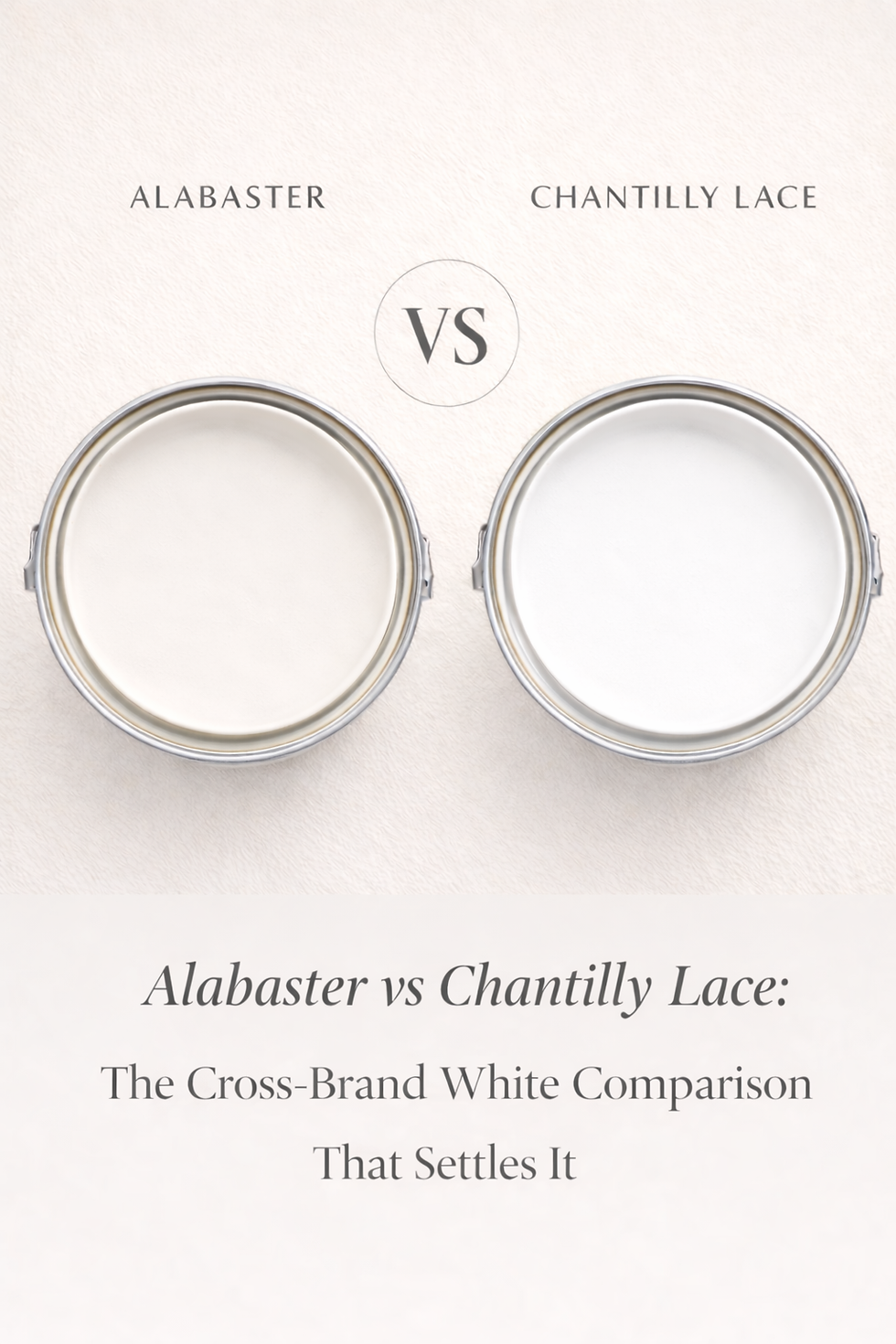
Side by Side
| Alabaster SW 7008 | Chantilly Lace OC-65 |
Brand | Sherwin Williams | Benjamin Moore |
LRV | ~82 | ~92 |
Undertone | Warm cream -- soft yellow anchored by subtle greige | Near-neutral -- very faint cool quality, reads as true white |
Character | Warm, creamy, soft, settled | Crisp, bright, architectural, clean |
North-facing | Excellent -- warm undertone prevents coldness | Works well -- high LRV prevents darkness |
South-facing | Beautiful -- creamy warmth glows warmly | Brilliant -- reads as luminous, clean white |
Best for | Organic modern, traditional, transitional, warm-palette rooms | Contemporary, minimalist, trim, cool-palette rooms |
Risk | Can read buttery or heavy in south-facing rooms with warm materials | Can read stark or clinical with cool materials and cool light |
Alabaster SW 7008 -- What It Actually Is

Alabaster SW 7008 is Sherwin Williams' most popular warm white and one of the most widely specified whites in residential design. At LRV ~82 it sits firmly in the off-white zone -- deep enough to have genuine warmth and body on a wall, bright enough to read clearly as white rather than cream. It has been a designer favourite for years and suits the widest range of interior styles of any SW white.
Alabaster's undertone is warm cream with a soft yellow quality anchored by a subtle greige base -- it reads as clearly warm and inviting without tipping into obviously yellow or buttery territory in most conditions. The greige anchor is what prevents it from feeling dated in the way that some warm yellowed whites do -- it keeps the warmth sophisticated and grounded. In warm natural light it glows beautifully. In cool north-facing light the greige anchor holds the warmth steady without a dramatic shift. The full story on Alabaster's undertone and every room it suits is in the Sherwin Williams Alabaster review.
For the comparison of Alabaster against SW Pure White - the near-neutral that sits just two LRV points above and works as the most natural trim pairing - the Alabaster vs Pure White guide covers the wall and trim question in full.
Chantilly Lace OC-65 -- What It Actually Is

Chantilly Lace OC-65 is Benjamin Moore's crispest, most architectural white and one of the most specified whites in contemporary residential design. At LRV ~92 it sits at the very bright end of the white spectrum -- one of the highest LRV values available in residential paint -- reflecting an enormous amount of light and reading as a clean, bright white in virtually every condition.
Chantilly Lace's undertone is near-neutral with a very faint cool quality -- it sits just on the cool side of neutral, which is precisely what gives it its clean, pure character. It does not have the warmth of Alabaster, the subtle yellow of Simply White, or the creaminess of White Dove. It reads as white -- clean, unambiguous, architectural white. Every pairing, trim combination, and room application is covered in the Chantilly Lace coordinating colors guide.
For the comparison of Chantilly Lace against SW Shoji White - the warm earthy off-white 18 LRV points below that Chantilly Lace is most commonly paired with as trim - the Chantilly Lace vs Shoji White guide covers the depth gap and trim relationship in full.
For the full comparison of Chantilly Lace against SW Creamy - the committed warm yellow off-white at the opposite end of the undertone spectrum - the Chantilly Lace vs Creamy guide explains exactly why these two should never share adjacent surfaces and which one belongs in which room.
The LRV Difference -- Why It Matters More Than Usual
Alabaster at LRV ~82 and Chantilly Lace at LRV ~92 have a 10-point gap between them -- and this is one of the comparisons where the LRV difference is the primary differentiator, not a secondary one. For how Alabaster compares to Revere Pewter - a much deeper, warm-toned greige rather than another near-white - the Alabaster vs Revere Pewter guide explains why the two aren't really competing for the same wall and how to use them as a light-and-dark pairing instead.
That 10-point gap is clearly and immediately visible on a wall. Alabaster has genuine body and depth -- it reads as a proper off-white with warmth and presence. Chantilly Lace at LRV ~92 reflects dramatically more light and reads as a clean, brilliant white without depth or body. In a room where you want maximum brightness, Chantilly Lace wins by a significant margin. In a room where you want warmth and a sense of settled softness, Alabaster wins. This is not a subtle difference -- in most rooms you will know immediately which one you want once you see both at sample scale.
For the cross-brand comparison of Alabaster against BM Cloud White - the creamier BM off-white at a similar LRV with a taupe-anchored undertone - the Alabaster vs Cloud White guide covers the undertone difference and which one belongs in which room.
How Each Colour Behaves in Different Light
North-Facing Rooms

Both colours perform well in north-facing rooms, but the reason differs. Alabaster's warm cream undertone actively counteracts the cool quality of north-facing light -- the greige-anchored warmth prevents any reading of coldness and the room feels soft and settled regardless of light direction. It is one of the most reliable warm whites for challenging north-facing conditions.
Chantilly Lace in a north-facing room is more conditional. At LRV ~92 the high reflectance keeps the room bright and prevents darkness, but the near-neutral undertone offers no warmth to counteract the cool light. With warm materials -- warm wood floors, warm textiles, brass hardware -- Chantilly Lace reads as clean and bright. With cool materials -- grey stone, stainless steel, cool linen -- it can tip toward slightly cold or clinical. Alabaster is the more reliable choice for north-facing rooms across the full range of material palettes.
For the most contrasting comparison in Alabaster's range - against BM Fog Mist, the cool grey-green neutral that belongs to the opposite undertone family - the Alabaster vs Fog Mist guide explains the undertone conflict and which one suits your brief.
South-Facing Rooms

South-facing rooms are where the choice becomes a style and atmosphere question rather than a performance one -- both will look excellent. Alabaster in strong warm natural light reads as warm, creamy, and beautifully settled -- the greige anchor prevents the warmth from becoming excessive and the room feels genuinely inviting and considered. Chantilly Lace in the same conditions reads as luminous, crisp, and brilliant -- the near-neutral undertone allows the light itself to dominate and the room feels alive and energised.
In a south-facing room the choice comes down to the desired atmosphere: organic modern, traditional, or warm contemporary briefs lean toward Alabaster's settled warmth; contemporary, minimalist, or high-contrast briefs lean toward Chantilly Lace's luminous crispness.
For how Chantilly Lace compares to Natural Linen - a warm Sherwin-Williams neutral at a much lower LRV, built for the wall rather than the trim - the Natural Linen vs Chantilly Lace guide covers the wall-and-trim logic behind the pairing and the light test to confirm it works in your room.
Artificial Light

Under warm-spectrum bulbs (2700K-3000K) Alabaster performs beautifully -- the warmth of the bulb temperature complements the cream undertone and the room reads as warm, rich, and inviting. Under cool artificial lighting the greige anchor holds the undertone steady and prevents the colour from reading obviously yellow.
Chantilly Lace under artificial light is more context-dependent. Under warm-spectrum bulbs it reads as a clean, warm-adjacent white that suits most rooms well. Under cool daylight bulbs (5000K+) the near-neutral undertone can edge toward slightly cold -- compensate with warm materials and warm textiles if the lighting is on the cool end.
For how Alabaster compares to Snowbound - the composed, grey-based Sherwin-Williams white it sits closest to on the LRV scale - the Snowbound vs Alabaster guide covers the warm-versus-cool undertone split and the classic wall-and-trim pairing between the two.
Not sure which white is right for your room? Book a colour consultation here -- bydesignandviz.com/book-online |
Trim and Cabinet Pairings -- A Critical Difference
The trim and cabinet logic for these two colours is completely different -- and this is where the cross-brand comparison becomes most practically important.
Alabaster on walls pairs best with warm trim -- Pure White SW 7005 is the most reliable choice for trim alongside Alabaster walls. Chantilly Lace on trim alongside Alabaster walls creates an uncomfortable contrast -- the 10-point LRV gap and the undertone clash make both colours look worse by comparison.
Chantilly Lace on walls pairs best with Chantilly Lace on trim -- using the same colour on walls and trim in a contemporary scheme is one of the most elegant and widely used combinations. Alternatively, Extra White SW 7006 or Pure White SW 7005 on trim alongside Chantilly Lace walls works cleanly. Never use Alabaster alongside Chantilly Lace on adjacent surfaces -- the warmth of Alabaster against the crispness of Chantilly Lace creates an undertone clash that makes Alabaster read dirty and Chantilly Lace read cold.
For how Alabaster compares to White Heron - the Benjamin Moore bright white with a faint cool cast that sits close to it on brightness - the White Heron vs Alabaster guide covers the undertone difference, the kitchen and cabinet verdict, and the trim pairings for each.
Alabaster vs Chantilly Lace Room by Room
Living Rooms

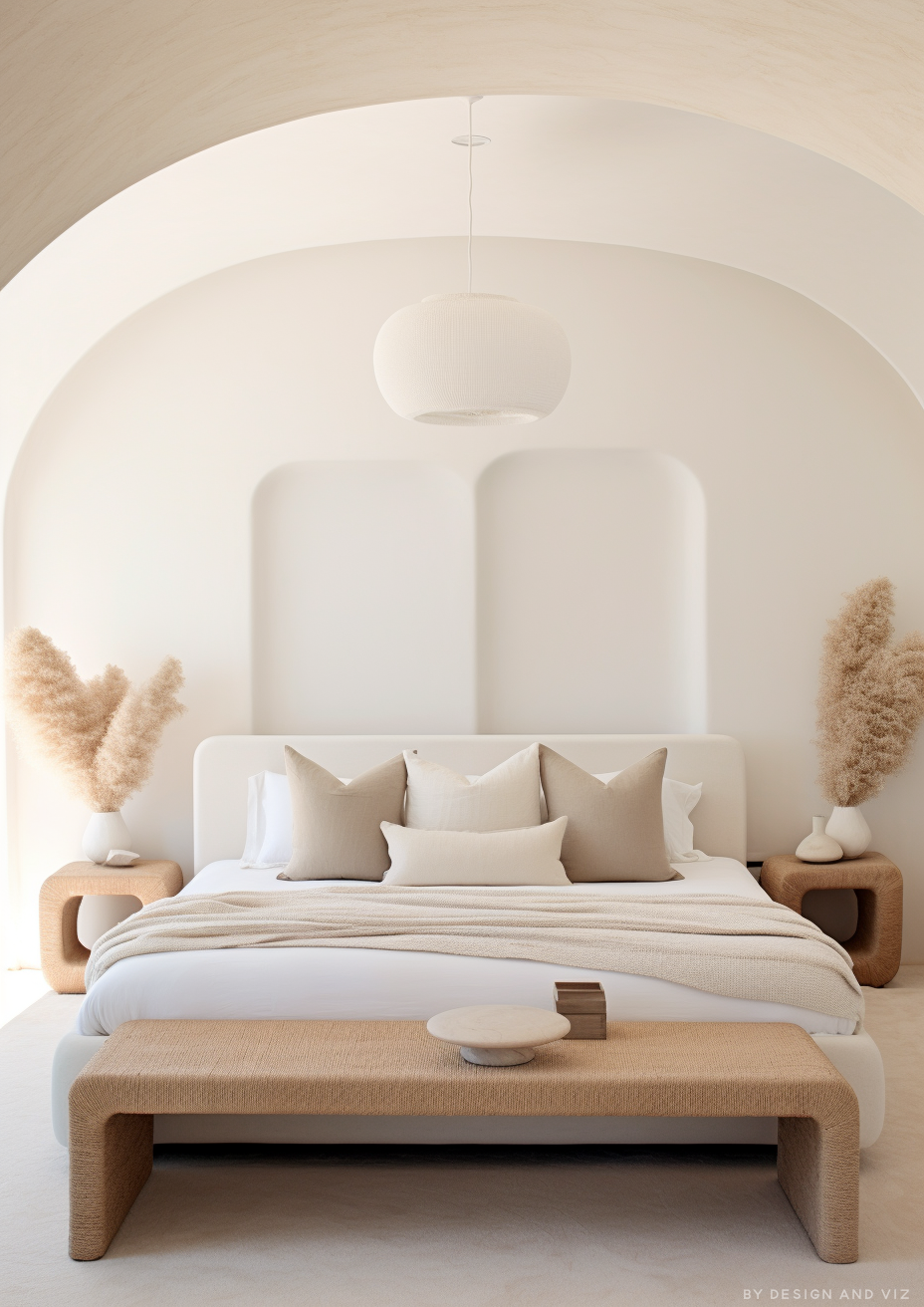
In a living room with a warm material palette -- warm wood floors, linen furniture, brass hardware, organic modern or traditional style -- Alabaster is almost always the correct choice. The warm cream character relates naturally to the warm materials and the result reads as cohesive, sophisticated, and deeply considered. It is one of the most popular SW choices for exactly these living room conditions.
In a living room with a contemporary or minimalist brief, cool-palette materials, or a scheme built around bold or saturated wall colours -- Chantilly Lace is the stronger choice. The crisp brightness reads as architectural and the near-neutral undertone does not create conflicts with any wall colour direction. For how Chantilly Lace handles the full range of living room combinations, the Chantilly Lace vs White Dove guide covers the BM white family in detail.
Kitchens and Cabinets
Alabaster on kitchen cabinets is one of the most popular SW cabinet choices -- the warm cream character suits organic modern, transitional, and traditional kitchens with warm stone countertops, brass hardware, and warm wood open shelving. It reads as a proper warm off-white rather than a stark white and creates a kitchen that feels inviting and considered.
Chantilly Lace cabinets read as clean, crisp, and brilliantly bright -- they suit contemporary and minimalist kitchens with cool stone, stainless appliances, and chrome or brushed nickel hardware. At LRV ~92 Chantilly Lace cabinets make a kitchen feel noticeably brighter and more open than Alabaster cabinets in the same room -- the 10-point LRV difference is clearly visible at cabinet scale.
Bedrooms

Alabaster creates a bedroom atmosphere that is warm, soft, and deeply restful -- the cream undertone under warm evening artificial lighting reads as beautifully inviting and is the more reliable choice for bedrooms in most conditions, particularly in north-facing or artificially lit rooms.
Chantilly Lace in a bedroom suits contemporary and minimalist briefs where the goal is light, airy, and uncluttered. In a bedroom with strong natural light and a pared-back palette, the architectural quality reads as considered. In a darker or north-facing bedroom, Alabaster's warmth creates a more comfortable atmosphere.
Bathrooms
Bathrooms are where Chantilly Lace is often most at home -- alongside white tile, cool marble, chrome fixtures, and a spa-like brief, the clean brightness reads as crisp, fresh, and precisely right. It is the bathroom white for maximum freshness and maximum light. Alabaster in a bathroom with warm stone, brass fixtures, and warm wood creates a luxurious, enveloping atmosphere -- the choice depends entirely on whether the material palette is warm or cool.
Exteriors

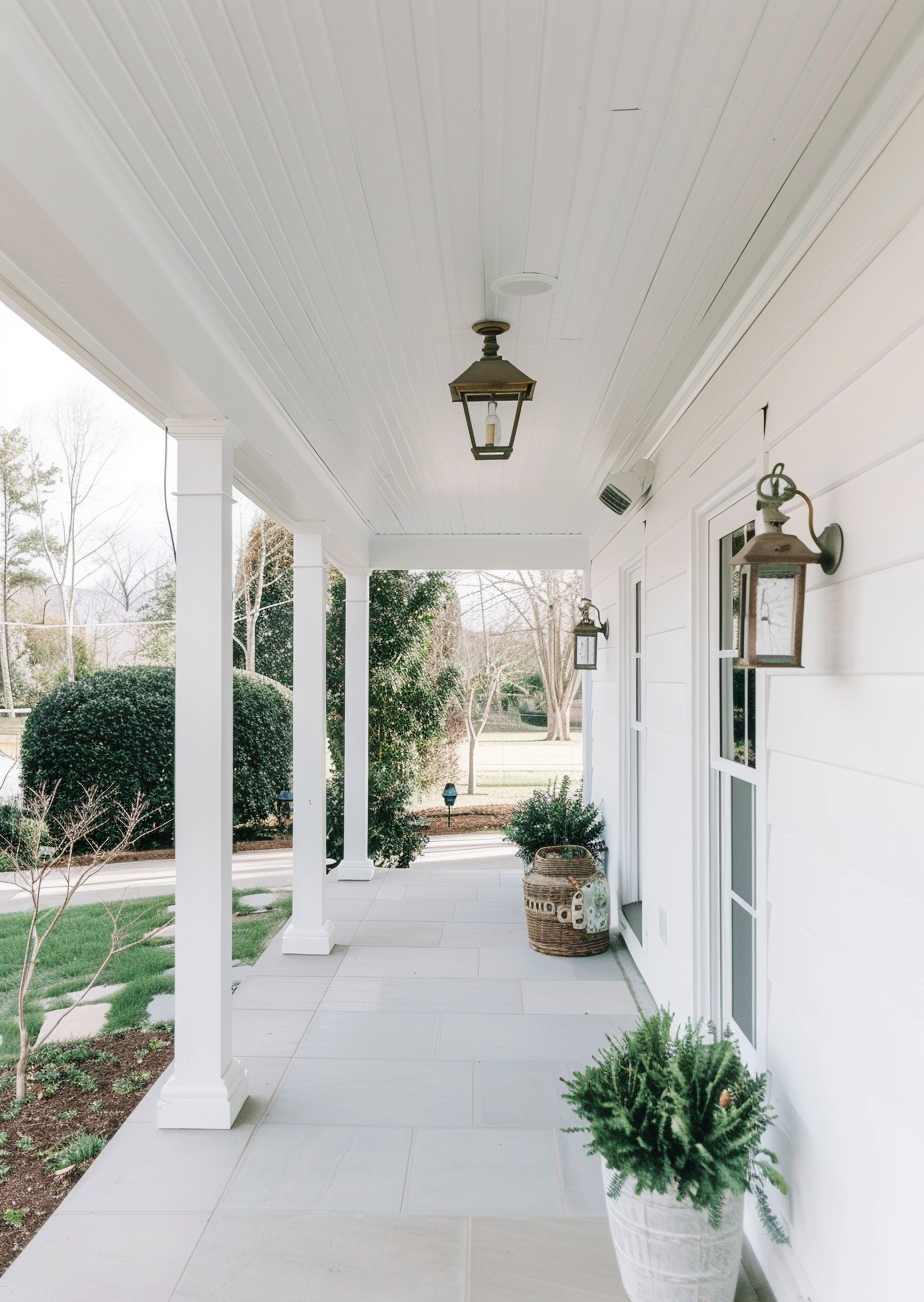
Alabaster is one of the most specified SW exterior whites -- the warm cream undertone reads beautifully on facades in both warm and cooler natural light and suits traditional, farmhouse, and organic modern architecture naturally. Chantilly Lace on an exterior reads as a clean, brilliant white and suits contemporary architecture and any facade where maximum crispness is the brief.
Which Should You Choose?
Choose Alabaster if:

The interior style is organic modern, traditional, or transitional -- the warm cream character relates naturally to these contexts and to the warm material palettes that typically accompany them.
The material palette is warm -- warm wood, warm stone, aged brass, natural linen, terracotta -- the cream undertone creates cohesion with warm materials in a way that Chantilly Lace's cooler brightness cannot.
The room is north-facing or has limited natural light -- Alabaster's warmth handles cool north-facing conditions reliably and the greige anchor prevents any dramatic shift. It is one of the most trusted warm whites for challenging conditions.
You want a white with genuine warmth and body -- Alabaster at LRV ~82 has a presence and depth on the wall that Chantilly Lace's brighter, flatter character does not deliver. If the room needs to feel warm and settled rather than crisp and energised, Alabaster is the correct choice. For the full picture of what Alabaster pairs with, the Alabaster vs Simply White guide covers the cross-brand warm white comparison in detail.
Choose Chantilly Lace if:

The interior style is contemporary, minimalist, or Scandinavian -- the clean, architectural crispness reads as intentional in these contexts and suits the restraint of the brief.
You want maximum brightness -- the 10-point LRV advantage over Alabaster is significant and clearly visible. In rooms where brightness and openness are the priority, Chantilly Lace outperforms Alabaster by a clear margin.
The scheme includes cool or saturated wall colours -- deep greens, navies, charcoals -- where Chantilly Lace trim creates a clean, bright boundary without undertone conflict. The full trim logic for Chantilly Lace is in the Benjamin Moore Chantilly Lace review.
You want white to read as genuinely white -- not warm, not cream, not off-white, but a true clean white with maximum brightness and near-neutral character.
If you are still unsure:
Sample both at large scale in the actual room -- not a chip in a store, not a screen. The 10-point LRV gap and the undertone difference between Alabaster and Chantilly Lace are both visible at sample scale in a way that makes the choice immediately obvious. The room's own light and materials will tell you which direction is correct.
Alabaster and Chantilly Lace vs Other Whites
vs White Dove OC-17 BM -- White Dove at LRV ~83 is almost identical in depth to Alabaster but sits in the Benjamin Moore range. It has a warm white undertone that is slightly less creamy than Alabaster's and more restrained. For how White Dove compares to Chantilly Lace across BM's own white range, the Chantilly Lace vs White Dove guide covers every condition.
vs Simply White OC-117 BM -- Simply White at LRV ~89.5 sits between Alabaster and Chantilly Lace in both depth and warmth. It has a barely-there warm yellow undertone that reads as a warm bright white without Alabaster's depth or Chantilly Lace's crispness. The middle-ground choice for rooms where neither extreme is correct.
vs Pure White SW 7005 -- Pure White at LRV ~84 is Sherwin Williams' closest trim white to Alabaster in depth. It is slightly cooler and brighter than Alabaster and sits between Alabaster and Chantilly Lace in both depth and warmth. It is the most reliable SW trim white alongside Alabaster walls.
Frequently Asked Questions
Is Alabaster warmer than Chantilly Lace?
Yes -- significantly warmer. Alabaster's warm cream undertone with a greige anchor places it firmly in the warm white family. Chantilly Lace's near-neutral undertone sits just on the cool side of neutral. The difference is not subtle -- in most light conditions they read as clearly different in warmth character, and the 10-point LRV gap compounds the visual difference further.
Can Alabaster and Chantilly Lace be used together?
Not on adjacent or simultaneously visible surfaces -- the LRV gap and the undertone clash make both colours look worse when placed side by side. Alabaster reads dirty against Chantilly Lace; Chantilly Lace reads cold against Alabaster. In separate rooms with clear visual boundaries they can coexist, but they should never share a room.
Is Alabaster a good alternative to Chantilly Lace?
They are not alternatives to each other -- they are different colours that suit different rooms and different briefs. If your room needs warmth and body, Alabaster. If your room needs crisp brightness and maximum reflectance, Chantilly Lace. Choosing Alabaster because you wanted Chantilly Lace -- or vice versa -- will almost always produce a disappointing result.
Which is better for kitchen cabinets?
Alabaster for warm-palette kitchens with brass hardware and warm stone; Chantilly Lace for contemporary kitchens with cool stone and chrome. Both are widely used and both produce beautiful results in the right context. The material palette and kitchen character determine the correct choice.
Which is better for a whole-house scheme?
Alabaster is the more reliable whole-house choice for most UK homes. Its warmth holds consistent across different orientations and different light conditions, and its broad compatibility with warm material palettes suits the majority of UK residential interiors. Chantilly Lace whole-house works beautifully in contemporary homes with consistent warm-spectrum lighting and a cool or minimal material palette throughout.
The Verdict
Alabaster and Chantilly Lace are not interchangeable and should not be treated as cross-brand equivalents. The 10-point LRV gap and the opposing undertone directions create two completely different rooms. Alabaster is the white for warm, organic, traditional, and transitional interiors where the brief is warmth, softness, and a settled quality. Chantilly Lace is the white for contemporary, minimalist, and high-contrast interiors where the brief is maximum brightness, crispness, and architectural precision.
The decision is straightforward once you understand the conditions: if your material palette is warm and the style is organic or traditional, Alabaster. If the palette is cool or contemporary and brightness is the priority, Chantilly Lace. Sample both at large scale in the actual room -- the 10-point LRV difference alone will make the right choice immediately obvious.
Need help choosing the right white for your home? See our design packages here -- bydesignandviz.com/#interiordesignpackages |
About the Author
Beril Yilmaz is a qualified architect and interior designer based in the UK. She runs BY Design And Viz, a design platform covering paint colour reviews, interior design guidance, and residential design projects.


Comments