


Benjamin Moore Iron Mountain 2134-30 - An Architect's Honest Review

Benjamin Moore Iron Mountain 2134-30 is one of the most misread dark neutrals in the BM range - and that is exactly why so many people are drawn to it, and exactly why so many people are surprised by it on the wall. It sits in a genuinely unusual position: deep enough to read as dramatic and near-black in lower light conditions, warm enough to create an atmosphere that a pure charcoal or a cool black cannot replicate. In the right room with the right palette, it is one of the most beautiful and most atmospheric dark neutrals available from any brand. In the wrong conditions it can look muddy, heavier than expected, or more obviously green than the chip suggested.
I have specified Iron Mountain on dining room walls, kitchen islands, exterior facades, and built-in joinery, and the consistent lesson across all of those projects is the same: this colour rewards understanding and punishes guessing. Read it correctly and commit to the conditions it needs - warm materials, warm lighting, and where possible warm natural light - and it delivers results that genuinely impress. Treat it as a generic dark neutral and apply it without that understanding and it can disappoint.
This review covers everything you need to know - its true undertone, what the LRV actually means in practice, how it behaves in every orientation, what to pair it with, and an honest verdict on who it is and is not right for.
What Type of Colour Is Benjamin Moore Iron Mountain?

Iron Mountain is a dark, warm-toned near-black - more accurately described as a very deep warm charcoal than a true black. At LRV ~9 it sits at the dark end of the near-black zone, absorbing most of the light that hits it while retaining just enough pigment character to read as a colour rather than a void.
The confusion about what Iron Mountain actually is runs through most of the content written about it - some sources describe it as a dark gray, others call it a soft black, some say it has blue undertones (it does not - that is Wrought Iron), and others describe it as warm brown. The correct characterisation is: a very dark warm charcoal with a grey-green quality and a subtle earthy brown note that gives it organic richness. Understanding that description is the key to using it correctly.
LRV - What ~9 Means on a Real Wall
Iron Mountain has an LRV of approximately 9, which places it firmly in the near-black zone.
To put that number in context: pure white is LRV 100, Pale Oak is LRV ~70, Kendall Charcoal is LRV ~14, and true near-black colours like Black Beauty sit below LRV 6. Iron Mountain at ~9 sits between Kendall Charcoal and the true near-blacks - deep enough to read as dramatically dark on a wall, light enough that it retains visible colour character rather than reading as flat black.
What LRV 9 means in a real room is this: Iron Mountain will absorb the vast majority of light in a space. In a room with limited natural light it will feel dark and enveloping - some people find this cocooning and atmospheric, others find it oppressive. In a room with good natural light it reveals its warm grey-green quality beautifully and reads as rich rather than heavy. The lighting specification - both natural and artificial - is the single most important variable for how Iron Mountain performs.
The practical implication for specification: I never commit Iron Mountain to a full room without visiting the space at multiple times of day and assessing the light quality in person. A small dimly lit study that receives a shaft of warm afternoon sun from the west is a different proposition entirely from a large north-facing living room. Both might have the same floor area. Both will produce completely different results with Iron Mountain.
Iron Mountain Undertones - The Complete Picture

The undertone of Iron Mountain is the most debated aspect of this colour across the internet - and the debate exists because the undertone is genuinely complex and genuinely light-sensitive.
Here is the definitive answer: Iron Mountain's primary undertone is warm grey-green with a subtle earthy brown quality. It is not blue. It is not purple. It is not a cool colour.
The confusion with blue or cool undertones comes from two sources: first, some people are conflating it with Wrought Iron 2124-10 which does have a cool blue-black undertone; second, Iron Mountain can reveal a faint violet-adjacent quality in very specific cool light conditions, but this is secondary and rare.
The grey-green is the dominant quality and the one that matters most for specification. In warm natural light - south and west-facing conditions - the green quality reads as earthy, organic, and deeply beautiful. The colour has a richness that straightforward charcoals cannot deliver. In cool north-facing light or under cool artificial lighting the green quality becomes more prominent and the colour can read as more obviously grey-green than intended - closer to a very dark mossy colour than a near-black charcoal.
The brown note is the subtler quality - but it is what separates Iron Mountain from Wrought Iron. Alongside warm wood, warm stone, and organic materials, the earthy quality creates a genuine sense of cohesion - the dark colour and the warm materials share a common earthy direction that makes the scheme feel considered. This is why Iron Mountain is so much more beautiful in a room with warm oak floors and unlacquered brass than in a room with cool stone and polished chrome.
How Iron Mountain Behaves in Different Light

South-Facing Rooms
South-facing rooms are Iron Mountain's most flattering conditions and where I specify it with most confidence.
In warm natural light the warm grey-green quality reads as rich, alive, and deeply sophisticated - the colour reveals its full character without any of the risks that cooler light introduces. A south-facing dining room in Iron Mountain with warm oak floors, White Dove trim, unlacquered brass chandelier, and 2700K warm artificial lighting is one of the most consistently impressive residential colour decisions I know how to make. The combination of warm natural light and warm materials activates Iron Mountain completely.
North-Facing Rooms
North-facing rooms are where Iron Mountain demands the most careful management - and where I have seen it go wrong most often. The cool indirect light of a north-facing room removes the warm quality that makes Iron Mountain special and instead allows the grey-green to dominate. In a north-facing room without compensating warm elements, Iron Mountain can read as a very dark, flat, grey-green that feels heavy rather than atmospheric.
My minimum specification for Iron Mountain in a north-facing room: 2700K warm-spectrum bulbs throughout - I would consider 2400K if the room has very limited natural light - warm wood floors or significant warm wood furniture as the dominant floor element, unlacquered brass or aged bronze as the primary metal, and warm linen or natural textiles in substantial quantities.
Without all of those elements working together, I would redirect the client toward Kendall Charcoal HC-166 which is more forgiving in cool light conditions.
East-Facing Rooms
East-facing rooms receive warm morning light and progressively cooler light through the day. Iron Mountain in an east-facing room is at its most beautiful in the morning - the warm light activates the earthy quality and the colour reads as rich and grounded. In the afternoon and evening the cooler quality emerges and the colour reads more deeply and more grey-green. For breakfast rooms, morning studies, or east-facing kitchens that are primarily used in the morning, this pattern can work beautifully. For rooms used across all hours, the variation needs to be tested on a large sample before committing.
West-Facing Rooms
West-facing rooms are arguably the most atmospheric application for Iron Mountain. The warm raking evening light of a west-facing room hits Iron Mountain at the most flattering angle and the warm grey-green becomes genuinely extraordinary - rich, organic, and deeply enveloping. A west-facing sitting room or dining room in Iron Mountain used primarily in the evening hours can be one of the most impressive dark neutral rooms I have produced. The warm evening light does everything that the warm artificial lighting prescription aims to replicate - but naturally and more beautifully.
Artificial Lighting
Artificial lighting is non-negotiable with Iron Mountain. Under warm-spectrum bulbs at 2700K the earthy warmth is activated and the colour reads as deeply sophisticated and atmospheric. Under cool daylight bulbs at 4000K or above, the grey-green dominates and the earthy quality is suppressed - the colour reads as a flat, dark grey-green rather than a rich, warm near-black. I specify 2700K as standard for any Iron Mountain application. In rooms where the client has installed cool LED downlights I address that conversation before the paint decision is made - keeping the wrong bulbs and painting Iron Mountain is a predictable disappointment.
Thinking about Iron Mountain for your home? Book a colour consultation here - bydesignandviz.com/book-online |
Best Rooms for Iron Mountain

Dining Rooms
Dining rooms are the application I recommend Iron Mountain for most readily - and the room type where it consistently produces the most impressive results.
The cocooning, atmospheric quality of a very dark warm charcoal is perfectly suited to a dining room brief: intimate, rich, and deeply considered. In a south or west-facing dining room with warm oak floors, White Dove trim, aged brass pendant lighting at 2700K, and natural linen chairs, Iron Mountain creates a genuinely extraordinary room that most clients say is better than anything they imagined when they first saw the chip. The material palette does all the work.
Studies and Home Offices
Studies and home offices are consistently among the most successful Iron Mountain applications I have seen and specified.
The focused, concentrated atmosphere that a very dark warm colour creates is genuinely conducive to work - it reduces visual distraction and creates a sense of deliberate intent that lighter neutrals cannot replicate. In a south or east-facing study with warm wood shelving, warm brass picture lights at 2700K, and warm leather or linen upholstery, Iron Mountain feels like a design decision rather than a paint choice. A client once told me their Iron Mountain study was the only room in the house they actually got work done in - I believe it.
Kitchens - Islands and Joinery
Iron Mountain on a kitchen island or as a lower cabinet colour in a kitchen with warm perimeter cabinets is one of the most organic and most beautiful kitchen colour decisions available. The warm grey-green quality relates naturally to warm stone countertops, warm wood shelving, and unlacquered brass hardware in a way that cooler dark colours like Wrought Iron cannot fully replicate. I have used Iron Mountain on kitchen islands in two residential projects with calacatta viola countertops and aged brass hardware and the result in both cases was genuinely distinctive - the earthy quality of Iron Mountain and the warm marble created a cohesion that made the island feel like a furniture piece rather than a painted box.
Exteriors
Exterior applications are where Iron Mountain has its widest following - and where it performs most broadly across different conditions.
At exterior scale in natural daylight, the warm grey-green reads as a rich, organic near-black that suits traditional, farmhouse, organic modern, and contemporary architecture equally. Unlike Wrought Iron which reads as cool and crisp at exterior scale, Iron Mountain reads as earthy and grounded - it sits naturally against warm brick, warm stone, warm timber, and landscape greenery. I have specified it on a stone-clad country house exterior and the warm grey-green read as an almost natural material colour against the stone - the house looked like it had always been that colour.
Feature Walls and Accent Applications
Iron Mountain on a single feature wall - behind a bed, behind built-in shelving, as a fireplace breast - is a lower-commitment entry point that works well as a first application. The warm grey-green on a single wall with White Dove or Chantilly Lace on surrounding walls creates a high-contrast combination that reads as considered and dramatic without the full commitment of a whole room.
What Iron Mountain Works With

Trim Colours
White Dove OC-17 is my first recommendation for trim alongside Iron Mountain - the warm cream quality of White Dove relates naturally to Iron Mountain's earthy warmth and the boundary between dark wall and warm white trim reads as considered and cohesive.
The warmth of White Dove counterbalances the cool grey-green aspect of Iron Mountain and draws out the earthy brown quality instead.
Chantilly Lace OC-65 is a stronger, more graphic alternative for contemporary schemes where maximum contrast is the brief - the near-neutral crispness creates a sharp boundary that reads as architectural and precise. I use Chantilly Lace alongside Iron Mountain when the interior style is more contemporary or transitional and the brief calls for graphic contrast rather than warm cohesion.
Avoid warm cream trims like Antique White or Linen White alongside Iron Mountain - the warmth-on-warmth combination blurs the boundary between the dark wall and the trim and the scheme loses definition and contrast. This is a mistake I have seen on site more than once, usually when a client has chosen the trim independently of the wall colour.
Floor Materials
Warm wood floors are the most important material decision alongside Iron Mountain.
White oak, medium warm oak, and warm walnut all work beautifully - the shared earthy direction between the warm wood and Iron Mountain's brown-green quality creates a palette that reads as naturally cohesive.
I specify medium warm oak most frequently alongside Iron Mountain because the warmth is present without the orange quality that honey oak can bring - honey oak and Iron Mountain can create an undertone conflict where the orange and the warm green fight each other.
Warm stone floors - warm limestone, travertine, warm terracotta tile - work exceptionally well alongside Iron Mountain for the same reason: the shared earthy palette direction creates cohesion. Cool grey stone or pale bleached floors are a more demanding pairing and require significant warm material investment through textiles and lighting to prevent the scheme reading as cold.
Metal Finishes
Unlacquered brass and aged brass are my first choice alongside Iron Mountain - the warm golden quality is the single most effective counterbalance to the grey-green undertone and the combination is one of the most consistently beautiful dark-neutral metal pairings available.
On kitchen hardware, door furniture, lighting, and bathroom fixtures, unlacquered brass alongside Iron Mountain reads as considered and luxurious. I specify unlacquered rather than polished brass because the slightly muted warmth sits more naturally with Iron Mountain's earthy depth.
Aged bronze and dark bronze are strong alternatives that create a more tonal, less contrasting result - the dark bronze sits closer to Iron Mountain in depth and the scheme reads as deeply layered and atmospheric rather than high contrast. Matte black hardware alongside Iron Mountain creates a graphic, near-monochromatic result that suits contemporary applications.
Complementary Colours
Warm off-whites are the most widely used complementary colours alongside Iron Mountain - White Dove, Alabaster, and Accessible Beige on adjacent walls or in connected spaces create a warm-dark contrast that reads as considered and balanced. Muted sage green and dusty olive are beautiful accent directions that share Iron Mountain's earthy quality and create a cohesive organic palette. Deep navy as an accent colour creates a rich, moody combination - Hale Navy HC-154 in joinery alongside Iron Mountain walls is one of the most atmospheric combinations in the BM range.
How Iron Mountain Compares to Similar Colours
Iron Mountain vs Wrought Iron 2124-10

WHICH IS WARMER? Iron Mountain is significantly warmer. Wrought Iron has a cool blue-black undertone; Iron Mountain has a warm grey-green with brown quality. In a room with warm materials the difference is immediately visible - Iron Mountain glows with earthy richness while Wrought Iron reads as crisp and cool.
WHICH HAS THE HIGHER LRV? Iron Mountain at LRV ~9 is slightly higher than Wrought Iron at LRV ~6. The difference is small but means Iron Mountain retains marginally more visible colour character in low-light conditions.
WHICH IS MORE VERSATILE? Wrought Iron is more versatile across different material palettes and room orientations because its cleaner undertone adapts more broadly. Iron Mountain is more beautiful in the right conditions but demands specific conditions - warm materials, warm light, warm orientation - to perform at its best.
MY VERDICT: Iron Mountain for traditional, organic modern, and warm-palette rooms. Wrought Iron for contemporary, cool-palette, and architectural applications. The full side-by-side comparison is in the Wrought Iron vs Iron Mountain guide.
Iron Mountain vs Kendall Charcoal HC-166

WHICH IS WARMER? Both have warm grey-green undertones but Iron Mountain is significantly deeper and its warmth reads differently - richer and more earthy. Kendall Charcoal at LRV ~14 reads as a warm mid-depth charcoal; Iron Mountain reads as a dark, atmospheric near-black with warmth.
WHICH HAS THE HIGHER LRV? Kendall Charcoal at LRV ~14 is meaningfully lighter than Iron Mountain at LRV ~9. The gap is significant in practice - Kendall Charcoal is more forgiving in rooms with limited light.
WHICH IS MORE VERSATILE? Kendall Charcoal is significantly more versatile - the lighter LRV means it works in more room types, more orientations, and with less demanding material requirements. Iron Mountain is more atmospheric and more dramatic in the right conditions.
MY VERDICT: If you love the warm grey-green direction but your room has limited natural light or the brief does not demand full drama, Kendall Charcoal is the safer and more broadly reliable choice. If the room has good light and the brief is fully atmospheric, Iron Mountain. The Benjamin Moore Kendall Charcoal guide covers every Kendall Charcoal application.
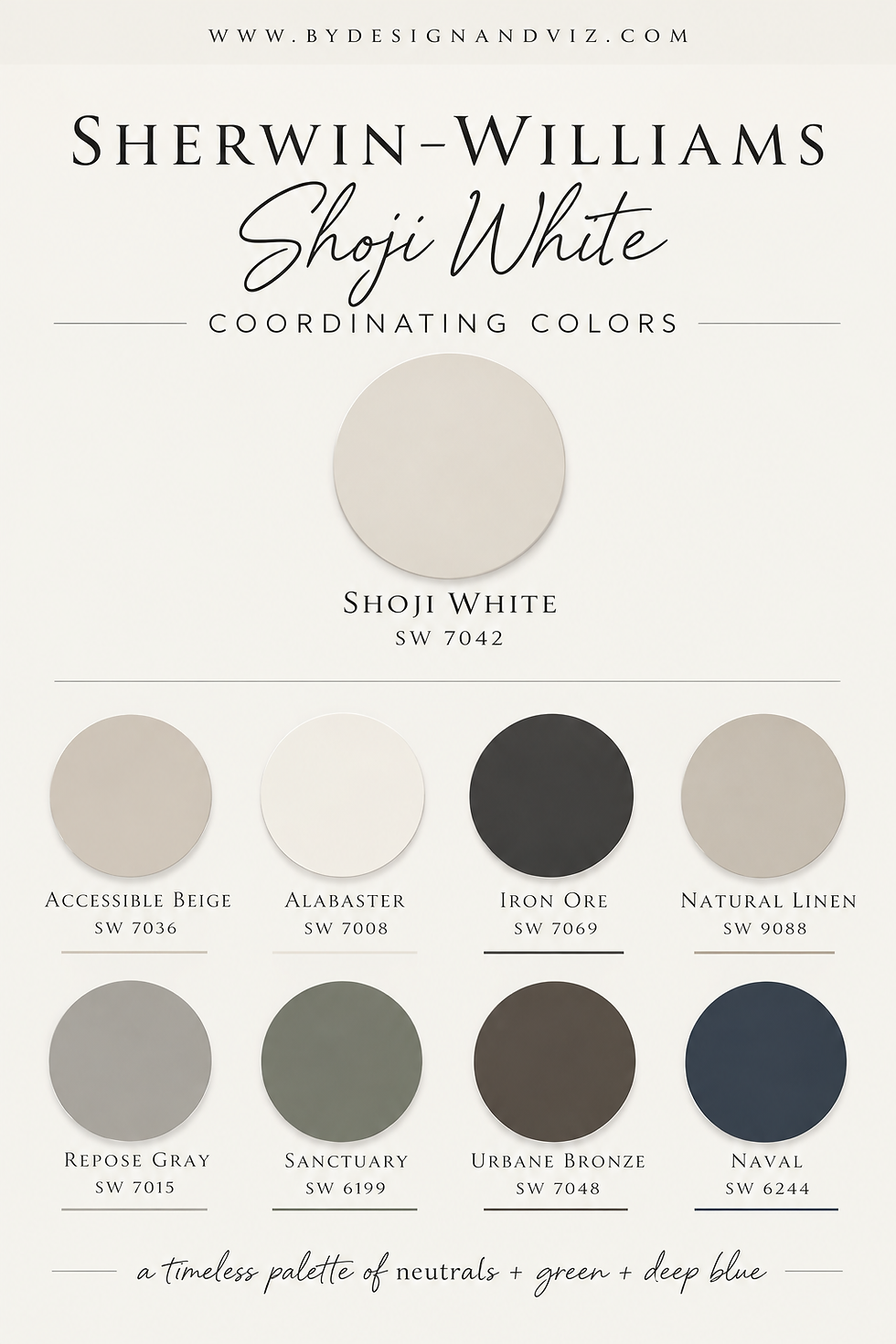
Iron Mountain vs Iron Ore SW 7069

WHICH IS WARMER? Iron Mountain is warmer. Iron Ore from Sherwin Williams has a more neutral-cool undertone that reads as a cleaner, softer black. Iron Mountain's grey-green warmth gives it more organic character than Iron Ore's more restrained neutrality.
WHICH HAS THE HIGHER LRV? Iron Mountain at LRV ~9 and Iron Ore at LRV ~6 - Iron Mountain is marginally lighter and retains slightly more colour character. Iron Ore reads as slightly closer to true black.
WHICH IS MORE VERSATILE? Iron Ore is more broadly versatile across material palettes - its more neutral undertone adapts to both warm and cool contexts without the warm material requirement that Iron Mountain needs. For exterior applications where the material context is mixed, Iron Ore is often the safer cross-brand choice. The full Iron Ore review is at Iron Ore Sherwin Williams.
MY VERDICT: Iron Mountain for interiors and exteriors with warm organic material palettes. Iron Ore for more broadly neutral applications or cross-brand schemes.
Iron Mountain vs Peppercorn SW 7674

WHICH IS WARMER? Iron Mountain is warmer. Peppercorn from Sherwin Williams at LRV ~19 is a medium-deep charcoal with a more balanced cool-warm undertone that reads as a true charcoal grey rather than a near-black with warmth.
WHICH HAS THE HIGHER LRV? Peppercorn at LRV ~19 is noticeably lighter than Iron Mountain at LRV ~9. The difference on a wall is clearly visible - Peppercorn reads as a dark grey that allows the room to function normally; Iron Mountain reads as near-black that transforms the atmosphere.
MY VERDICT: Peppercorn for rooms where a dark grey presence is needed without full near-black drama. Iron Mountain for full atmospheric commitment in the right conditions. Different briefs entirely.
Frequently Asked Questions
Is Benjamin Moore Iron Mountain warm or cool?
Iron Mountain is warm - its grey-green undertone with an earthy brown quality places it clearly in the warm family. This is one of the most common points of confusion about this colour because it reads as near-black on a chip and people often assume dark colours are neutral or cool. The warm quality is what makes Iron Mountain so distinctive and so beautiful in the right room - and it is also what makes it sensitive to the conditions around it.
Does Iron Mountain look green on the wall?
In certain conditions Iron Mountain can read as more obviously grey-green than expected - particularly in rooms with strong natural light, in rooms with warm materials that create a contrast with the green quality, or in rooms with cool artificial lighting. In most well-specified conditions it reads as a very dark, warm near-black with an earthy complexity rather than an obviously green colour. The green quality is most visible when the colour is placed in direct sunlight or alongside cool materials that contrast with the warm undertone.
What is the best trim colour for Iron Mountain?
White Dove OC-17 for warm, traditional, and organic modern schemes - the creamy warmth relates naturally to Iron Mountain's earthy quality. Chantilly Lace OC-65 for contemporary schemes where graphic contrast is the brief. Both are correct in their contexts. Avoid warm cream trims like Antique White - they blur the definition between wall and trim and the scheme loses clarity.
Can Iron Mountain work on a full room?
Yes - and a full room in Iron Mountain in the right conditions is one of the most impressive residential colour decisions available. The conditions needed: south or west-facing orientation, warm-spectrum artificial lighting throughout (2700K), warm wood floors, warm metal hardware, and warm textiles. Remove any of those elements and the risk increases. In a full room with all conditions met, Iron Mountain is extraordinary.
Is Iron Mountain good for kitchen cabinets?
Iron Mountain on kitchen cabinets or an island is a strong and distinctive choice for the right kitchen - one with warm stone countertops, unlacquered brass hardware, and a warm organic modern or traditional brief. It is less suited to contemporary kitchens with cool stone and stainless because the warm grey-green can feel at odds with the cool materials. In the right context it is genuinely beautiful and more distinctive than the more commonly specified Wrought Iron or Kendall Charcoal.
How does Iron Mountain compare to Wrought Iron?
Iron Mountain is warmer and more earthy; Wrought Iron is cooler and more architectural. Both are near-blacks but they suit completely different briefs, material palettes, and room orientations. The full detailed comparison including room-by-room guidance is in the Wrought Iron vs Iron Mountain guide.
The Verdict
Benjamin Moore Iron Mountain is not a safe default dark neutral - it is a colour that rewards commitment and understanding. The warm grey-green with earthy brown quality is genuinely distinctive, genuinely beautiful in the right conditions, and genuinely demanding of those conditions. Every project I have specified it on has required a conversation about lighting specification, floor material, hardware finish, and room orientation before I would commit to it. That conversation is not a warning against using it - it is the price of admission for one of the most atmospheric and most rewarding dark neutrals available.
The clearest guidance I can give is this: if you have warm natural light, warm wood floors, warm metal hardware, and you can commit to 2700K warm-spectrum artificial lighting throughout - Iron Mountain will almost certainly exceed your expectations.
If any of those conditions are missing, the risk increases and Kendall Charcoal or Wrought Iron may be the more reliable specification. Sample it at large scale on the actual wall under actual conditions. At this depth of colour, the chip in the store tells you almost nothing.
Need help deciding if Iron Mountain is right for your room? See our design packages here - bydesignandviz.com/#interiordesignpackages |
About the Author
Beril Yilmaz is a qualified architect and interior designer based in the UK. She runs BY Design And Viz, a design platform covering paint colour reviews, interior design guidance, and residential design projects.



Comments