


Modern Patio Ideas: What Actually Works According to an Architect

Updated: Jun 1
Modern patio design is one of the areas where the gap between what looks good on Pinterest and what works in a real outdoor space is widest. The patios that read as genuinely modern share a set of specific design principles — in materials, proportions, planting, and how the space connects to the interior — that have nothing to do with trends and everything to do with architecture.
I have designed outdoor spaces across a range of residential projects and the same principles apply whether the patio is 10 square metres or 100. This guide covers the modern patio ideas that consistently produce spaces that look considered, feel comfortable, and hold up over time — not just in the first summer after they are built.
What Makes a Patio Feel Modern?

Modern outdoor design is defined by simplicity of material, clarity of layout, and the deliberate connection between indoor and outdoor space — not by any specific furniture style or planting trend. A modern patio uses a limited material palette chosen with intention, a layout that reflects how the space is actually used, and a planting approach that provides structure rather than abundance.
The three most common mistakes in patio design — mixing too many materials, overcrowding the space with furniture, and treating planting as an afterthought — all work against the modern aesthetic. Each one adds visual noise that prevents the space from reading as calm, considered, and deliberate.
For a full breakdown of how to approach patio layout before any materials or furniture decisions are made, the patio layout ideas guide covers the planning principles that underpin every successful patio design.
Modern Patio Materials — What to Use and What to Avoid

Porcelain Paving
Large-format porcelain tiles are the defining material of modern patio design — their clean, precise surface, minimal joints, and consistent color make them the most effective way to achieve the calm, flat ground plane that modern outdoor spaces require. Formats of 600x600mm or larger are most effective — smaller tiles create more joints which adds visual busyness that works against the modern aesthetic.
Porcelain is also one of the most practical patio materials available — it is frost-resistant, non-porous, requires no sealing, and does not stain. The most popular porcelain finishes for modern patios are concrete-effect and stone-effect in warm grey, warm beige, and off-white tones — they provide the visual simplicity of the material without the maintenance demands of real concrete or stone.
One important consideration: porcelain can be slippery when wet. Always specify a textured or anti-slip finish — a smooth porcelain patio in a UK climate is a safety risk, not a design choice.
Concrete
Poured concrete or concrete paving slabs are the most architecturally honest modern patio material — the flat, uniform surface and raw material quality have a directness that suits contemporary residential design at every scale. Brushed concrete finishes provide slip resistance while maintaining the material's clean aesthetic. Exposed aggregate adds texture without compromising the modern quality.
The practical consideration with concrete is maintenance — it requires sealing to prevent staining and can crack with ground movement over time. For a lower-maintenance alternative with the same visual quality, large-format concrete-effect porcelain achieves almost identical results without the upkeep.
Composite Decking
Contemporary composite decking — in warm grey, warm brown, or charcoal tones with a brushed rather than grooved surface — works well in modern patio design when used as a secondary surface alongside stone or porcelain rather than as the primary paving material. The material warmth of decking adds contrast and tactility to a patio scheme that would otherwise be entirely hard surface.
Avoid traditional grooved timber-look composite in light brown tones — it reads as dated in a contemporary scheme. Choose a brushed finish in a deeper, more neutral tone for a result that sits comfortably in a modern palette.
Materials to Avoid in Modern Patio Design
Indian sandstone in orange-brown tones, small-format block paving, and mixed random-stone designs all work against the modern aesthetic — they introduce colour variation, pattern complexity, and joint frequency that prevents the ground plane reading as calm and unified. They are not bad materials in the right context, but that context is not a modern patio.
Modern Patio Layout Principles

Define Zones Before Choosing Furniture
The layout decision — where to eat, where to sit, where to plant — should be made before any furniture is chosen, not after. Most patio layouts that feel crowded or unresolved were designed furniture-first, with the zones fitting around the pieces rather than the pieces fitting the zones.
A modern patio layout typically includes a dining zone, a seating zone, and at least one planting zone — the separation between these zones, even if only implied rather than physically divided, is what makes a patio feel designed rather than arranged. For a full guide to thinking through patio zones and circulation, the how to plan your patio guide covers the process step by step.
The Relationship to the Interior
The most important layout decision in any modern patio is how it connects to the interior of the house — specifically, whether the floor level, floor material, and sightlines from inside create a sense of continuation or separation. Modern residential design consistently favours continuation: the patio feels like an extension of the interior rather than a separate outdoor room.
Practically this means: matching the interior floor level as closely as possible (a step down to the patio immediately creates separation), using a patio material that relates to the interior floor tone if not the same material, and positioning the seating zone so it is visible from inside — creating the sense that the outdoor space is part of the home even when the doors are closed.
Proportion and Furniture Scale
Oversized furniture on a small patio is one of the most common design mistakes — it makes the space feel cramped and prevents the layout from reading clearly. The furniture should occupy no more than 50-60% of the patio area, leaving enough clear paving around it to allow comfortable movement and to let the material quality of the ground plane read properly.
For small patios specifically — where furniture scale is the critical constraint — the small patio ideas guide covers how to plan furniture and layout at restricted dimensions, and the small patio designs guide shows how the principles apply in real spaces.
Modern Patio Furniture — What Works
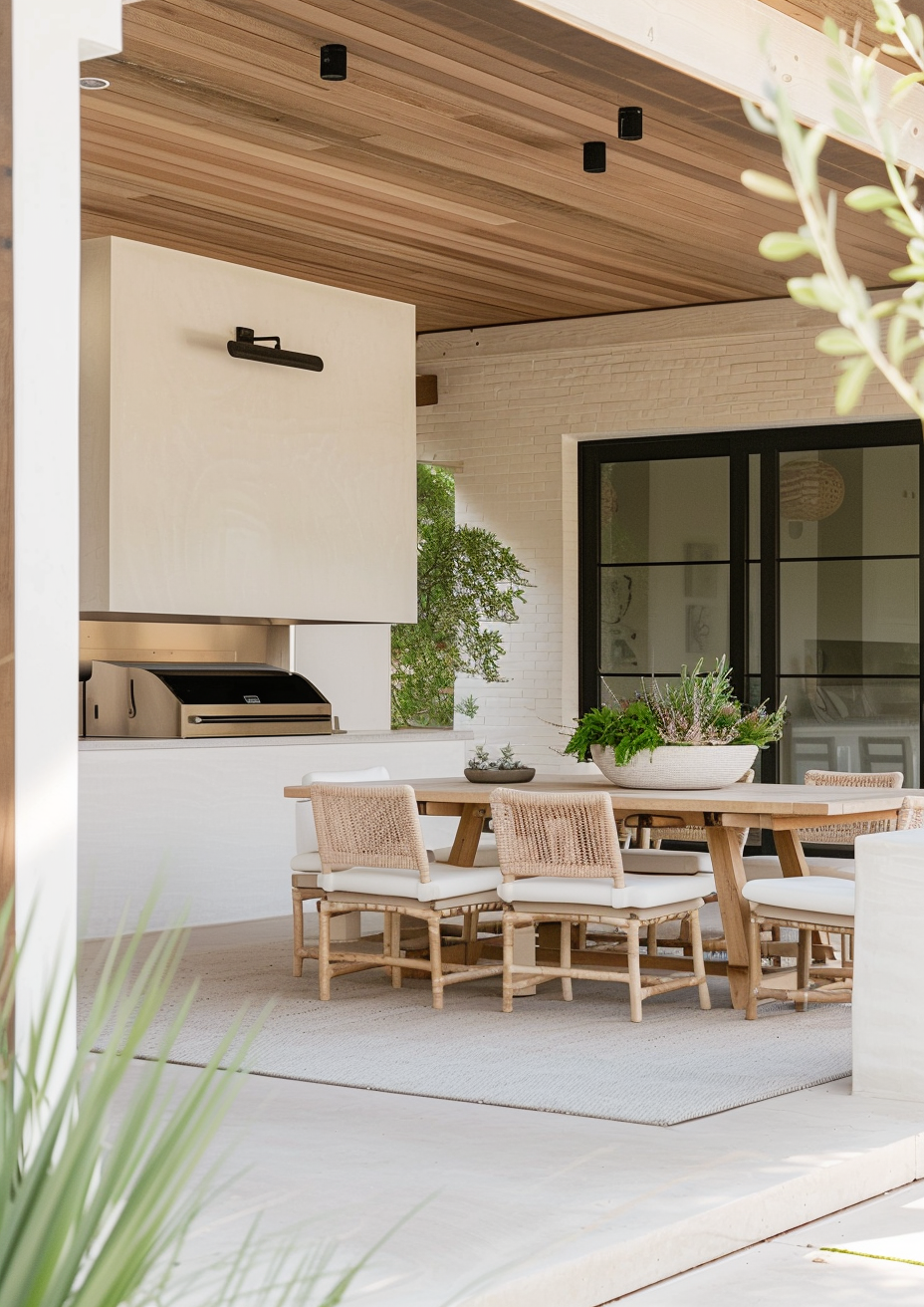
Modern patio furniture is characterised by clean lines, minimal ornamentation, and materials that weather honestly — powder-coated aluminium, teak, concrete, and quality rope weave are all appropriate. Ornate cast iron, heavily branded plastic, and imitation rattan in bright white are not.
The most important quality in modern outdoor furniture is visual weight — furniture that reads as light and open (thin-profile frames, open weave, glass table tops) allows the patio material and planting to read behind it. Heavy, solid furniture competes with the space rather than sitting within it.
Seating
Deep, low seating — lounge chairs and sofas at a seat height of 35-40cm — gives a modern patio a relaxed, residential quality that dining-height seating alone cannot achieve. A combination of dining and lounge zones, even in a smaller patio, creates a space that functions across different uses and times of day.
Outdoor cushions in neutral tones — warm linen, off-white, warm grey — age better than bold pattern and sit more naturally in a modern scheme. The outdoor textiles are where warmth and texture come from in a modern patio — the hard materials should be calm and the soft materials should do the work of making the space feel inviting.
Dining
A large dining table is always worth the space it takes on a patio — outdoor dining is one of the primary ways most families use their patio, and a table that is too small for the household creates friction every time it is used. Size up rather than down when space allows.
Extendable tables are the most practical solution for patios that need to accommodate both everyday and occasional larger gatherings. In modern patio design, choose an extendable table in a single material rather than a mix — a teak top with aluminium legs reads as more considered than a glass top with mixed metal legs in most contemporary schemes.
Modern Patio Planting

Planting is the element that separates a modern patio from a hard-landscaped yard — but the planting approach in a modern outdoor space is very different from a traditional garden. Modern patio planting uses structure, repetition, and restraint rather than abundance and variety.
Structural Plants
One or two large structural plants — olive tree, Fatsia Japonica, architectural grass, bamboo in a contained root barrier — anchor a modern patio in a way that a collection of smaller plants cannot. The scale and presence of a single well-chosen structural plant reads immediately as designed. A collection of small pots in different sizes and materials reads as accumulated rather than planned.
Planting in Raised Beds
Raised planting beds built from the same material as the patio paving — or from a complementary material such as Corten steel alongside porcelain paving — integrate planting into the architecture of the patio rather than treating it as an addition. This is the approach that most clearly distinguishes a designed modern patio from a decorated one.
The plants within raised beds in modern patio design are typically architectural in character — grasses, lavender, rosemary, olive, box, and phormium all work well. Avoid flowering annuals and highly colorful perennials in a modern scheme — they introduce the kind of visual variety that works against the restrained palette.
Pots and Containers
If raised beds are not practical, large pots in a single consistent material — concrete, terracotta, or dark-glazed ceramic — achieve a similar sense of intention without the construction involved. The key word is large — a group of three or five large pots has far more design impact than ten small ones, and the scale makes the planting choice matter more.
Modern Patio Lighting

Lighting is the element most often underbudgeted in patio design and the one that makes the biggest difference to how the space feels after dark — which, in a UK climate, is when most outdoor entertaining actually happens.
Modern patio lighting uses three layers: ground-level uplighting for plants and structural features, overhead lighting for the dining zone, and ambient lighting for the seating zone. Each layer serves a different function and the combination creates a space that reads as warm and considered rather than flatly lit.
Festoon lights are the most common outdoor lighting choice and they work well in modern schemes when used sparingly — a single run of warm-white festoon lights over the dining zone is enough. Multiple crossing runs read as decorative rather than designed. Wall-mounted exterior lanterns in a modern profile — slim, dark-framed, minimal — complement the patio material and furniture better than traditional lantern styles.
Covered and Enclosed Modern Patios

A covered patio — pergola, sail shade, or full glazed structure — extends the usable season significantly in a UK climate and changes the character of the space from outdoor room to indoor-outdoor room.
For a full guide to planning and designing a covered patio — structure options, materials, and how to integrate them with the house — the covered patio guide covers every option in detail.
Modern Patio Ideas by Space Size

Small Modern Patio Ideas
A small patio benefits most from the modern design approach — restraint, limited material palette, and large-format paving all make a small space read larger than it is. The single biggest mistake in a small modern patio is introducing too many elements — one seating zone, one structural plant, one material, and good lighting is a complete and considered small patio scheme.
For ideas specifically scaled to small outdoor spaces, the small patio ideas and small patio designs guides both cover layout and material approaches at restricted dimensions.
Large Modern Patio Ideas
A large patio needs the zone separation that a small patio can imply — the dining and seating zones should be physically distinct, separated by a change in level, a planting bed, or a simple change in the ground material. Without this separation a large patio reads as a single undifferentiated area of paving, regardless of how good the individual elements are.
A porch or transitional covered zone between the interior and the main patio also works well at larger scales — for how to design the connection between a covered porch and open patio, the porch and patio design guide covers that relationship specifically.
Modern Patio Colors — Materials and Soft Furnishings

The modern patio palette is almost always anchored in warm neutrals — warm grey, warm off-white, warm beige — in the hard materials, with contrast coming from dark structural elements (dark aluminium frames, dark steel planters, dark outdoor furniture) and warmth coming from natural materials (teak, rope, terracotta, natural stone accents) and soft furnishings.
The mistake to avoid is introducing too many material colors at the hard landscape level — the ground plane, walls, and built elements should form a unified neutral backdrop against which the plants and furniture read clearly. Color in a modern patio comes from planting and textiles, not from the architecture of the space.
Working on a patio project and want professional design input? Book a consultation here — bydesignandviz.com/book-online |
Frequently Asked Questions

What makes a patio look modern?
A modern patio is defined by a limited material palette, large-format paving, clean-lined furniture, structural planting, and a clear connection to the interior — not by any specific furniture style or trend. The shared quality of all modern patios is that they look considered and intentional: every element has been chosen rather than accumulated.
What is the best paving for a modern patio?
Large-format porcelain paving in a concrete or stone effect is the most popular and practical choice for a modern patio — it is durable, low-maintenance, frost-resistant, and achieves the clean flat ground plane that modern design requires. Formats of 600x600mm or larger, in warm grey or warm beige tones, work best in most residential schemes.
How do I make a small patio look modern?
Use one paving material, one large structural plant, and furniture scaled to the space — restraint is more effective in a small modern patio than variety. Large-format paving makes a small space read larger. A single well-chosen structural plant in a large pot has more design impact than multiple small ones. Keep the color palette simple and warm.
What plants work best on a modern patio?
Architectural plants with strong structural form work best in modern patio design — olive trees, ornamental grasses, lavender, rosemary, phormium, bamboo (in a root barrier), and Fatsia Japonica. These plants provide year-round presence and structure rather than seasonal color, which suits the restrained modern palette.
Do I need planning permission for a patio?
In most cases, no — patios at ground level that do not involve raising the surface more than 300mm above the existing ground level generally do not require planning permission in the UK under permitted development rights. However, listed buildings, conservation areas, and certain new-build developments may have restrictions. Always check with your local planning authority if you are unsure, particularly if the patio is at the front of the property.
Final Thought
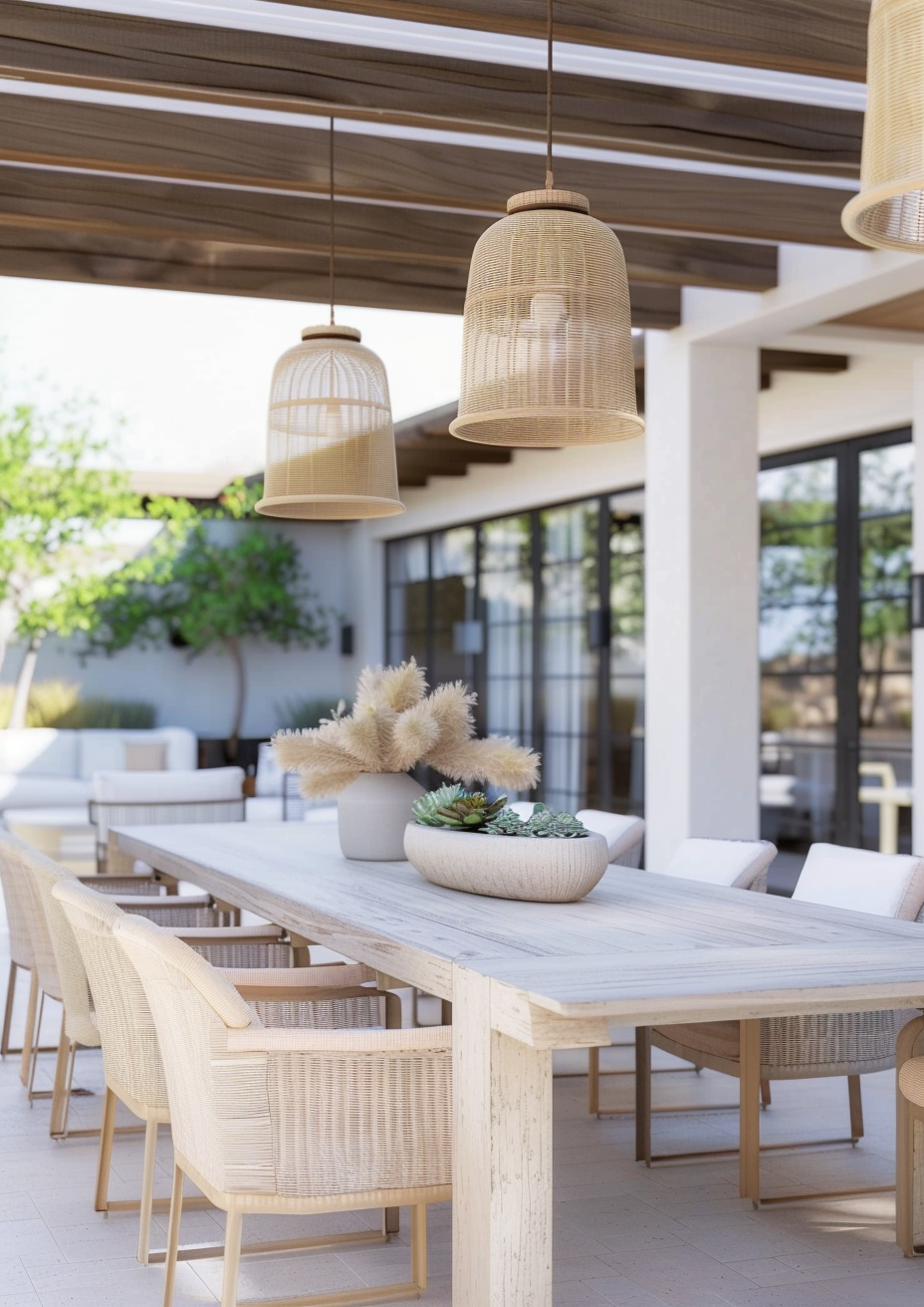
The modern patio ideas that hold up best over time are the ones built on design principles rather than trend — a well-proportioned layout in quality materials with considered planting and good lighting will look as relevant in ten years as it does today. The patios that date fastest are the ones built around a specific trend rather than around how the space is actually used.
Before any material or furniture decision, get the layout right — understand how you want to use the space, how it connects to the interior, and what proportions feel comfortable for the household. Everything else follows from that.
Need help planning and designing your patio? See our residential design packages here — bydesignandviz.com/packages |
About the Author
Beril Yilmaz is a qualified architect and interior designer based in the UK. She runs BY Design And Viz, a design platform covering paint color reviews, interior design guidance, and residential design projects. Beril has designed patios and outdoor spaces across residential projects in the UK.


Comments