


Swiss Coffee vs Cloud White: The Comparison That Actually Helps You Decide

Swiss Coffee and Cloud White sit two LRV points apart, and that gap is exactly where the trouble starts. Both are Benjamin Moore warm whites, both show up on the same shortlists for trim and walls, and both get bought by people who assume "close on the fan deck" means "interchangeable in the room." It doesn't. Swiss Coffee carries a beige-cream undertone that reads warm in almost any light. Cloud White carries a softer, more diffuse warmth that behaves closer to a true off-white.
I have specified both on active projects, sometimes in the same house. The choice between them is never about which one is "better" — it's about which undertone the room's light and materials can actually support.
This guide covers the LRV and undertone differences, how each performs in north- and south-facing rooms, how they pair on walls and trim, and which one to choose when you can only pick one.

At a Glance
| Swiss Coffee | Cloud White |
Brand | Benjamin Moore | Benjamin Moore |
LRV | 83 - warm, reflects well, with a beige-cream undertone that shows in most light | 85 - marginally brighter than Swiss Coffee, with a softer, more diffuse warmth |
Colour category | Committed warm white - reads as a soft beige-cream rather than a neutral off-white | Restrained warm white - closer to a true off-white than a cream |
Undertones | Beige-yellow, consistent across light conditions - the undertone doesn't hide | Soft, low-saturation warmth - present but never reads as beige or yellow |
Character | Traditional and dependable; leans warm enough to need checking against cool materials | Quiet and adaptable; holds warmth without pulling a room toward any one era or style |
North-facing | Workable - the beige undertone holds its warmth without turning obviously yellow | Reliable - the muted undertone avoids the grey-flat look many whites get in low light |
South-facing | Strong - warmth intensifies pleasantly, reads rich rather than washed out | Clean - stays soft rather than intensifying into cream the way Swiss Coffee does |
Open-plan | Moderate - consistent undertone helps, but can look dated next to very cool finishes | Strong - the low-saturation undertone reads consistently across zones with mixed materials |
On walls | Dependable warm-white backdrop with a visible beige cast under most bulbs and daylight | Soft, versatile backdrop that reads warm without announcing a specific undertone family |
On cabinets | Reliable in traditional kitchens with warm wood or stone; can look dingy against bright white appliances | The safer pick across most kitchens, including those with cool stone or stainless finishes |
Use together? | Yes - Swiss Coffee on walls with Cloud White on trim is a tested, low-risk pairing | Yes - Cloud White on trim alongside Swiss Coffee walls is the tested pairing; the reverse needs testing first |
Trim for each | Cloud White OC-130 for a soft step up, or Chantilly Lace OC-65 for crisp contrast | Simply White OC-117 or Chantilly Lace OC-65 for a crisp step up in brightness |
Style fit | Traditional, transitional, classic American interiors | Traditional, transitional, coastal, modern farmhouse - the more versatile of the two |
Architect's pick | When the brief wants warmth that reads the same in every room, regardless of light direction | When the room's materials or light conditions are mixed and an undertone-heavy white is a risk |
Benjamin Moore Swiss Coffee OC-45 - What It Really Looks Like

Swiss Coffee has an LRV of approximately 83, and the number undersells how present the undertone is. It carries a steady beige-cream cast that doesn't shift dramatically between daylight and evening light — what you see on the sample chip is close to what you get on the wall. In cooler rooms this reads as reassuring warmth. In already-warm rooms it can start to feel heavy.For the direct match-up against a Sherwin-Williams warm white with a comparable beige lean, the Swiss Coffee vs Alabaster guide breaks down which undertone wins when the two are tested side by side in the same room.
The defining trait is consistency, not restraint. Swiss Coffee does not shift character the way some warm whites do under changing light — it holds its beige undertone through the day. That consistency is useful when a client wants predictability, but it also means Swiss Coffee cannot disappear into a scheme the way a more neutral white can. It needs materials that agree with its warmth, not fight it.
Benjamin Moore Cloud White OC-130 - What It Really Looks Like

Cloud White has an LRV of approximately 85, sitting just above Swiss Coffee, but the real distinction is how little the undertone asserts itself. It is warm enough to avoid the cold, clinical look of a true white, but the warmth is so evenly distributed that it rarely reads as any single hue. This is why it became a go-to trim and wall white for designers who need something that won't clash with whatever else is in the room.For how Cloud White holds up against a crisp, cool-neutral white in the same family, the Cloud White vs Simply White guide covers the undertone gap and which one suits a north-facing room better.
There is nothing ambiguous about its versatility. Cloud White works in rooms where Swiss Coffee would look mismatched — cooler stone, white oak with grey undertones, matte black or nickel hardware. It doesn't fight cool materials because it was never committed to warmth in the first place. That restraint is the entire point.
The Real Difference Between Swiss Coffee and Cloud White

Swiss Coffee commits to a beige-cream identity. Cloud White refuses to commit to any one undertone at all. Held side by side, Swiss Coffee reads noticeably warmer and more defined; Cloud White reads softer and harder to pin down — which is precisely its advantage in mixed-material rooms.
The two-point LRV gap between them (83 versus 85) is almost irrelevant on its own. Both reflect light similarly well. What actually separates them is undertone saturation: Swiss Coffee's beige is consistent and visible, Cloud White's warmth is diffuse and low-key. That difference matters more in a north-facing room than any LRV number does.
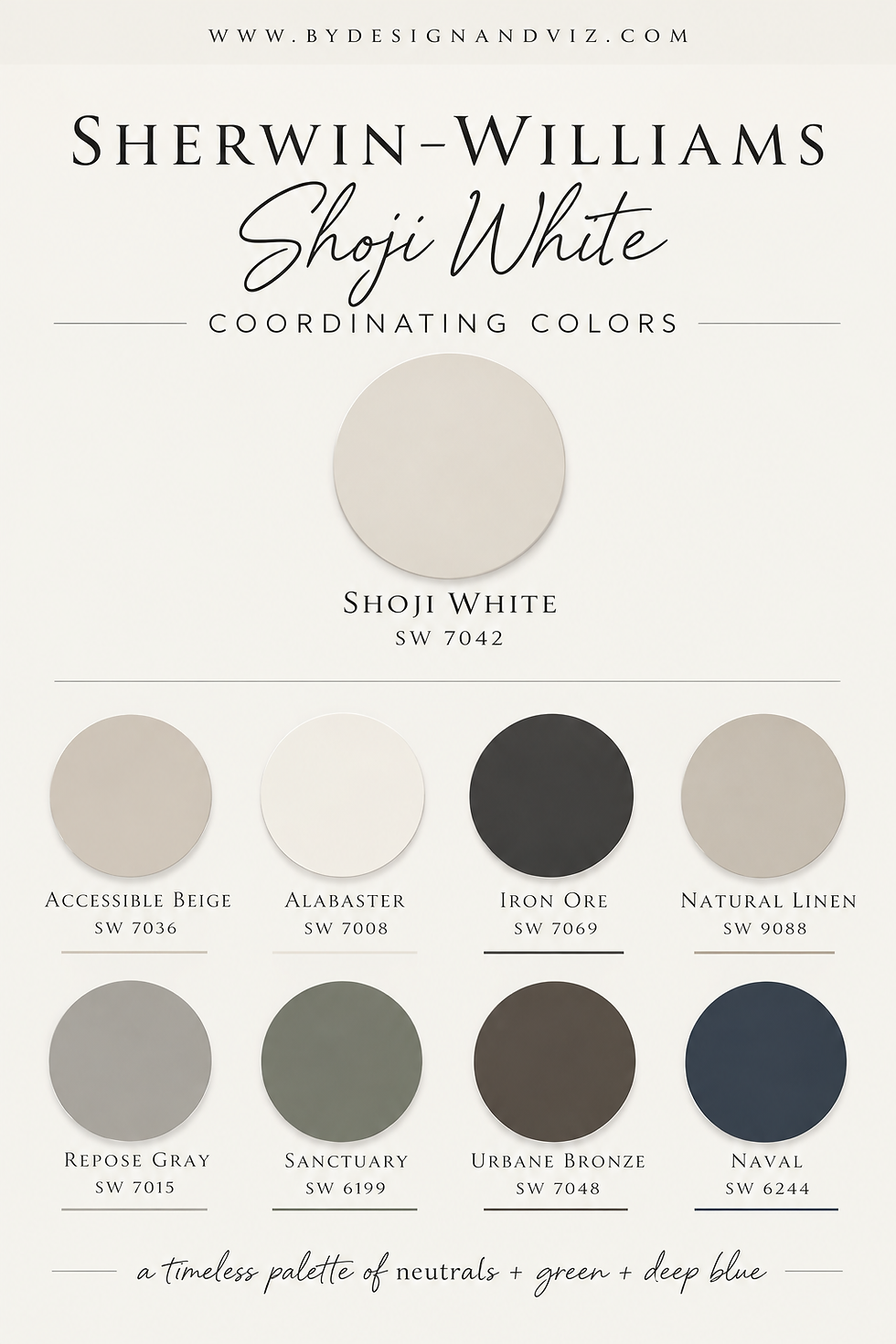
Swiss Coffee on walls with Cloud White on trim is the tested, low-risk pairing — the trim reads as a clean, soft lift without introducing a competing undertone. Cloud White on walls with Swiss Coffee on trim works too, but the trim can look slightly heavier and more beige than the walls beneath it, so test it first. For how this dynamic plays out against a third warm-white contender in the same range, the Shoji White vs Swiss Coffee guide covers a comparable case where a near-neutral trim white sits alongside a beige-leaning wall colour.
Not sure which one works for your room? A colour consultation is included in all our design packages - book directly here. |
When to Choose Swiss Coffee
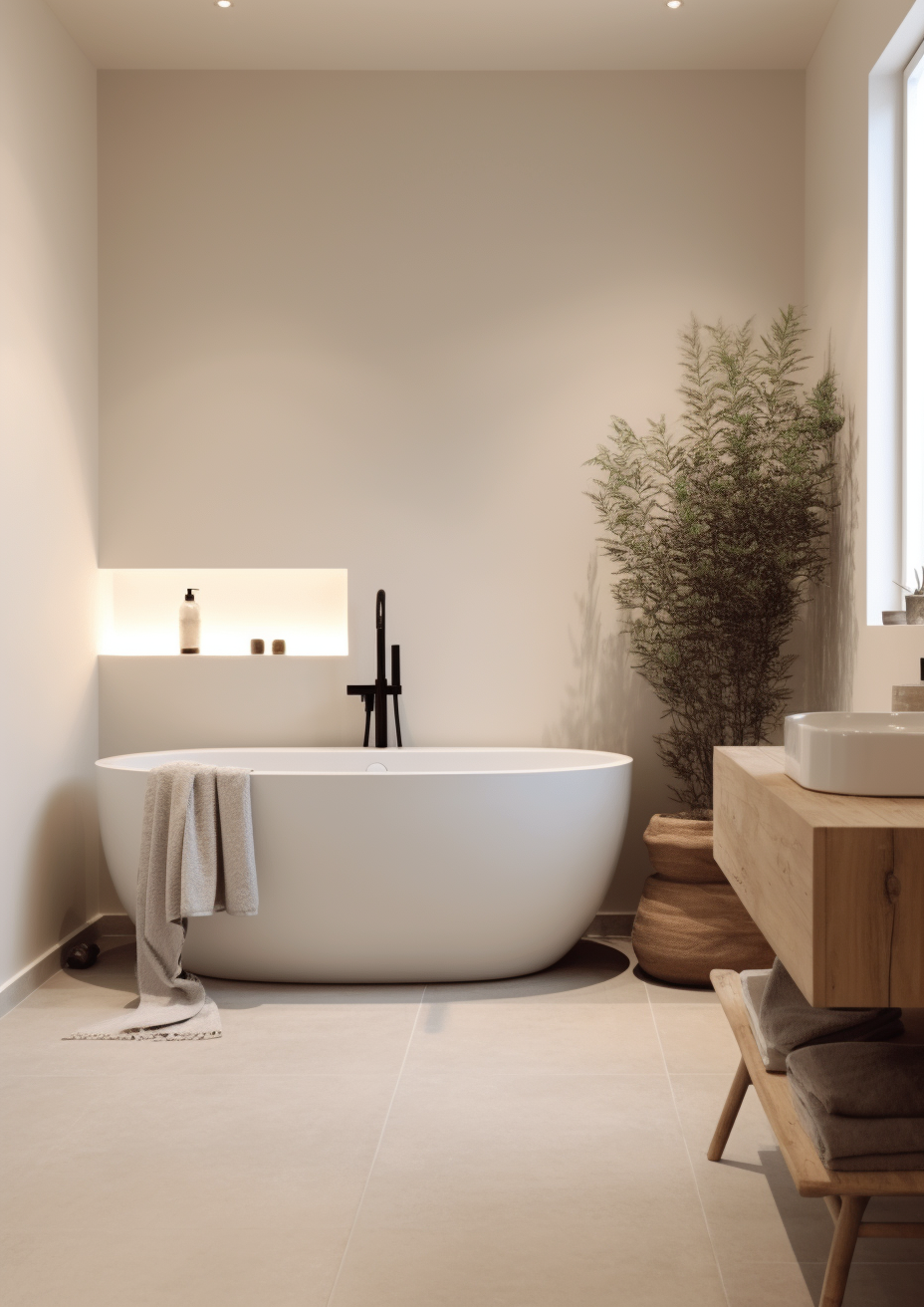
Choose Swiss Coffee when you want a warm white that behaves the same in every room of the house, regardless of orientation. It suits traditional interiors with warm wood floors, brass or bronze hardware, and stone with a beige or tan base. It is a strong choice for hallways and connecting spaces that move between north- and south-facing rooms, because its undertone doesn't swing wildly with the light.
Avoid it where the brief is crisp, modern, or cool-toned. Against white oak with a grey cast, chrome fixtures, or bright white trim, Swiss Coffee's beige undertone will read as slightly dated rather than intentional. Test it against your actual cabinet and floor samples before committing — its undertone is unforgiving of mismatched materials.
When to Choose Cloud White

Choose Cloud White when the room's materials are mixed, cool-leaning, or simply unconfirmed. It is the safer choice for open-plan spaces that move between kitchen, dining, and living zones with different finishes. It also performs well on exteriors and trim, where a white that reads consistently under shifting daylight matters more than a strong identity.
Avoid it if the brief specifically wants a beige-leaning, traditional warmth. Cloud White will look thinner and less characterful than Swiss Coffee in a room built entirely around warm wood and brass. If the goal is a defined creamy warmth rather than a quiet backdrop, Swiss Coffee is the stronger choice.
How the Pairings Differ

For Swiss Coffee on walls, Cloud White on trim creates a soft, coordinated lift without introducing a second undertone family. Chantilly Lace works as a higher-contrast alternative where more definition is wanted. Avoid stark, cool whites on trim — they will make Swiss Coffee's beige read dingy by comparison.
For Cloud White on walls, Simply White or Chantilly Lace on trim gives a crisp, confident finish. Cloud White on both walls and trim also works well as a quiet, enveloping scheme, particularly in bedrooms where the goal is softness without a defined undertone taking over.
Both colours suit warm wood tones, but Swiss Coffee needs it more urgently — cool grey flooring against Swiss Coffee walls creates a visible undertone clash. Cloud White is considerably more forgiving and reads well against warm wood, cool stone, and most porcelain tile.
Both colours pair well with brass and bronze. Cloud White also handles brushed nickel and matte black comfortably in more contemporary schemes. Swiss Coffee is less at ease with cool metals — its beige undertone can look slightly at odds with chrome or bright nickel finishes.
Architect's Verdict - Swiss Coffee or Cloud White?

For most homes — particularly those with mixed materials, open-plan layouts, or any uncertainty about how the light behaves through the day — Cloud White is the more dependable choice. Its restraint is the feature, not a limitation.
Swiss Coffee is the right call when the brief wants a defined, traditional warmth and the surrounding materials — wood floors, brass hardware, warm stone — are already pulling in that direction. In a traditional home with consistent warm materials throughout, Swiss Coffee has more presence and character than Cloud White will ever deliver.
Cloud White is the safer call whenever the room's conditions are mixed or unconfirmed. It performs consistently across zones, doesn't clash with cool materials, and rarely needs to be second-guessed once it's on the wall.
The test I always run on this pairing: paint two large sample boards and hang them in the room's worst light — typically a north-facing wall in late afternoon, when warm whites are most likely to flatten or turn muddy. If Swiss Coffee still reads warm and inviting rather than dull or beige-grey, it has passed and can carry the room. If it looks flat or heavy in that light, move to Cloud White and repeat the same test — it should hold a soft, even warmth with no grey cast. Whichever one still looks intentional in the worst light in your house is the one to specify.
Frequently Asked Questions

Is Swiss Coffee warmer than Cloud White?
Yes — Swiss Coffee has a stronger, more visible beige undertone, while Cloud White's warmth is softer and more diffuse. Side by side in good light, Swiss Coffee reads clearly as the creamier, more defined option.
Can I use Swiss Coffee and Cloud White in the same house?
Yes, and it's a tested combination. Swiss Coffee on walls with Cloud White on trim is the more reliable direction — the trim reads as a clean, soft lift rather than a competing undertone. The reverse pairing works too but should be tested first.
Which is better for kitchen cabinets?
Cloud White is the more practical choice for most kitchens. Its restrained undertone works across a wider range of countertop and appliance finishes. Swiss Coffee looks excellent in traditional kitchens with warm wood and stone, but can look dingy against bright white appliances or cool stone.
Does Swiss Coffee look dated on walls?
It can, in the wrong context. Against cool-toned materials — grey-cast wood, chrome, bright white trim — Swiss Coffee's beige undertone reads as dated rather than intentional. Against warm wood and brass, it reads as classic rather than tired. The materials around it decide which.
Which is better for a north-facing room?
Cloud White handles north light more reliably. Its low-saturation undertone avoids both the flat-grey look some whites get in cool light and the heavy beige cast Swiss Coffee can pick up when there's no warm daylight to balance it.
What is the LRV of Swiss Coffee vs Cloud White?
Swiss Coffee has an LRV of approximately 83 and Cloud White approximately 85. The two-point gap is minor in terms of reflectance — the real difference is undertone saturation, not brightness.
Final Thought
Swiss Coffee and Cloud White are both dependable Benjamin Moore warm whites, but they solve different problems. Swiss Coffee delivers a defined, traditional warmth for rooms built to support it. Cloud White delivers a quiet, adaptable warmth for rooms where the materials or light can't be fully predicted.
If your materials are warm and consistent throughout, Swiss Coffee rewards you with real character and a settled, traditional feel. If your materials are mixed or your light conditions vary through the day, Cloud White is the more forgiving and ultimately more reliable choice. Paint large sample boards of both, hang them in your worst light, and check them again at night under lamplight. The room will tell you which undertone it can actually support.
Want a complete colour scheme built around Swiss Coffee or Cloud White? Our design packages cover full palette selection, finish recommendations, and 3D visualisations - see our packages. |
About the Author
Beril Yilmaz is a qualified architect and interior designer based in the UK. She runs BY Design And Viz, a design platform covering paint colour reviews, interior design guidance, and residential design projects. Beril has specified both Swiss Coffee and Cloud White across residential projects in the UK and internationally — Swiss Coffee in traditional homes with warm wood and brass throughout, Cloud White in open-plan and transitional spaces where materials and light vary across the day, often specifying both together in the same scheme with Cloud White on trim.



Comments