


All White vs Wimborne White: The Comparison That Actually Helps You Decide

Updated: Sep 14
These two sit at opposite ends of Farrow & Ball's white palette, and the gap between them is bigger than the paint chips suggest. All White carries no pigment beyond white itself — it is the brand's cleanest, most neutral shade. Wimborne White is built from a warm cream base, closer in spirit to a soft off-white than a true white. Hold the two cards together and the difference is obvious within seconds.
I have specified both across UK residential projects, and I never treat them as interchangeable. All White reads coldest and cleanest of the pair — the one to reach for when a scheme needs a genuinely neutral backdrop. Wimborne White reads warm and inviting, closer to Alabaster than to any brilliant white.
This guide covers how each behaves under real UK light, where each earns its place on walls, ceilings, and trim, and how to decide which one your room actually needs.

At a Glance
| All White | Wimborne White |
Brand | Farrow & Ball | Farrow & Ball |
LRV | 94 - among the highest in the F&B range, reflects almost all light | 89 - very bright, though a touch lower than All White |
Colour category | Pigment-free neutral white - the cleanest, most restrained white F&B makes | Warm cream-white - one of F&B's most popular whole-house neutrals |
Undertones | None added - the closest thing to a true white without the coldness of a brilliant white | Soft warm cream, close in feel to Sherwin-Williams Alabaster - present but never heavy |
Character | Quiet and architectural; the backdrop colour that lets everything else in the room do the talking | Warm and inviting; a whole-house white that never tips into stark or clinical |
North-facing | Reliable - the absence of added pigment means it does not shift warm or cool the way tinted whites do | Good - the warm undertone prevents the flat, grey-tinged look colder whites can get in low light |
South-facing | Clean and bright - stays crisp rather than glowing or warming up | Glowing and soft - the cream undertone activates without turning yellow |
Open-plan | Strong - reads consistently because it has no undertone to be thrown off by mixed light | Strong - the gentle warmth reads consistently across rooms with mixed light and material temperatures |
On walls | Neutral, gallery-like backdrop - the choice when the brief is 'just white,' not 'a colour that happens to be pale' | Warm, whole-house backdrop - the choice when 'white' still needs to feel inviting rather than clinical |
On cabinets | Excellent on modern joinery and cabinetry where a true, uncomplicated white is the goal | Reliable in kitchens with warm wood or stone; can look slightly creamy next to very cool stainless finishes |
Use together? | Yes - All White on trim against Wimborne White walls is a classic F&B pairing | Yes - Wimborne White walls with All White or Strong White trim is a well-tested combination |
Trim for each | All White itself, or Strong White for a fractionally warmer step | All White or Strong White, both of which sit fractionally cooler and cleaner |
Style fit | Contemporary, architectural, Scandinavian-influenced, minimal | Traditional, period, transitional, warm contemporary |
Architect's pick | When the brief is a genuinely neutral white with zero undertone to manage | When the brief wants warmth and softness without committing to a visible cream |
Farrow & Ball All White No. 2005 - What It Really Looks Like

All White has an LRV of approximately 94, the highest of any colour in this comparison, and it is the only Farrow & Ball white made with no added pigment at all. That absence is the whole story. There is nothing to warm it up or cool it down.
In practice this means All White behaves consistently under almost any light. It does not swing warm in the evening or cold under cloud cover the way a tinted white would. It simply stays neutral. That predictability is its main appeal for anyone who has been caught out by a 'white' with a strong hidden undertone.
The trade-off is character. All White does not soften a room the way a warmer neutral does. In a space with little natural light or cool-toned materials, it can read slightly stark. It performs best where the room's other elements - timber, stone, fabric - are already doing the work of adding warmth.For a colour that shares All White's clarity but adds the faintest hint more depth, the Farrow & Ball Strong White review is worth reading alongside this one.
Farrow & Ball Wimborne White No. 239 - What It Really Looks Like

Wimborne White has an LRV of approximately 89, close to All White on paper, but the undertone tells a different story entirely. Wimborne White is built on a warm cream base. It is not a neutral white wearing a warm coat - the warmth is native to the colour.
In good natural light it reads as a soft, settled off-white. It never turns yellow the way a true cream would. The warmth is present but consistently restrained, which is why it is often compared directly to Sherwin-Williams Alabaster - both occupy that same quietly warm territory.
This is also why it works as a genuine whole-house white. Rooms with different light and different material temperatures do not throw it off balance. It holds its warmth in a north-facing hallway and stays soft rather than glowing in a south-facing kitchen. For the fullest breakdown of where All White works best on its own the All White review covers every application in more depth than a comparison post allows.
The Real Difference Between All White and Wimborne White
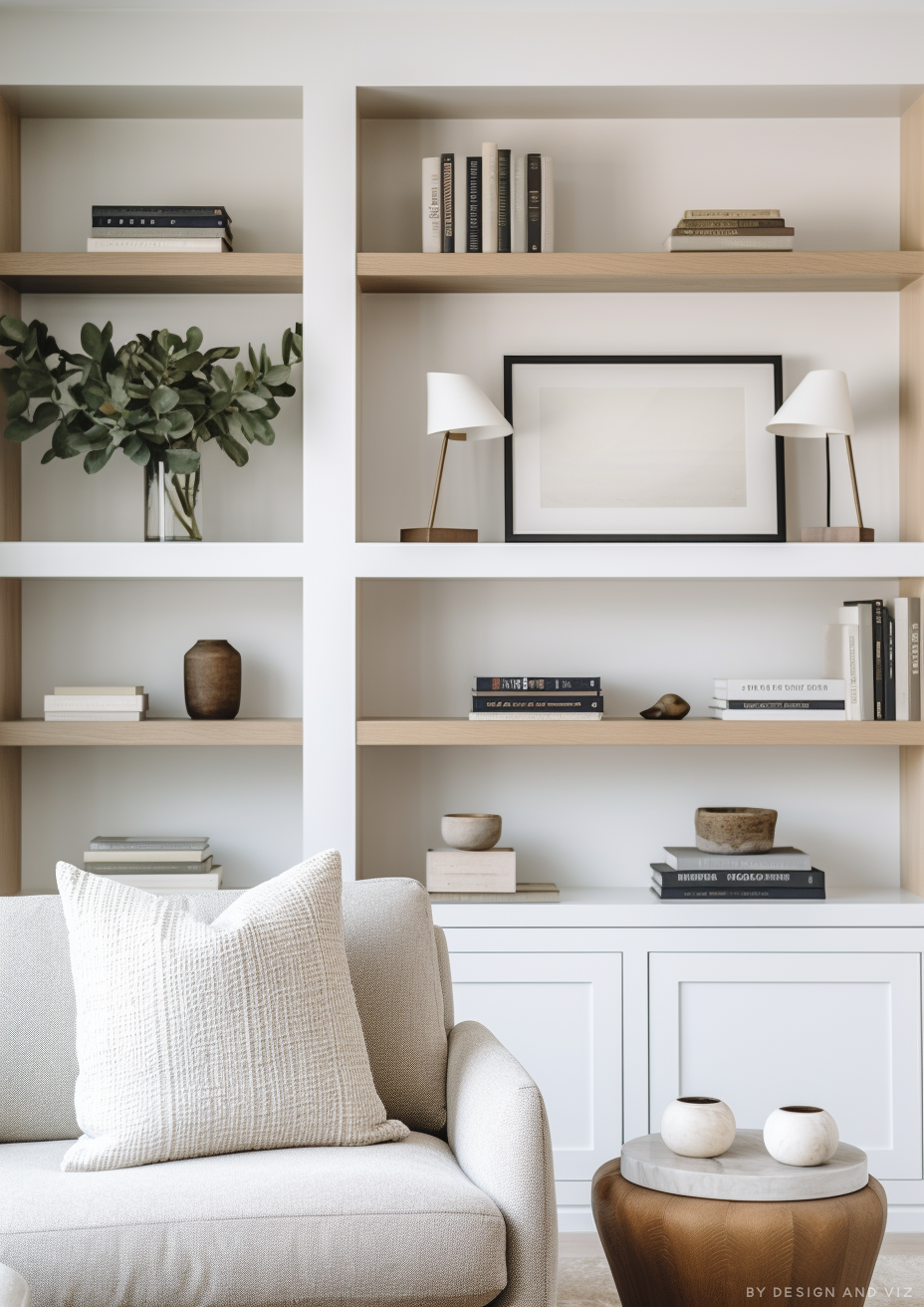
The simplest way to put it: All White is the absence of colour. Wimborne White is colour, quietly delivered. For how Wimborne White compares to Pointing - the warmer, red-based Farrow & Ball off-white most often shortlisted alongside it - the Pointing vs Wimborne White guide covers the undertone difference and the classic wall-and-trim pairing between the two.
The LRV gap is modest - roughly 94 against 89 - and on its own would suggest two very similar whites. It is the undertone, not the LRV, that separates them. All White has none. Wimborne White has a soft, consistent warmth that shows up the moment you paint a full wall rather than hold up a swatch.
All White and Wimborne White are frequently used together, and the pairing works precisely because the contrast is gentle rather than jarring - warm wall, clean trim. For a closer look at Wimborne White as a standalone whole-house colour — including its closest Sherwin-Williams match — the Wimborne White review goes deeper into how it holds up room by room.
Not sure which one works for your room? A colour consultation is included in all our design packages - book directly here. |
When to Choose All White
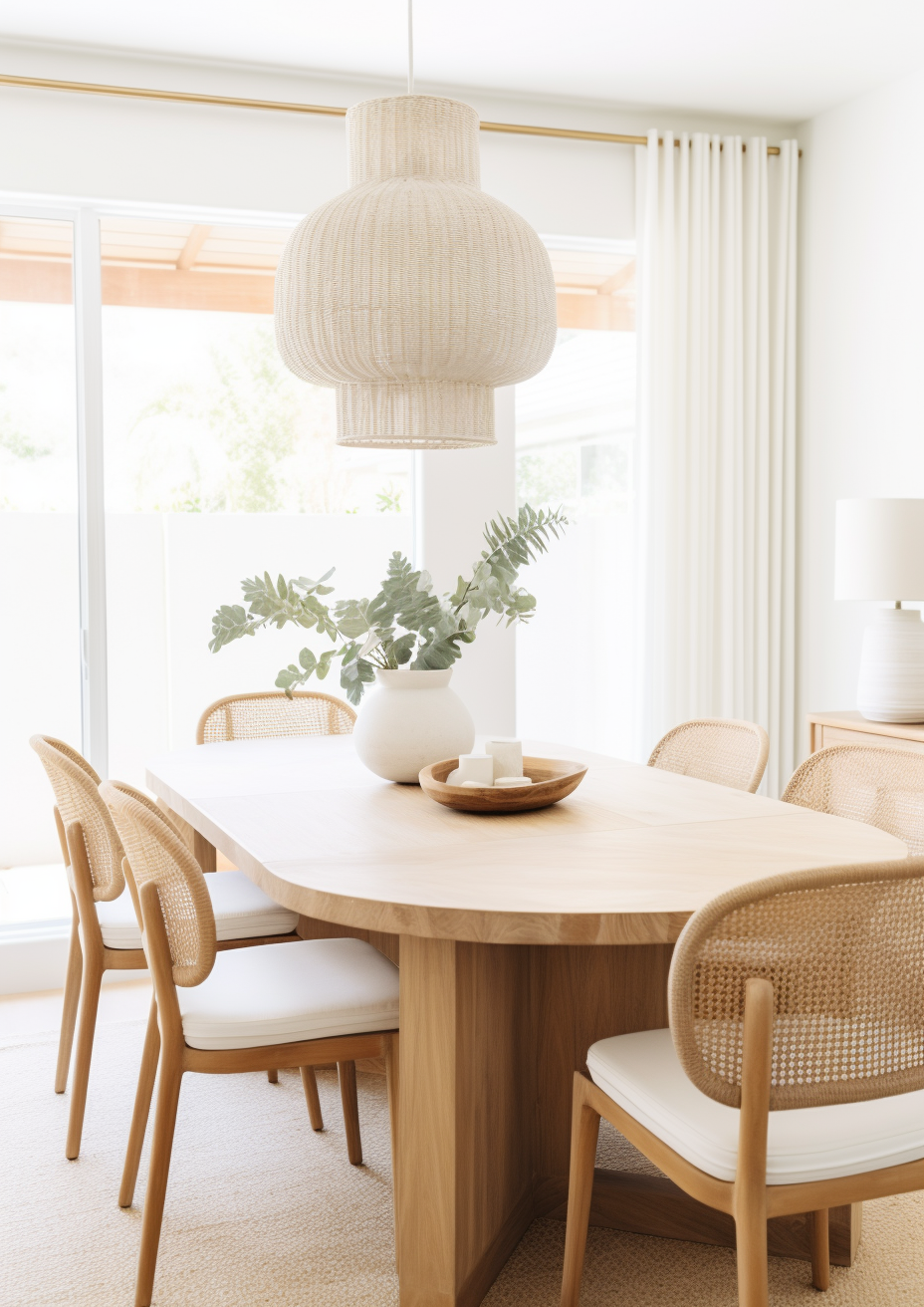
Choose All White when the brief calls for a true, undertone-free neutral rather than a warm-leaning white. These are the conditions where it is the right answer:
Contemporary and architectural interiors where a genuinely neutral backdrop matters more than warmth. Rooms with cool stone, polished concrete, or steel finishes, where a tinted white would create an undertone clash. Galleries, studios, and spaces where colour and material are meant to be the focus, not the wall.
Avoid All White in a room with limited natural light and no warm materials to compensate - without something to soften it, it can read flat rather than restrained. It is also not the right choice for a period property leaning into a cosy, traditional brief.
When to Choose Wimborne White

Choose Wimborne White when the room needs warmth and a settled, whole-house feel rather than a stark, neutral white. These are the conditions where it is the stronger answer:
North-facing rooms where a completely neutral white risks looking flat or cold. Traditional and period interiors where a soft cream-white feels appropriate to the architecture. Kitchens and living spaces with warm wood or stone, where the undertone has something to sit alongside rather than fight. Whole-house schemes where consistency across rooms with different light matters more than absolute neutrality.
Avoid Wimborne White where the brief specifically calls for a cold, gallery-white backdrop - its warmth will always be visible against very cool, minimal materials. And avoid pairing it with a brilliant white trim, which will make the wall colour look unintentionally creamy by contrast.
How the Pairings Differ

All White on walls works best with equally clean, undertone-free companions - Strong White or a crisp trim white keeps the whole scheme reading as genuinely neutral rather than warm-leaning.
Wimborne White on walls pairs naturally with All White or Strong White on trim and joinery - the step down in warmth on the woodwork creates definition without fighting the wall colour.
Both colours suit pale oak and bleached timber. All White is more forgiving of cool stone and polished concrete, where its lack of undertone keeps the room from reading as mismatched. Wimborne White prefers warm timber or warm stone underfoot to avoid feeling under-supported by cooler flooring.
All White suits brushed nickel, matte black, and chrome - cool metals that reinforce its neutral character. Wimborne White leans toward aged brass and warm brushed gold, echoing its cream undertone rather than fighting it.
Architect's Verdict - All White or Wimborne White?

For most UK homes - particularly those with mixed natural light and a mix of warm and cool materials - Wimborne White is the safer, more forgiving choice. Its warmth does real work without ever tipping into obviously cream.
All White is the right call when the brief is specifically for a true, neutral white - a gallery-like backdrop, a contemporary kitchen with cool stone, or any scheme where an undertone would be a liability rather than an asset.
Wimborne White is the stronger whole-house choice when the room needs to feel warm and settled rather than clinical, and when the light conditions vary across the day or across zones.
The test I always use for this pair: paint a large sample of each on the wall that gets the least light in the house - typically north-facing - and view it at midday and again at dusk under lamplight. If All White still reads clean and undertone-free in both conditions, it passes. If it starts to look flat or slightly cold, Wimborne White's warmth will solve the problem your room is telling you about.
Frequently Asked Questions

Is All White whiter than Wimborne White?
Yes - All White contains no added pigment and has a higher LRV of roughly 94 against Wimborne White's 89. Wimborne White carries a soft warm cream undertone that keeps it from reading as a true white, even though the two look close on a paint chip.
Can I use All White and Wimborne White in the same house?
Yes, and it's a well-established Farrow & Ball combination. Wimborne White on walls with All White on trim is a classic pairing - the trim reads fractionally cleaner and cooler, which gives the joinery definition without creating harsh contrast.
Which is better for a north-facing room?
Wimborne White handles north-facing rooms more reliably. Its warm undertone prevents the flat, slightly cold look that a completely neutral white like All White can take on when natural light is limited. All White is not wrong in a north-facing room, but it needs good artificial lighting to avoid looking lifeless.
Which is closer to Sherwin-Williams Alabaster?
Wimborne White is the closer match. Its warm cream undertone and LRV in the high 80s put it in the same territory as Alabaster, while All White reads considerably cooler and cleaner than either.
Does Wimborne White look cream on the walls?
In warm light, yes, there is a visible soft cream quality. It is restrained rather than pronounced - closer to a warm white than an obvious cream - but it is enough to distinguish it clearly from a true white like All White on a full wall.
What is the LRV of All White vs Wimborne White?
All White has an LRV of approximately 94 and Wimborne White approximately 89. Both are very bright, light-reflecting colours, but the five-point gap combined with the undertone difference means they behave quite differently in real rooms rather than as near-duplicates.
Final Thought
All White and Wimborne White are both excellent Farrow & Ball neutrals, but the choice between them is not about which reflects more light - it is about whether your room wants warmth or wants none at all.
If the brief calls for a true, undertone-free white, All White is the more disciplined choice. If the room needs warmth and a settled, whole-house feel, Wimborne White is the more reliable result. Buy sample pots of both, paint patches on your darkest wall, and check them in midday and lamplight before committing.
Want a complete colour scheme built around All White or Wimborne White? Our design packages cover full palette selection, finish recommendations, and 3D visualisations - see our packages. |
About the Author
Beril Yilmaz is a qualified architect and interior designer based in the UK. She runs BY Design And Viz, a design platform covering paint colour reviews, interior design guidance, and residential design projects. Beril has specified both All White and Wimborne White across residential projects in the UK and internationally - All White in contemporary schemes needing a genuinely neutral backdrop, Wimborne White in warmer, whole-house projects where the brief calls for softness rather than a stark white, often specifying both together with All White on trim against Wimborne White walls.


Comments